
[ad_1]
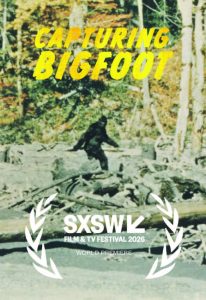 The most famous film of Bigfoot has been conclusively revealed as a hoax in a new documentary film, Capturing Bigfoot. The iconic 1967 footage taken in Bluff Creek, California, by Roger Patterson and Bob Gimlin is said to show a female Bigfoot (dubbed “Patty”) walking across a riverbed. The 16-mm film has been the subject of controversy and debate for half a century and is routinely cited as the gold standard for Bigfoot footage (even some fifty-five years later, which is deeply suspicious given the ubiquity of high-quality smartphone cameras since then). Though the footage is blurry, one thing is clear: it’s either a hoax or a Bigfoot. It’s not an optical illusion, misidentified bear, or anything else.
It is no exaggeration to say that the film is a foundational pillar of modern Bigfoot belief. Sure, there are plenty of anecdotal sighting reports (typically at dusk and from great distances), ambiguous tracks, “strange” calls in the forest at night, and so on. But nothing compares to the Patterson/Gimlin film for sheer pop culture influence. Its frames have been pored over and analyzed by countless armchair experts, who see obvious proof of its authenticity in its blurry images, for example from pareidolia-provided details of musculature that could not be seen on any costume available at the time. Skeptics have offered damning analyses, both of Patterson—who devised a series of money-making schemes to keep ahead of creditors—and the murky circumstances under which the film was created and developed; see, for example, Greg Long’s The Making of Bigfoot and Daniel Loxton and Donald Prothero’s Abominable Science.
More importantly, the Bigfoot community has the logic exactly backward: the question is not why no one has replicated the film if it’s a hoax but instead why no one has replicated the film if it’s real. In other words (regardless of the film’s authenticity), why does the best Bigfoot footage date back to 1967? The question seems to have been answered in the new documentary film Capturing Bigfoot, directed by Marq Evans: it was, indeed, a hoax—just as skeptics have said for decades. The documentary provides an overview of the film and its murky origins and adds a bombshell revelation: a confession.
According to Patterson’s son Clint and widow Patricia, it was a belatedly admitted hoax, but most people already knew or suspected that. Bolstering their confessions is newly discovered footage shot a year prior by Roger Patterson that shows a rehearsal for the famous footage (obviously there should be no “test footage” of Bigfoot the previous year if it’s authentic). For students of the film, the question will come down to how closely the “Bigfoot” in that 1966 film matches Patty. Some who have seen the footage in the documentary say it’s virtually an exact match, and if so that destroys the key claim that Patty could not simply be a man in a suit. Roger Patterson died decades ago, but Bob Gimlin is still alive and has stuck by his story.
Capturing Bigfoot is less about the 1967 footage itself than about how it—core as it is to pop culture Bigfoot belief—came about. The question isn’t necessarily how it fooled so many people for so long, because it’s not clear how many it did in fact fool. To skeptics, the new documentary is merely another nail in the coffin. For decades, the footage has been widely—and, apparently, correctly—assumed to be a hoax, with virtually no evidence for its authenticity and many reasons against it. Skeptics will likely greet the news with a shrug, but the impact on hardcore Bigfoot believers will be fascinating.
Capturing Bigfoot premiered this year at South by Southwest and is making the rounds at festivals. Sooner or later, it’s likely to be picked up by a distributor and available either in theaters or on a streaming service. Until then, Bigfoot believers and skeptics alike are clamoring to see it, with some suggesting—with rich irony—that the evidence in the new film is itself a hoax.
Regardless of its subject, the original footage is one of the most prominent hoaxes in history. There is likely no piece of film, aside from the Zapruder film of JFK’s assassination (which is referenced in Capturing Bigfoot) that has been so widely seen and analyzed. Even for those skeptics who think the whole thing is silly because Bigfoot doesn’t exist and therefore the film was an obvious hoax from the beginning, there are important skeptical lessons to be learned, from the power of confirmation bias to how so many prominent Bigfoot experts—including the late Jeff Meldrum—could have been so confident in their proclamations of authenticity.
[ad_2]
Source link
