
[ad_1]
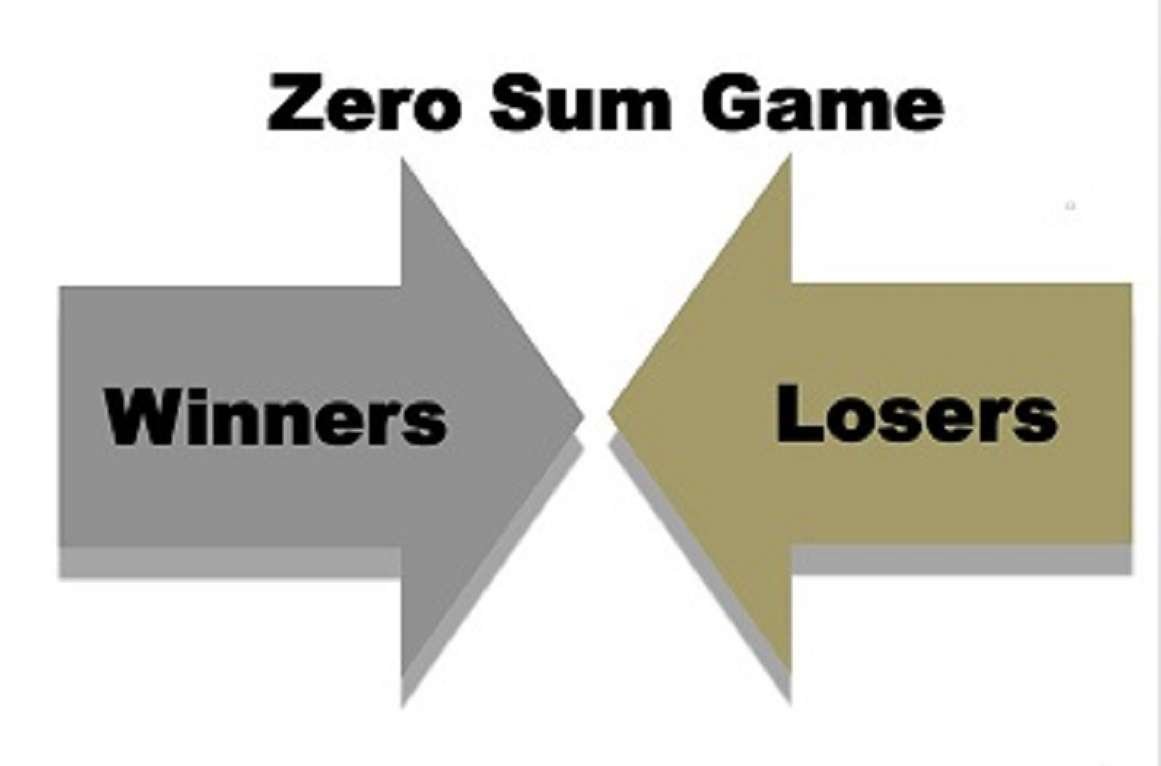
A new study just published by the prestigious American Economic Review may be the most important recent social science article most nonexperts have never heard of. It’s entitled “Zero-Sum Thinking and the Roots of US Political Differences” and the authors are Sahil Chinoy, Nathan Nunn, Sandra Sequeira, and Stefanie Stantcheva. Here is the abstract:
We investigate the origins and implications of zero-sum thinking: the belief that gains for one individual or group tend to come at the cost of others. Using a new survey of 20,400 US residents, we measure zero-sum thinking, political preferences, policy views, and a rich array of ancestral information spanning four generations. We find that a more zero-sum mindset is strongly associated with more support for government redistribution, race- and gender-based affirmative action, and more restrictive immigration policies. Zero-sum thinking can be traced back to the experiences of both the individual and their ancestors, encompassing factors such as the degree of intergenerational upward mobility they experienced, whether they immigrated to the United States or lived in a location with more immigrants, and whether they were enslaved or lived in a location with more enslavement.
I have long argued that zero-sum assumptions are central to the dangerous world views of both right-wing nationalists and many left-wing socialists and “wokists.” I have also long warned against the dangers of widespread political ignorance, which has been a central theme of my work for many years. This study provides extensive evidence that zero-sum thinking is widespread, and that it is at the root of many crucial political attitudes.
As the authors show, zero-sum worldviews cut across party and ideological lines (though slightly more prevalent among Republicans than Democrats), and are strong predictors of political views on issues like redistribution, the use of racial preferences for affirmative actions, and immigration restrictions.
The authors’ analysis of the determinants and correlates of zero-sum worldviews is also groundbreaking. Most notably, they find that experiences of upward mobility and immigration (including having immigrant parents or grandparents) are strongly negatively correlated with zero-sum thinking. On the other hand, zero-sum thinking has a strong positive correlation with having ancestors who experienced slavery and others forms of forced labor or even just living in an area where slavery was historically prevalent.
Among American Blacks, this latter effect is, as the authors recognize, partly caused by a history of segregation and discrimination that persisted after slavery was abolished. The same can be said of the impact of living in an area where slavery was prevalent (which also are almost always areas where there was a high degree of later segregation and other discrimination). But it is notable that the impact of past enslavement is also significant among other groups, such as Jews whose parents or grandparents were forced laborers during the Holocaust.
The impact of immigration is particularly noteworthy in light of current debates over immigration restrictions. Libertarians and free-market conservatives sympathetic to restrictionism often argue that immigration should be curtailed because it might lead to increased welfare state spending. But the Chinoy, et al. study shows that zero-sum thinking is a major determinant of support for redistributive policies, and immigrants and children of immigrants are much less prone to it than other voters, even after controlling for a variety of other variables. This is actually an additional important pathway by which immigration is likely to reduce the burden of the welfare state, rather than increase it. I went over some additional flaws in the welfare state rationale for immigration restrictions in this post, and in Chapter 6 of my book Free to Move: Foot Voting, Migration, and Political Freedom.
The same goes for concerns that immigration might increase “woke” policies like affirmative action racial preferences. Chinoy, et al. also show that support for these policies is heavily driven by zero-sum assumptions, and immigrants and their children are far less likely to hold such views than natives. I outlined some other ways in which immigration reduces support for affirmative action here.
I don’t want to overstate the importance of these points. As also noted in Chapter 6 of my book, recent immigrants tend to vote and otherwise participate in politics at lower rates than natives. That considerably diminishes any effect they have on political outcomes, whether good or bad. But to the extent they do have a marginal impact, it’s likely to reduce political pressure for redistribution and racial preferences rather than increase it.
I would add that, as the authors point out, zero-sum worldviews are likely to be important for a range of issues beyond those they tested. For example, in addition to heavily influencing views on immigration, I would expect them to also influence views on protectionism. Indeed, a measure of zero-sum attitudes towards international trade is (quite properly) one of the authors’ questions gauging zero-sum attitudes.
I would also expect zero-sum views to be crucial determinants of attitudes on such policies as rent control and “NIMBY” restrictions on housing construction. If you think the economy is a zero-sum game generally, you are probably more likely to also believe that housing is a zero-sum game between landlords and tenants, and between long-time residents and developers and potential migrants. Indeed, survey data on housing issues shows that much opposition to zoning reform is driven by false beliefs that new housing construction will not reduce prices, and other kinds of economic ignorance driven in part by zero-sum assumptions.
While most of the authors’ evidence is limited to the United States, they note some data that suggests similar effects in other countries. Testing their hypothesis further in other countries is an important potential topic for future research.
As regular readers know, I am generally hostile to zero-sum thinking and the policies it leads to. I think zero-sum assumptions about immigration, housing, the interests of the poor and minority groups, and most other issues are largely wrong, and lead to pernicious policies. In previous writings, I have extensively critiqued zero-sum assumptions about immigration (e.g. here and here), and housing, among other issues. In most cases, zero-sum games only arise if pernicious government policies (often themselves based on zero-sum assumptions) needlessly create them. For example, housing can be a zero-sum game when exclusionary zoning blocks new construction in response to demand.
However, those more sympathetic to various types of zero-sum thinking than I am can also find value in the Chinoy, et al. article. Effects I view as pernicious, they might actually see as beneficial (and vice versa). Either way, the impact of zero-sum thinking on political views is an incredibly important field of study, and I commend the authors of this article for making a major advance in our understanding.
The above covers only part of what’s in the article. There is much more. Serious students of this subject should make sure to read the whole thing.
[ad_2]
Source link
