
[ad_1]
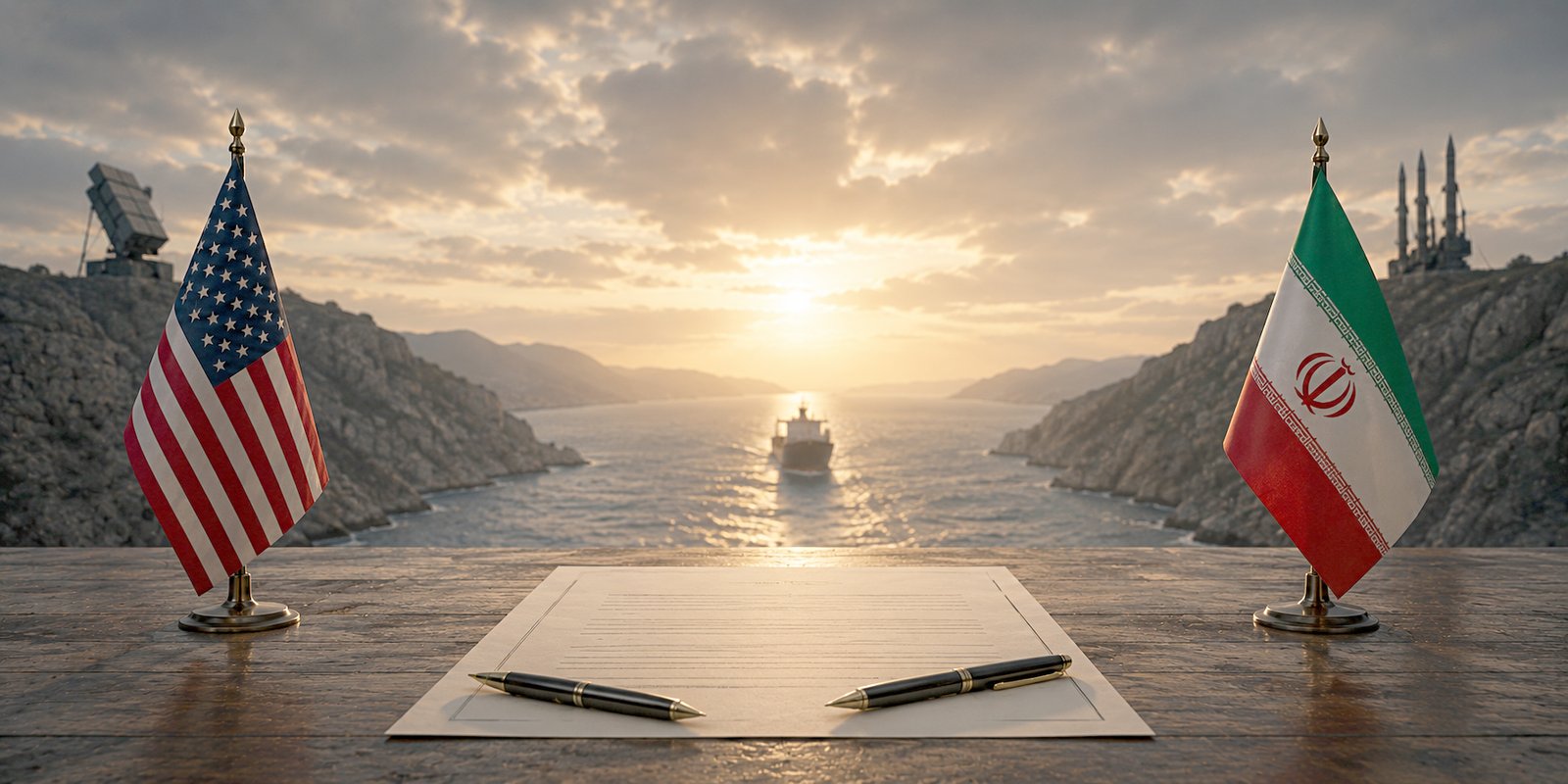
Almost every war produces the same immediate question: who won? Yet the more consequential question is whether either side can convert battlefield pressure into a political order it can sustain. The Islamabad Memorandum, signed by the United States and Iran on June 17, brings that distinction into sharp relief. It is a 60-day framework linking an end to military operations and navigation through the Strait of Hormuz to negotiations over sanctions, Iran’s nuclear program, and a broader political settlement. Its importance lies less in the document’s promises than in the reality that produced it: neither Washington nor Tehran could credibly claim that continuing the war would deliver the political outcome each sought.
This does not mean military power has ceased to matter. In conflicts where both sides can impose serious costs and frustrate the other’s objectives, the ability to damage an adversary is not the same as the ability to compel it. The Islamabad Memorandum is evidence of power’s limits when it cannot be translated into a durable political order.
The framework reflects those limits. It envisages commercial navigation through Hormuz, an end to the U.S. naval blockade of Iranian ports, temporary sanctions relief, and talks on Iran’s enriched-uranium stockpile under international supervision. Each element acknowledges that neither side achieved its preferred end state through force. The United States did not secure a stable regional order by military pressure alone; Iran did not compel Washington to abandon every demand merely by raising the costs of escalation. Security, nuclear questions, economic restrictions, and maritime access must instead be negotiated together.
For Washington, this is the central strategic lesson. The United States has never lacked the capacity to strike Iranian targets or impose material costs. The question was whether that superiority could produce a political arrangement that reduced risk without drawing America into an open-ended regional war. Iraq and Afghanistan offered a familiar warning: tactical success can destroy infrastructure and degrade capabilities, but it cannot settle rival security claims or force an adversary to accept a political future it regards as intolerable. In the Iranian case, additional strikes could have increased pressure, but they also risked higher energy costs, disruption to shipping, wider instability, and a conflict with no clear endpoint.
Diplomacy, then, should not be described simply as American retreat. It is an admission that an objective becomes less attainable as the cost of pursuing it rises. A strategy that can keep escalating but cannot define a credible political end state is not a strategy of victory. The memorandum gave Washington a way to pursue verification and regional stability without assuming that force could resolve every issue on American terms.
Iran reached a parallel conclusion from a different position. Tehran demonstrated that it could not be excluded cheaply from the regional security equation. Its capacity to impose costs on shipping, energy markets, and U.S. interests made a purely coercive settlement difficult. But resilience is not identical to the ability to impose one’s full political will. Iran could raise the price of war; it could not assume that prolonged confrontation would automatically produce sanctions relief, economic recovery, or a stable security environment. Negotiation therefore offered Tehran not capitulation, but a route to protect core interests while reducing pressures that military endurance alone could not remove.
This convergence of limitations gives the Islamabad Memorandum its historical significance. The document does not resolve decades of disputes, and it would be premature to treat it as the beginning of a settled regional order. Its provisions remain vulnerable to disagreement over sequencing, verification, sanctions implementation, and the future of nuclear talks. The recent suspension of Iranian participation in technical discussions and the subsequent agreement to halt mutual strikes show how fragile the arrangement remains. A fragile agreement is not yet a strategic transformation.
Some will argue that this fragility proves the opposite: that the memorandum is merely a tactical pause in which each side seeks time to regroup and improve its position. That possibility cannot be dismissed. States often negotiate while preserving military options, and both Washington and Tehran retain the capacity to return to coercion. But the fact that both sides preserve military leverage does not show that force can deliver their preferred political end state. It shows that deterrence survives even when decisive victory does not. The issue is not whether they can fight again; it is whether fighting again can resolve the underlying conflict more effectively than a negotiated arrangement.
This distinction reframes what a win-win outcome means. It is not a diplomatic slogan, and it does not require trust or ideological reconciliation. It is the practical result of recognizing mutual constraints. The United States can avoid a war with escalating regional and domestic costs while pursuing nuclear verification and maritime security. Iran has a path toward reducing economic pressure and preserving a role in the regional security equation. Neither side receives everything it wants. But both can obtain more through managed competition than through a war that cannot produce complete victory.
The memorandum’s durability will depend on whether its parties convert that recognition into enforceable arrangements. The negotiations need credible verification, a clear sequence for sanctions relief and Iranian nuclear commitments, workable maritime rules in Hormuz, and mechanisms capable of handling violations without turning every dispute into a pretext for escalation. Without those elements, the agreement may become another pause between rounds of conflict. With them, it could establish a more realistic principle: security is not created by demanding the other side’s unconditional defeat, but by constructing limits that neither side has an interest in breaking.
That is the deeper significance of the Islamabad Memorandum. It does not announce the end of war, nor does it prove that military power is obsolete. It shows that military power, even when formidable, cannot by itself turn coercion into political success. If the talks produce a durable agreement, the result will not be that one side defeated the other. It will be that both recognized a harder truth: in this conflict, the most meaningful victory is not the destruction of a rival’s capacity to resist, but the creation of an order in which neither side needs to keep testing that capacity.
Timothy Hopper is an international relations graduate of American University and a freelance foreign policy writer.
Join the Discussion!
We welcome thoughtful and respectful comments. Hateful language, illegal content, or attacks against Antiwar.com will be removed.
For more details, please see our Comment Policy.
[ad_2]
Source link
