
[ad_1]
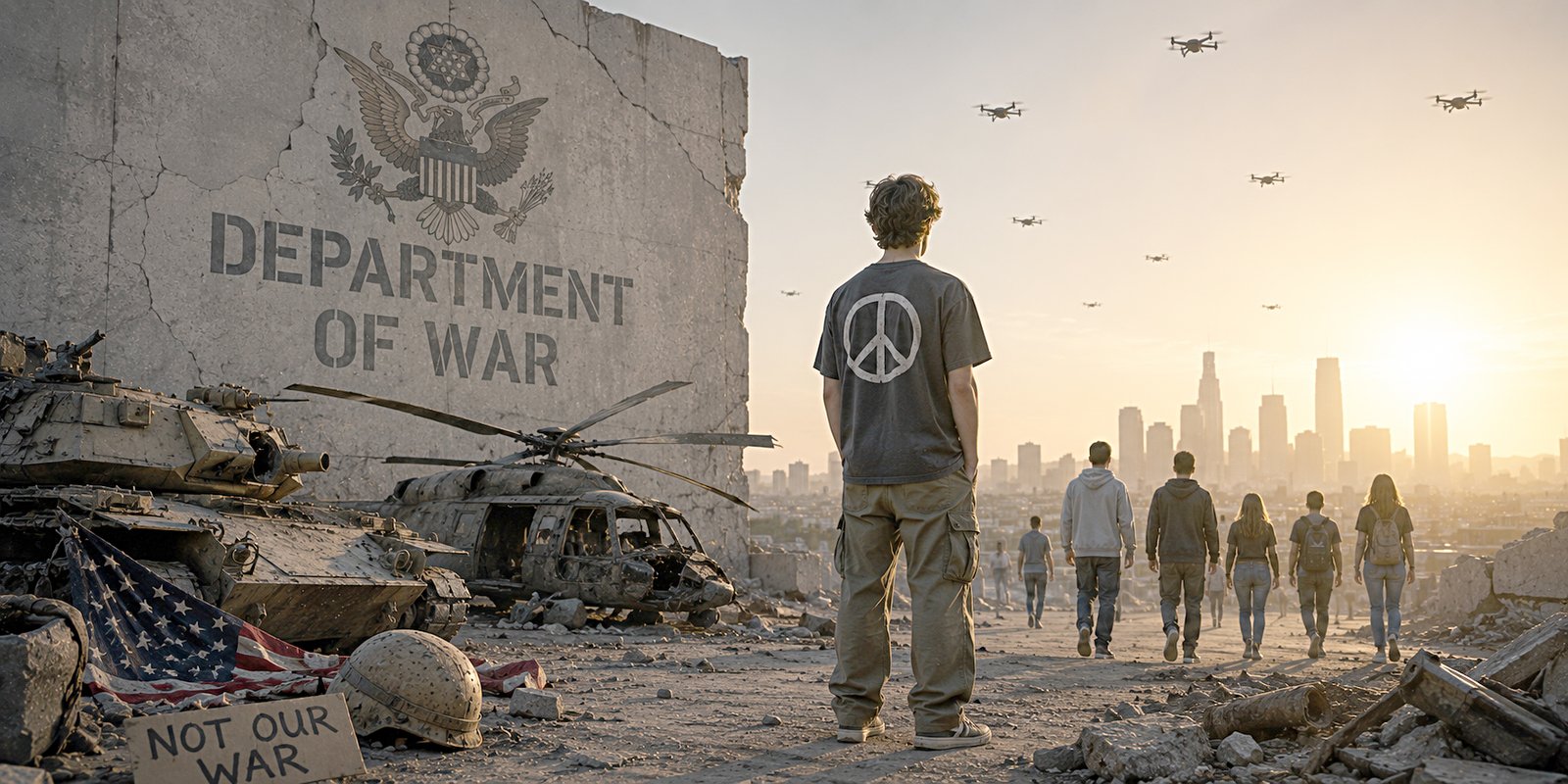
The failures of US militarism have soured the concept for many young Americans
On September 5, 2025, President Donald Trump signed an executive order which revived the original name for the Department of Defense, “The Department of War.” While technically the name remains the Department of Defense for legal purposes (as only an act of Congress can officially change the name), the Trump administration has done everything else in its power to rebrand the institution in this regard, claiming the original name is “woke” and that the change ensures the Department’s “ability to wage war and secure what is ours.”
This name change became part of a long and ever-growing list of controversial actions undertaken by Trump during his second term as President. But for members of Gen Z, in a way, the return to the original name is a return to transparency: war is all we have ever known.
The United States was born in war, and has been engaged in conflicts with other nations for virtually its entire existence. It has become a pillar of the American ethos, the willingness to fight for the virtues of democracy and liberty. This ethos encouraged millions of American men and women to volunteer in the World Wars, and later the Global War on Terror (GWOT). The concept, that one would sacrifice the comfort of home to risk their life for mere beliefs, was normal and encouraged; which was especially noteworthy considering a foreign power has never threatened American soil directly (with the exception of the miniscule Aleutian Islands campaign in World War II).
This changed with Gen Z. Whereas previous generations had grown up in the aftermath of World War II and during the Cold War, in which America’s adversaries were objectively a threat, members of Gen Z were born and raised during the GWOT. For us, war means soldiers travelling thousands of miles overseas, to fight supposedly evil people, in countries we had no idea existed. Considering none of us remember 9/11 and thus have no firsthand emotional attachment, we were constantly reminded our involvement overseas was to “defend our freedoms.”
But when did our freedoms get all the way over there?
Millennials were the last cohort to embrace the call to war. Watching 2,000 people die horribly on live television on September 11 resulted in thousands flocking to recruitment offices. But they were also the first cohort to suffer 21st century combat. The debilitating injuries caused by IEDs, coupled with an increasing pervasiveness of post traumatic stress disorder, changed popular perception of American foreign policy: our soldiers did not bear these sufferings defending our homeland, but rather invading another, far away and under dubious circumstances.
This gradual decline of post 9/11 patriotism was experienced firsthand by Gen Z. While we were young children, we were imbued with the endless commercials and attitudes concerning the GWOT; about how we needed to “support our troops” and how terrorism was an existential threat. But another 9/11, or anything remotely similar, has never happened. As the years went on, the broken men returning with terrifying stories and injuries became more and more questionable: what was the point of their suffering?
Most of Gen Z came of age during or around the time of America’s infamous departure from Afghanistan in 2021. This event signaled the end of almost two decades of American boots on the ground in the Middle East, and also concluded a fact of life that we had all grown accustomed to. But most of all, it confirmed the failure of American militarism, which was a sentiment that had been growing alongside us.
Since the beginning of the 2020s, Gen Z has become more and more vocal in society, becoming a key factor in American politics. We have been forced to mature during a pandemic, climate change, and crises in student debt and unemployment. And most apparent with the Epstein Files, many of us hold the system to be irrevocably flawed, and as such we have the lowest amount of trust in the government and other institutions. Social media has also become our main hub of both entertainment and information; given the endless amount of content and ease of communication, it has been crucial in shaping our attitudes towards politics and society.
This is why Gen Z won’t fight Washington’s next big war–we know too much. Besides the ease of access to graphic videos from the Ukraine War of drone strikes and firefights, social media also shattered the lies created by our leaders. Interviews and videos, especially in short-form content, have enlightened younger people to the realities of things such as CIA activities, American imperialism and hegemony, and the roles of regime change and resource procurement (i.e, oil) in driving American wars. Simply put, we feel like pawns.
Growing up with failed forever conflicts undoubtedly shaped our perception of the concept of war. And since nothing seems to have changed since 2003 (quite literally another “WMD” in the Middle East currently), this disillusionment is likely here to stay. War is just one of several aspects of American society that Gen Z is approaching differently than their predecessors, and it is hopefully something that will be approached differently by our nation as a whole.
Ioannis Vlahos is an editorial assistant and writer for AntiWar.com. He studies history and journalism at George Mason University. Contact: ivlahos93@gmail.com.
Join the Discussion!
We welcome thoughtful and respectful comments. Hateful language, illegal content, or attacks against Antiwar.com will be removed.
For more details, please see our Comment Policy.
[ad_2]
Source link
