
[ad_1]
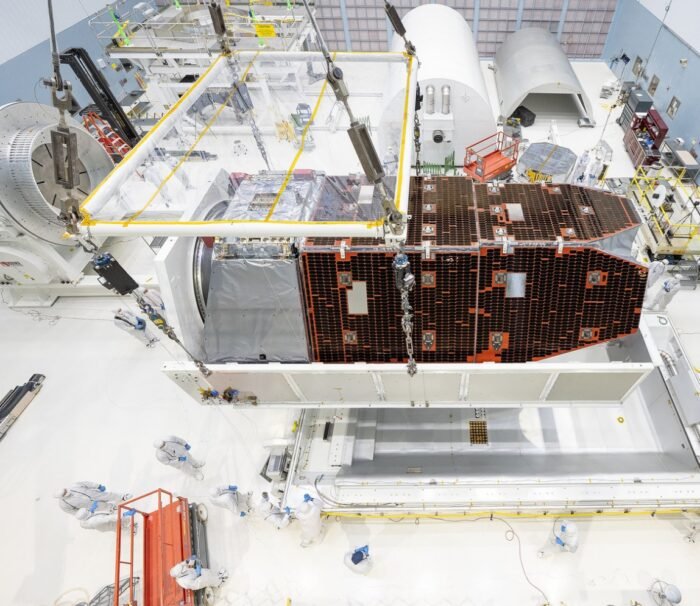
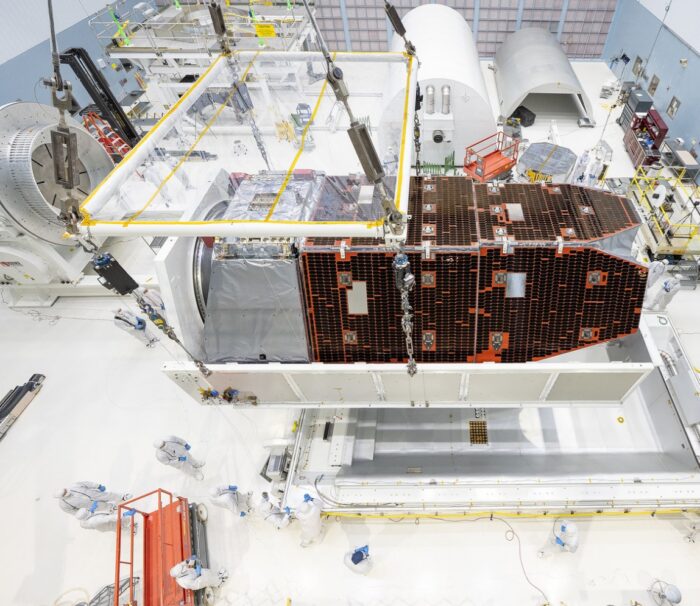 On Sunday August 30, 2026, NASA successfully launched the Nancy Grace Roman space telescope aboard a Space X Falcon Heavy. This telescope has amazing capabilities and will add to our ability to study and understand the universe, with a special focus on dark energy, black holes, and exoplanets. However, the best way to look at such telescopes is as part of a system of instruments, each with complementary trade-offs in abilities. But there are also some genuine technological advancements in this instrument.
The telescope is named after Nancy Grace Roman, who was NASAs first Chief Astronomer and NASA’s first female executive. She is also consider the “Mother of the Hubble” telescope for her critical role in planning and securing funding for the Hubble telescope.
Let’s start with the technical details. The Roman telescope was launched on a journey 1 million miles to the L2 Lagrange point between the Earth and Sun. Lagrange points are locations within overlapping gravitational fields, like the gravitational fields of the Earth and Sun, where there is a balance between the pull of both fields and the centrifugal force of orbiting itself. . The result is net zero forces on an object at a Lagrange point (of which there are 5 between Earth and the Sun). It does functionally act like a gravitational well itself. Roman will be orbiting the L2 point in what’s called a quasi-halo orbit, a large loop that ranges from about 117,000 to 500,000 miles away. The James Webb telescope is in a similar orbit around the same L2 point, but their orbits will keep them safely separated from each other. It will take Roman three months to arrive in its orbit around L2.
The primary mirror of Roman is a wide field infrared camera, with a 2.4 meter lens (the same size as Hubble’s). However, one of Roman’s primary features is that this lens is wide field – it can see 100 times as much of the sky in clear focus at the same time as the Hubble. It has a 300 megapixel camera with which to capture this information. This means it can gather a ton of data quickly, surveying the sky 1000 times faster than the Hubble. It will gather 50 times more data in 5 years than Hubble has in the last 30 years.
Roman also as an advanced coronagraph – this is a telescope designed to precisely block out the glare of a star so that planets around that star can be imaged. This instrument is designed to detect exoplanets, including ones that are smaller and colder than prior instruments and techniques could image. Over the life of Roman it is hoped that This coronagraph will discover tens of thousands of new exoplanets, perhaps as many as 100,000 (currently there are over 6,300 confirmed exoplanets). This will give us a much more thorough view of how planetary systems are typically structured. Also, the instrument is intended to gather information about the atmospheres of exoplanets, to determine their potential for life.
These instruments are best viewed in the context of what other space telescope NASA is operating. Webb, for example, has a narrower but more powerful view, so it can be used to follow up on anything interesting that Roman detects. Also, Roman can be used to view the environment around interesting objects that Webb has been studying. Hubble also can be turned on interesting objects found in Roman’s surveys, looking at them in other wavelengths. Together NASA is building a system of telescopes that together give us a broad and detailed view of the universe through many complementary lenses.
The Roman telescope will also be open access. This means that as soon as the data is processed, it will be made available to the world, so any scientific team can examine and conduct research on the data.
The Roman telescope has a five year mission, which can be extended for another five years for a total operational life span of 10 years. The limiting factor here is its hydrazine fuel. The instrument uses this fuel essentially to move – it will have to occasionally correct its orbit, which will tend to drift. It also has to keep its solar panels properly aligned with the sun. And it needs the fuel to control the internal gyroscopes. Its onboard fuel will last 10 years, however NASA equipped Roman with a refueling port. There is currently no craft that can get to L2 and refuel Roman, but the existence of a refueling port means that such a craft could be built and deployed, potentially extending Roman’s mission much further.
The instruments themselves (anything electrical) is powered by onboard solar panels. They can generate 4.1 kw of power for these instruments, and are paired with a battery to maintain smooth power to delicate instruments. For comparison, a typical US home has a baseload of 1.2kw, and peak energy demand of 5-20 kw. These solar panels also serve a dual purpose as they shade the Roman infrared telescope from the glare and heat of the sun.
What science will be done with the data from the Roman wide field infrared telescope? Well, we will see, but it enable scientists to construct large three dimensional maps of the universe. This will give us more data about the structure of the universe, which is crucial data that informs us about the nature of dark matter and dark energy. Both of these things are “dark” because they have never been directly observed. Their existence is inferred by the structure and movement of the universe. Dark matter is inferred by the apparent presence of more gravity than can be accounted for with visible matter. And dark energy is inferred by the apparent acceleration of the expansion of the universe.
It is great that NASA continues to do incredible science, building an infrastructure of space telescopes that can view the universe in unprecedented breadth, depth, and detail. I was excited when the James Webb telescope was launched, and already it has returned stunning images. I am just as excited now for the Roman telescope and can’t wait to see the flood of science it produces.
[ad_2]
Source link
