
[ad_1]
This is a response to Klaus Ziegler’s critique of my moral case for Hiroshima and Nagasaki.
I want to thank Klaus Ziegler for taking the time to read and respond to my essay, “The Moral Case for Dropping the Atomic Bombs.” He challenges my three propositions that (1) the atomic bombings contributed to Japan’s surrender, (2) without them substantially more people would likely have died, (3) therefore, the destruction of Hiroshima and Nagasaki was morally justified.
Despite Klaus’s thoughtful critique that reveals the many challenging issues involved in the U.S. government’s decision to drop the two atomic bombs on Japan, I stand by these propositions. In fact, since writing that analysis I have read James M. Scott’s fabulous new book, Empire of Ashes: Truman, Hirohito, and the Descent Into Total War, which not only reinforces my conclusions but makes it abundantly clear that President Truman’s decision to use this new weapon to end the war was absolutely the right one. Through 400 pages of gripping narrative grounded in nearly 400 references to primary and secondary sources, Scott concludes, and I agree, with Secretary of War Henry Stimson’s assessment in Harper’s Magazine in 1947 that this was “the least abhorrent choice” among those on the table considered by the administration:
The destruction of Hiroshima and Nagasaki put an end to the Japanese war. It stopped the fire raids, and the strangling blockade. It ended the ghastly specter of a clash of great land armies.
Japan’s Navy Minister Admiral Mitsumasa Yonai agreed:
The atomic bombs and the Soviet entry into the war are, in a sense, gifts from the gods.
Of course, Stimson’s “least abhorrent choice” must always be remembered for what it was by comparison, as Scott concludes his great work:
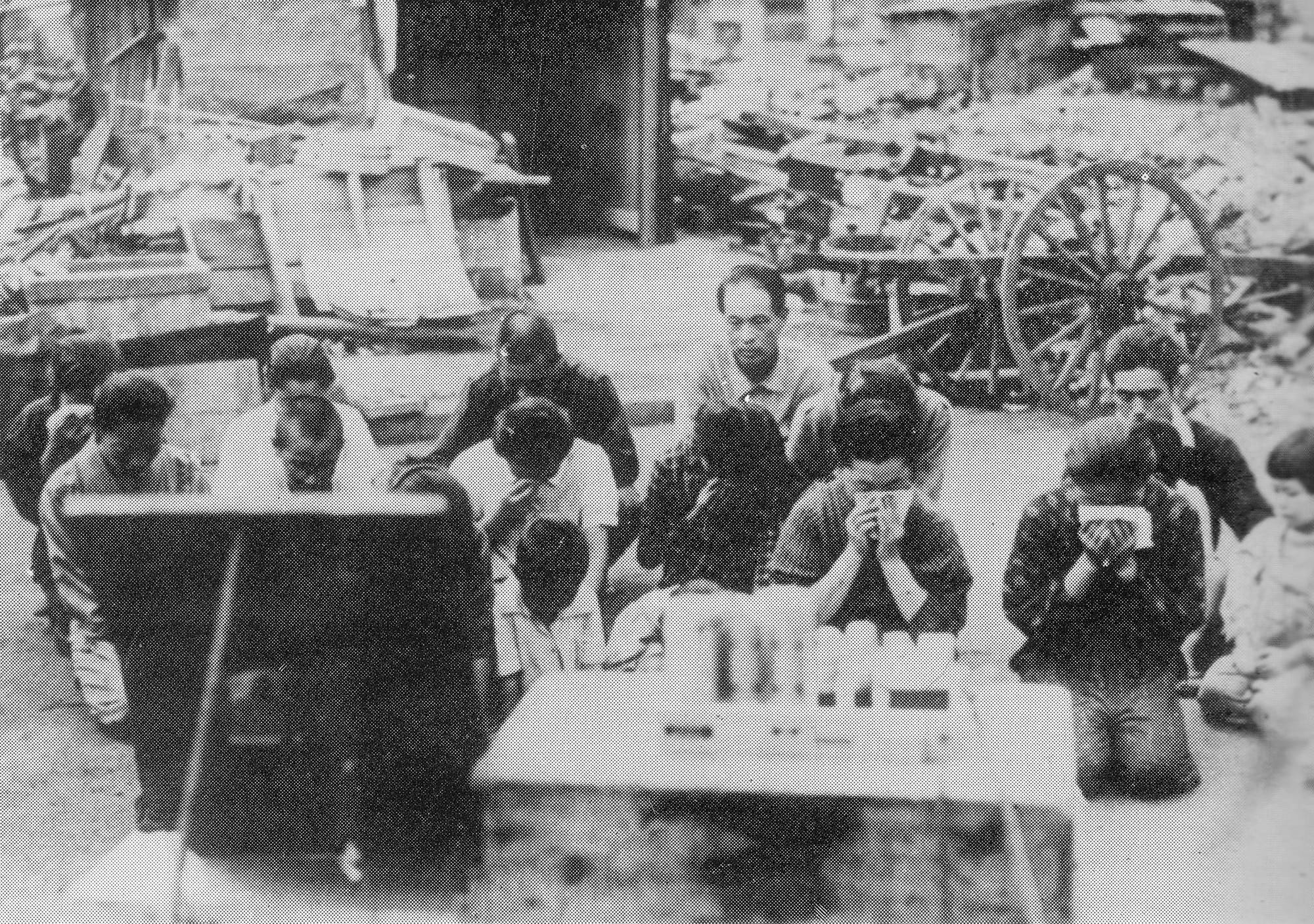
For the people in Hiroshima and Nagasaki, the atomic attacks were anything but a gift. The horror that befell those cities was unimaginable. Equally so was the devastating impact the attacks had on hundreds of thousands of lives, not only those killed but the survivors who battled everything from radiation sickness and painful keloids to the loss of loved ones and homes.
Why didn’t Japan end the carnage earlier, say in 1944 when it was unambiguously obvious they were going to lose the war, or even in 1943 after suffering major battle losses that made it clear the Americans were not going to let Japan have all that it had captured in the way of territories in Indonesia and the Pacific that would fuel their militarism (which is what the nation’s militarists in power hoped would happen after the sneak attack on Pearl Harbor)?
So committed were they to leading Japan into a final Götterdämmerung of death and destruction that they threatened to assassinate anyone who stood in their way…
As Scott reveals in excruciating detail down to the minutes and hours, the six men who ran the country (over which Emperor Hirohito had next to no control), were in unison that the army and the navy would fight to the bitter end, especially after the Potsdam Declaration President Truman signed insisting on unconditional surrender. So committed were they to leading Japan into a final Götterdämmerung of death and destruction that they threatened to assassinate anyone who stood in their way—including Pearl Harbor mastermind Isoroku Yamamoto, fellow generals who slept with pistols under their pillows, and even the Emperor himself.
After turning-point American victories such as at Midway, and especially after the many blood-soaked island-hopping battles in the Solomon Islands, the Gilbert Islands, the Mariana Islands, Iwo Jima, and Okinawa, all won by America’s ever-growing military production capacity, one would think even military-hardened veterans in Japan would have finally given up, especially when they could see all around them their starving citizens who, as one recalled after the 1945 Tokyo bombing, lived like stray dogs in what remained of Japan’s bombed-out cities.
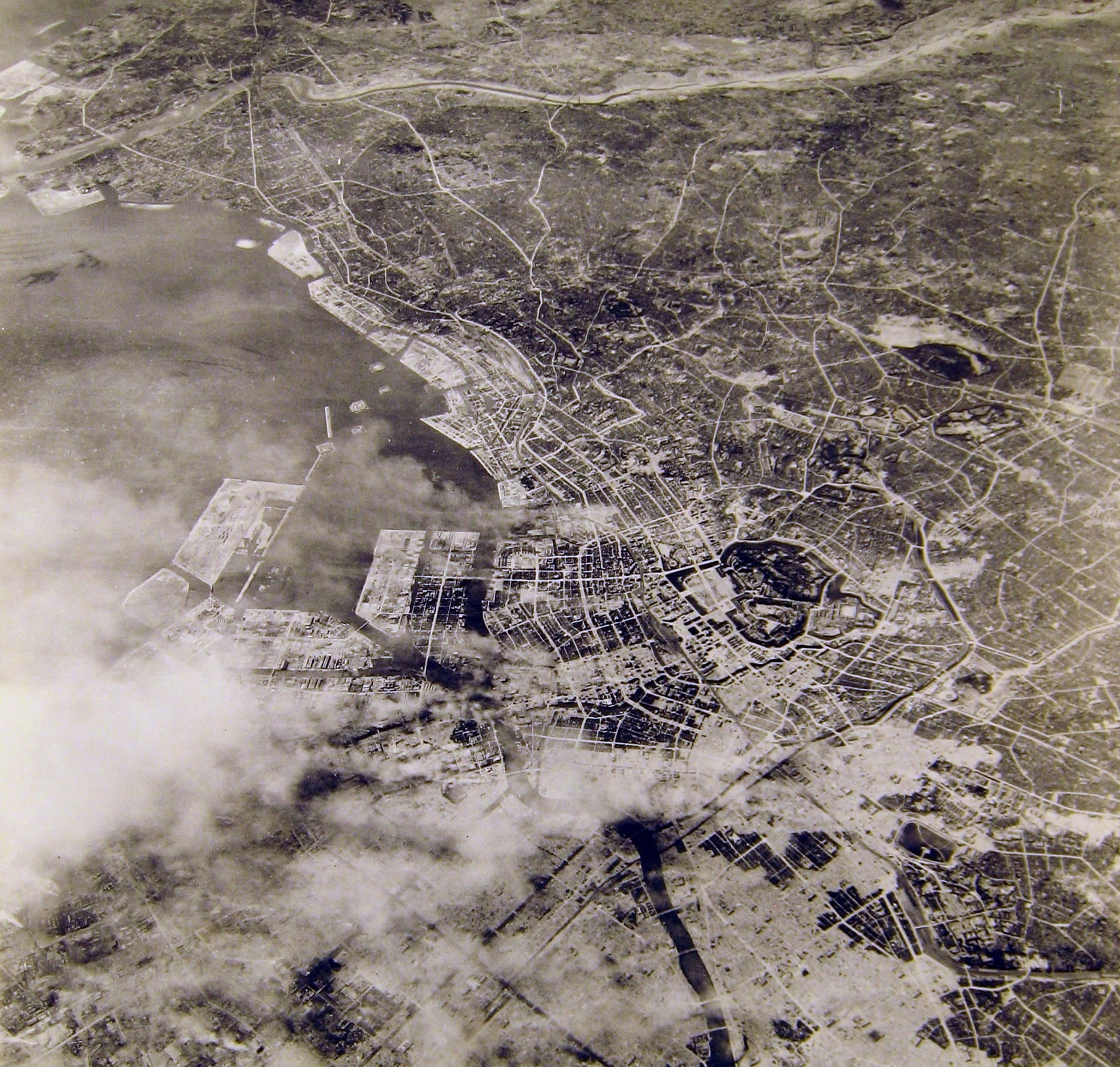
But no! Even after Curtis LeMay’s B-29 bombers reduced Tokyo to rubble and killed over 100,000 Japanese citizens in one night, the Truman administration didn’t hear a peep from the Japanese government, and so America marched on to complete the Manhattan Project, test the bomb at Trinity in New Mexico on July 16, and ship two bombs to Tinian and prepare them for launch. And still not a word of surrender emerged.
August 6. Hiroshima. 90,000–166,000 dead. Silence.
August 7. Nothing.
August 8. The Soviet Union declaration of war against Japan. Dial tone.
August 9. Nagasaki. 60,000–80,000 dead. All quiet on the Western Front.
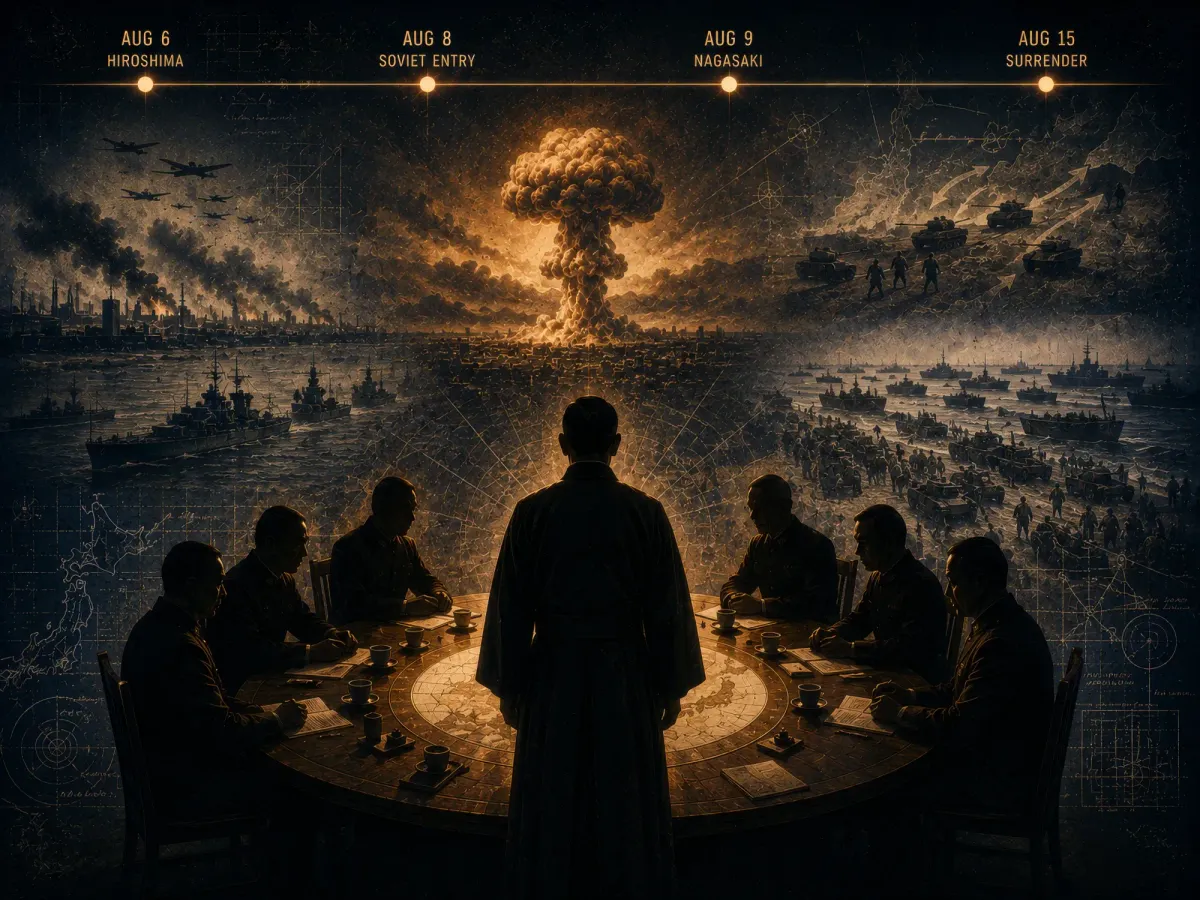
Finally, the Big Six Japanese leaders who held the fate of the entire nation in their hands, met the afternoon of August 9 to discuss what to do next. “The ensuing discussion revealed that the six leaders all agreed that Japan’s imperial structure must be preserved,” Scott writes, adding “but opinions beyond that proved sharply divided.”
Three favored accepting the Potsdam Declaration of unconditional surrender as long as they could retain the monarchy in the form of Emperor Hirohito (Foreign Minister Togo, Admiral Kantaro Suzuki, and Navy Minister Admiral Mitsumasa Yonai), whereas the other three “all imbued with the samurai ethos, wanted to add three additional conditions,” which included “limiting the occupation of the homelands, allowing officers to demobilize their own troops, and permitting Japan to oversee the trials of any suspected war criminals” (War Minister General Korechika Anami, Army Chief of Staff General Yoshijro Umezu, and Navy Chief of Staff Admiral Soemu Toyoda).
When Togo told the three holdouts that this was never going to happen, Umezu boasted that Japan was not defeated because the main islands had not been invaded, adding:
If we are lucky, we will be able to repulse the invaders before they land. At any rate, I can say with assurance that we will be able to destroy the major part of an invading army, that is, we will be able to inflict extremely heavy damage on the enemy.
Although Yonai growled “the war is lost,” Anami countered that it was “far too early to say that the war is lost,” adding “we must fight the war through to the end no matter how great the odds against us!” Umezu, expressing the sunk-cost fallacy (reluctance to abandon a heavily-invested in strategy), opined that “unconditional surrender now would only dishonor the heroic war dead.”
Instead of focusing on what America did to end the war, perhaps more attention should be paid to considering why Japan let it go on for so long…
Finally, at 2:20 a.m. the next morning, the Big Six turned to Emperor Hirohito to break the 3-3 split, who at long last found his spine and moral compass to override the military holdouts, rose to his feet and declared:
I have given serious thought to the situation prevailing at home and abroad and have concluded that continuing the war can only mean destruction for the nation and a prolongation of bloodshed and cruelty in the world. I cannot bear to see my innocent people suffer any longer. Ending the war is the only way to restore world peace and to relieve the nation from the terrible distress with which it is burdened.
On August 15, 1945, Hirohito delivered his “Jewel Voice Broadcast” to the citizens of Japan, and while never using the word “surrender” made it clear what led to his decision:
The enemy has begun to employ a new and most cruel bomb, the power of which to damage is indeed incalculable, taking the toll of many innocent lives. Should we continue to fight, it would not only result in an ultimate collapse and obliteration of the Japanese nation, but also it would lead to the total extinction of human civilization. Such being the case, how are we to save the millions of our subjects or to atone ourselves before the hallowed spirits of our imperial ancestors? This is the reason why we have ordered the acceptance of the provisions of the Joint Declaration of the Powers.
A final point (and counterfactual): there are between 250,000 and one million American families who did not receive letters from their government explaining that their sons had died in the final battle for Japan. Imagine how those families would have responded to President Truman if they learned that we had a weapon that could end the war overnight?
The historical record is now clear: both Hiroshima and Nagasaki were necessary to end the killing. It sounds absurd—kill some now to prevent even more being killed later—but this is not a social psychologist’s laboratory in moral reasoning but a tragic ending to an even more tragic war begun by the Japanese, who could have surrendered unconditionally any time before August and saved hundreds of thousands or even more of their citizens. Instead of focusing on what America did to end the war, perhaps more attention should be paid to considering why Japan let it go on for so long in the teeth of overwhelming evidence that they could only lose.
[ad_2]
Source link


