
[ad_1]
To most of us, at least at a first glance, maps appear to describe reality. They show states, borders, capitals, and frontiers with the reassuring precision of geography. We learn them at school, consult them in newspapers, and rarely question the assumptions they contain. A mountain either exists or it does not, and a river follows its course. A border appears equally factual.
But maps don’t simply record the world “as it is”—they record political settlements. Every border reflects decisions made by people under particular historical circumstances, typically through wars, negotiations, or revolutions. Unlike mountains and rivers, they are neither inevitable nor permanent. They are products of history. Yet something curious happens with time. Political settlements gradually lose their appearance of contingency. What began as one solution to one historical problem or circumstance comes to be treated as reality itself, and the map appears to describe the natural order of the world.
This is not an argument against borders. Almost every political community requires them. Nor is it an argument that every territorial claim deserves recognition—most do not. The question I pose today is a different and more skeptical one: Can political settlements become so familiar that we stop asking whether they still describe political reality?
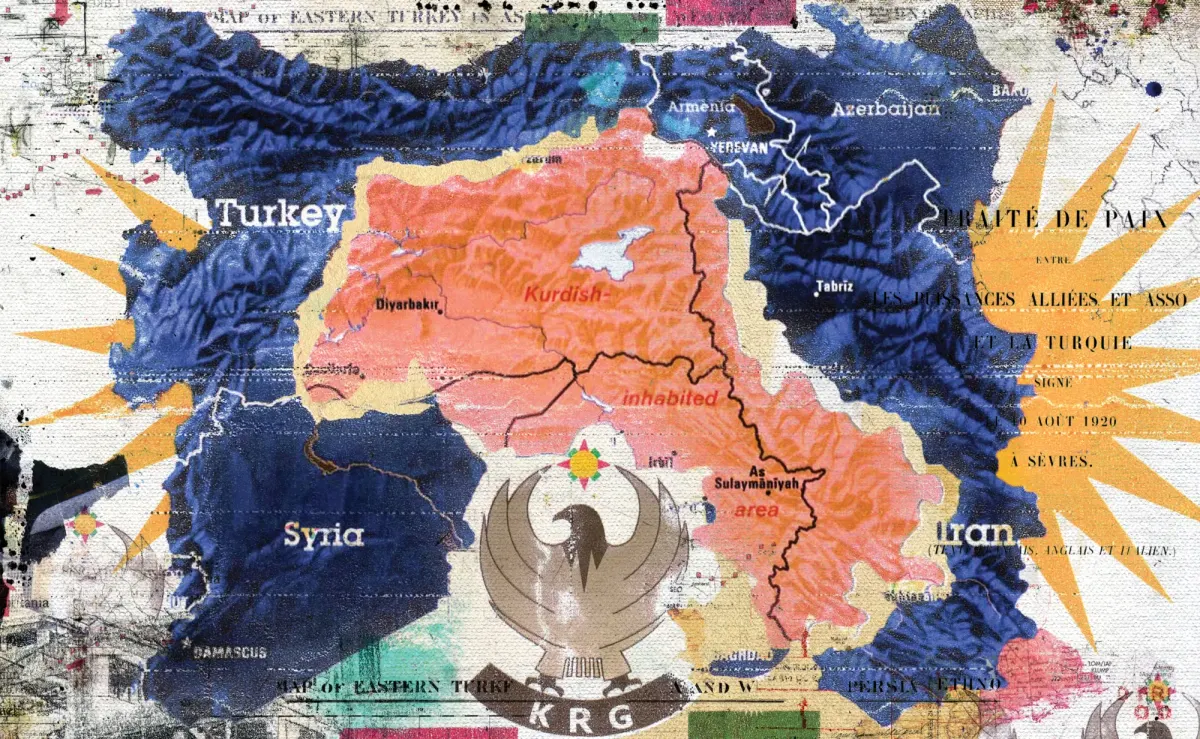
Look at a modern map of the Middle East and you will find, among many, Turkey, Iraq, Iran, and Syria. But you will not find a state called Kurdistan. The Kurds are commonly described as one of the world’s largest stateless peoples. Estimates vary because the states in which Kurds live do not all collect ethnicity data in comparable ways. Roughly 30 to 35 million Kurds live primarily across Turkey, Iraq, Iran, and Syria, with a large diaspora in Europe and elsewhere. They speak several closely related varieties of Kurdish, principally Kurmanji and Sorani, and have maintained a distinct cultural and historical identity for centuries. Modern Kurdish nationalism developed mainly in the late nineteenth and early twentieth centuries.
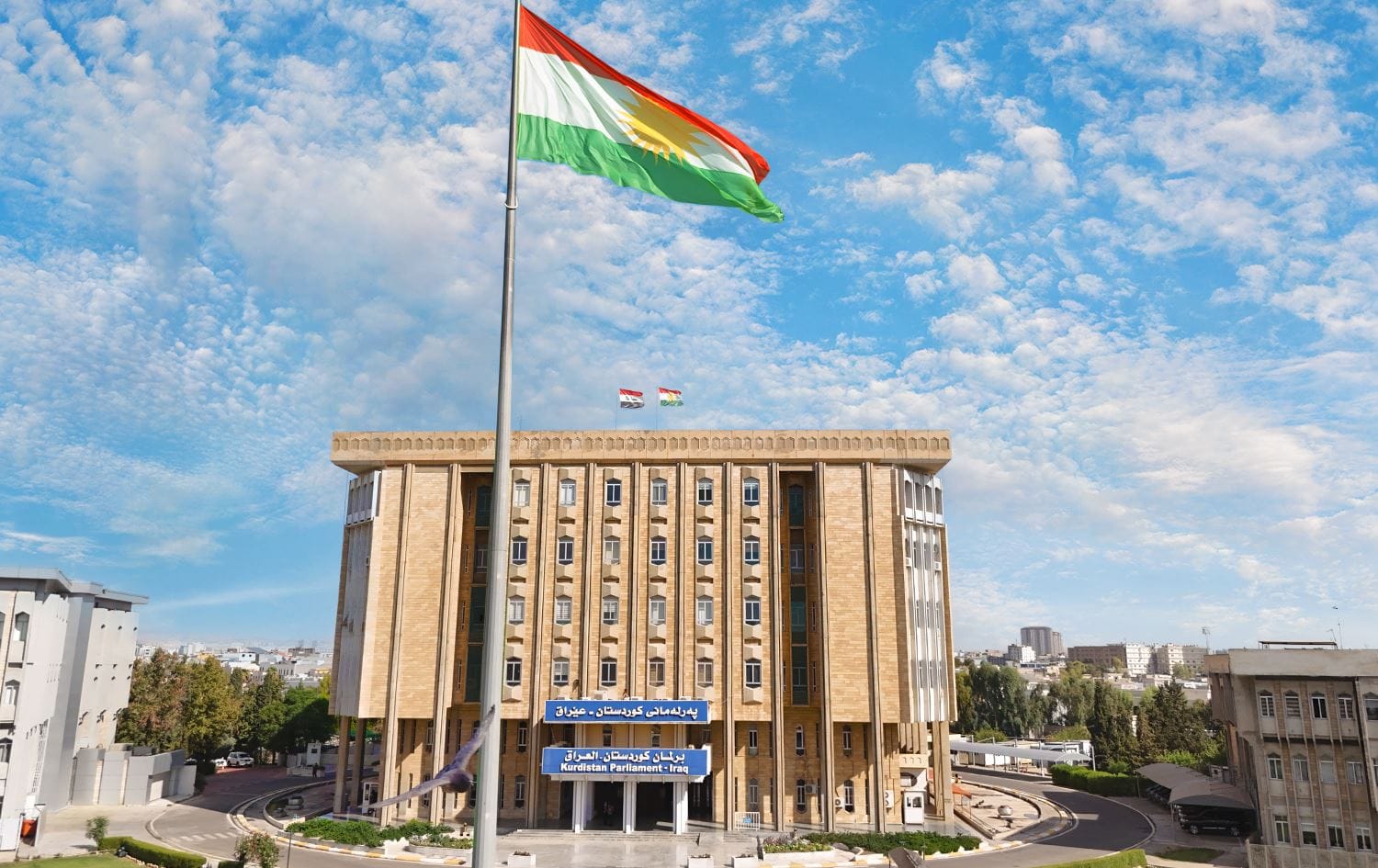
Today Kurdish political life ranges from constitutional self-government in the Kurdistan Region of Iraq, with its own parliament, presidency, government, universities, courts, and security institutions, to autonomous or party-led structures elsewhere. Kurdish armed forces are equally diverse: the Peshmerga serve the Kurdistan Region in Iraq, while Kurdish-led forces such as the YPG, YPJ, and later the Syrian Democratic Forces emerged during the Syrian civil war. The expression “the Kurds,” therefore, describes not a single political organization but a dispersed people living under very different political systems.
Borders and Spectrums
Long before diplomats drew the borders of the modern Middle East, Kurdish communities inhabited the mountainous region stretching across what are today southeastern Turkey, northern Iraq, western Iran, and northern Syria. They spoke related languages, cultivated rich literary and oral traditions, developed local institutions, and sustained a historical memory tied to a recognizable homeland. For centuries, Kurdish communities lived within the Ottoman and Persian empires. These empires exercised authority unevenly, often governing through local rulers, tribal confederations, religious leaders, and hereditary principalities, rather than through a single centralized administration. Imperial rule could be harsh, arbitrary, and violent, but it often left substantial room for local institutions to manage everyday life.
As the great empires gave way to modern nation-states, governments increasingly sought a different kind of authority: one language, one educational system, one army, one bureaucracy, one national history, and one political identity. Diversity that imperial systems had often accommodated imperfectly now appeared increasingly as a problem to be solved. The Kurdish question emerged within this transformation, created by the encounter between an older political community and a newer model of statehood that increasingly struggled to accommodate communities whose identities did not fit neatly within its national framework.
The First World War shattered the political order that had governed much of the Middle East for centuries. As the Ottoman Empire collapsed, its territories became the subject of negotiation among the victorious powers. Across the region, peoples who had long lived under imperial rule suddenly found themselves confronting a new political language: national self-determination.
Once the new borders gained international recognition, they acquired legal authority and, consequently, a presumption of permanence.
For the Kurds, this appeared to offer an unprecedented opportunity. Kurdish representatives argued that they constituted a distinct people with their own historical homeland and therefore deserved political recognition within the emerging international order. They were not alone in making such claims. Armenians, Arabs, Zionists, Persians, and other communities and governments were also advancing claims about sovereignty, mandates, borders, national government, or self-determination as the Ottoman order was dismantled.
But Kurds faced a particular disadvantage. Unlike several neighboring national movements, they possessed neither a unified government nor a single diplomatic leadership capable of speaking for all Kurdish regions. Their political reality exceeded their level of political organization. Among the most prominent Kurdish advocates was Şerif Pasha, a former Ottoman diplomat who presented a memorandum on Kurdish claims to the Paris Peace Conference in 1919. Acting as a leading Kurdish representative in Paris, he argued for recognition of a Kurdish political homeland in the post-Ottoman settlement, and submitted maps and territorial claims intended to give the Kurdish case diplomatic form. His position did not represent every Kurdish leader or region, but it was one of the clearest attempts to place Kurdish self-determination before the victorious powers in formal international diplomacy.
In 1920, the Treaty of Sèvres recognized, at least in principle, the possibility of Kurdish autonomy and, under certain conditions, eventual independence in parts of the former Ottoman Empire. The treaty settled almost nothing, but it briefly established that the international order at the time acknowledged a Kurdish political future as conceivable. Barely three years later, that possibility disappeared.
Military victories by the Turkish nationalist movement transformed the diplomatic landscape. In 1923, the Treaty of Lausanne replaced Sèvres, recognized the sovereignty of the new Turkish Republic, and abandoned the earlier provisions concerning Kurdish autonomy.
By the mid-1920s, the basic framework had been set. The Ottoman Empire was gone. The Republic of Turkey had been recognized. Iraq had been constructed under British influence with Mosul included. Syria had been placed under French mandate. Iran continued its own centralizing state project. Kurdistan was divided among Turkey, Iraq, Iran, and Syria. The Kurds did not move. The borders moved over them. A Kurd in Turkey now faced one state, one army, one ideology, one school system, one prison system, one legal vocabulary. A Kurd in Iraq faced another. A Kurd in Iran another. A Kurd in Syria yet another.
Once the new borders gained international recognition, they acquired legal authority and, consequently, a presumption of permanence. Questions that had recently belonged to international diplomacy were reclassified as domestic affairs. Kurdish demands for self-government were no longer debates about the political order of the Middle East. They became internal problems for the states that governed Kurdish populations.
In Turkey, Kurdishness was long treated as a defect in the project of one Turkish nation. The republic presented itself as modern, secular, civilizing, and unified. Kurdish language, memory, and self-rule appeared as backwardness or a threat to national unity. In Iraq, Britain acknowledged Kurdish distinctiveness when useful, then subordinated Kurdish self-rule when it interfered with the Iraq it wanted to build. Later Iraqi regimes, especially the Baathist state, would take this contradiction to catastrophic extremes through Arabization, village destruction, chemical attacks, and the genocidal Anfal campaign.
Maps don’t simply record the world “as it is”—they record political settlements. Every border reflects decisions made by people under particular historical circumstances.
In Iran, Kurdish leaders negotiated, organized, or declared self-rule in moments of state fragility, only to face execution or repression once Tehran regained strength. Iranian state forms changed—Qajar, Pahlavi, Islamic Republic—but Kurdish self-rule was repeatedly treated as a threat to central authority. In Syria, denial often worked more quietly. It operated through language restrictions, Arabization, and administrative erasure. Many Kurds in Syria were rendered stateless after the 1962 census. Kurdish identity was made faint in public life, not always through spectacular massacre, but through the slow violence of non-recognition.
This shift profoundly altered the burden of justification. Now, those seeking to change the (newly) established borders had to explain and advocate why they should be changed. The question was no longer What political arrangement best reflects the peoples of the region? but rather How can political aspirations be accommodated without disturbing the existing map?
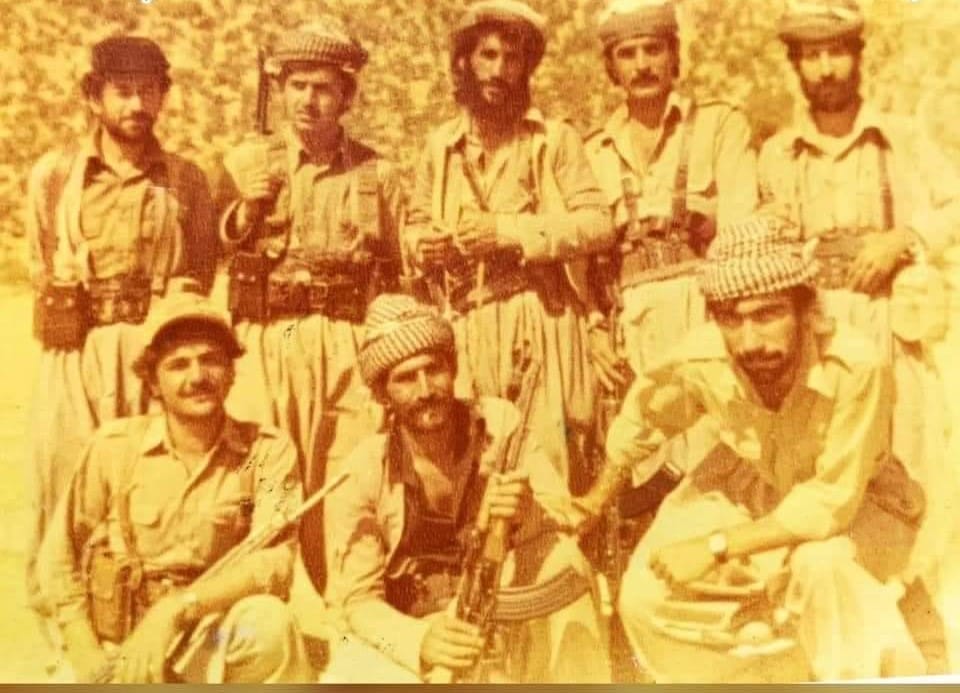
If the Kurdish question were simply the story of a people denied a state, its history would read like a sequence of unrelated defeats and occasional victories. One rebellion follows another. One uprising succeeds briefly before being crushed. One generation places its hopes in diplomacy, another in armed struggle, another in constitutional politics. Look more closely, however, and you’ll notice that Kurdish self-government has often advanced when central governments were weak or when outside powers provided protection, only to become vulnerable when the regional balance of power changed.
Brief Experiments in Kurdish Statehood
The collapse of the Ottoman Empire created several opportunities for Kurdish self-government, although none produced a durable state. One of the first arose around Sulaymaniyah, in what is now the Kurdistan Region of Iraq. After the First World War, British authorities appointed Sheikh Mahmud Barzanji, an influential religious and tribal leader, as governor of the area. He soon sought greater independence from British control and led an uprising in 1919.
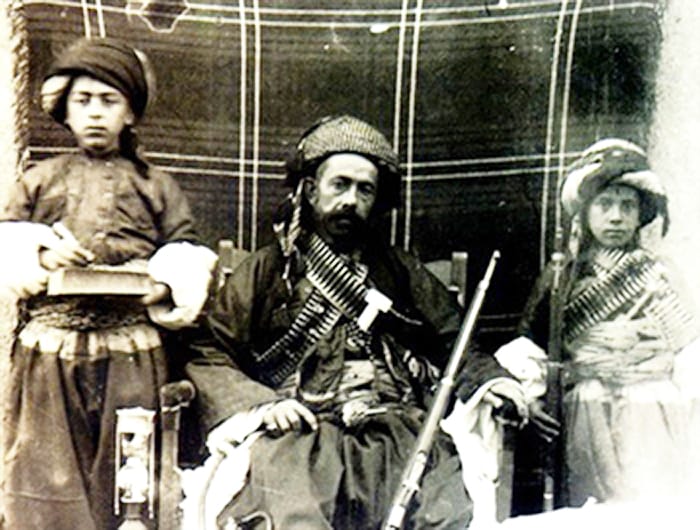
After a period of imprisonment and exile, he returned to Sulaymaniyah and in 1922 assumed the title King of Kurdistan. His authority extended over a relatively small territory and depended heavily on religious standing, tribal alliances, and personal loyalty. British and Iraqi forces eventually ended the experiment. It was a limited and politically fragile precursor to modern Kurdish nationalism, but it established an early precedent for Kurdish attempts to turn the collapse of Ottoman rule into political sovereignty.
A more developed experiment appeared in northwestern Iran after the Second World War. The Republic of Mahabad was proclaimed in January 1946 under Qazi Muhammad, leader of the newly established Kurdish Democratic Party. The republic established a government and promoted Kurdish-language education, publishing, and political organization. Its emergence was closely connected to the Soviet occupation of northern Iran, however, and Soviet military and economic support was important to its survival. When Soviet forces withdrew in 1946, the republic lost its principal external protection. Iranian forces reoccupied Mahabad in December, and Qazi Muhammad was executed in March 1947.
The most durable Kurdish political project began in Kurdistan after the 1991 Iraq Gulf War. Kurds rebelled against Saddam Hussein’s government, and the regime’s counteroffensive produced a mass exodus toward Turkey and Iran. The international response included Operation Provide Comfort, a security zone in northern Iraq, and restrictions on Iraqi military aircraft. These measures helped create an area beyond Baghdad’s effective control in which Kurdish political institutions could develop.
Kurdish identity was made faint in public life, not always through spectacular massacre, but through the slow violence of non-recognition.
In May 1992, Kurds in Iraq held parliamentary elections and established a regional legislature and government. The political system was imperfect from the beginning. The Kurdistan Democratic Party (KDP) and Patriotic Union of Kurdistan (PUK) dominated political life, and their rivalry developed into armed conflict in the mid-1990s. The two parties effectively governed separate zones until a U.S.-brokered agreement in 1998 helped end the fighting. Nevertheless, the Kurdish administration survived and gradually developed into a durable regional government.
The overthrow of Saddam Hussein in 2003 strengthened its legal position. Iraq’s 2005 Constitution formally recognized the Kurdistan Region and its existing authorities as a federal region. Kurdish self-government was therefore incorporated into the constitutional structure of the new Iraqi state rather than existing solely through foreign protection or Baghdad’s weakness. Over more than three decades of substantially autonomous Kurdish government in Kurdistan in Iraq, the Kurds have demonstrated the ability to administer territory, maintain public institutions, conduct elections, provide security, and negotiate with foreign governments over an extended period.
Another Kurdish-led political system emerged during the Syrian civil war. Beginning in 2012, as Syrian government forces withdrew from much of the north, the Democratic Union Party (PYD) and its armed forces, the YPG and YPJ, established control over several predominantly Kurdish areas. These territories later developed into a broader autonomous administration encompassing Kurdish, Arab, Assyrian, and other communities. The governing project, commonly associated with the Kurdish name Rojava, placed unusual emphasis on decentralized administration, political participation of women, and multiethnic representation.
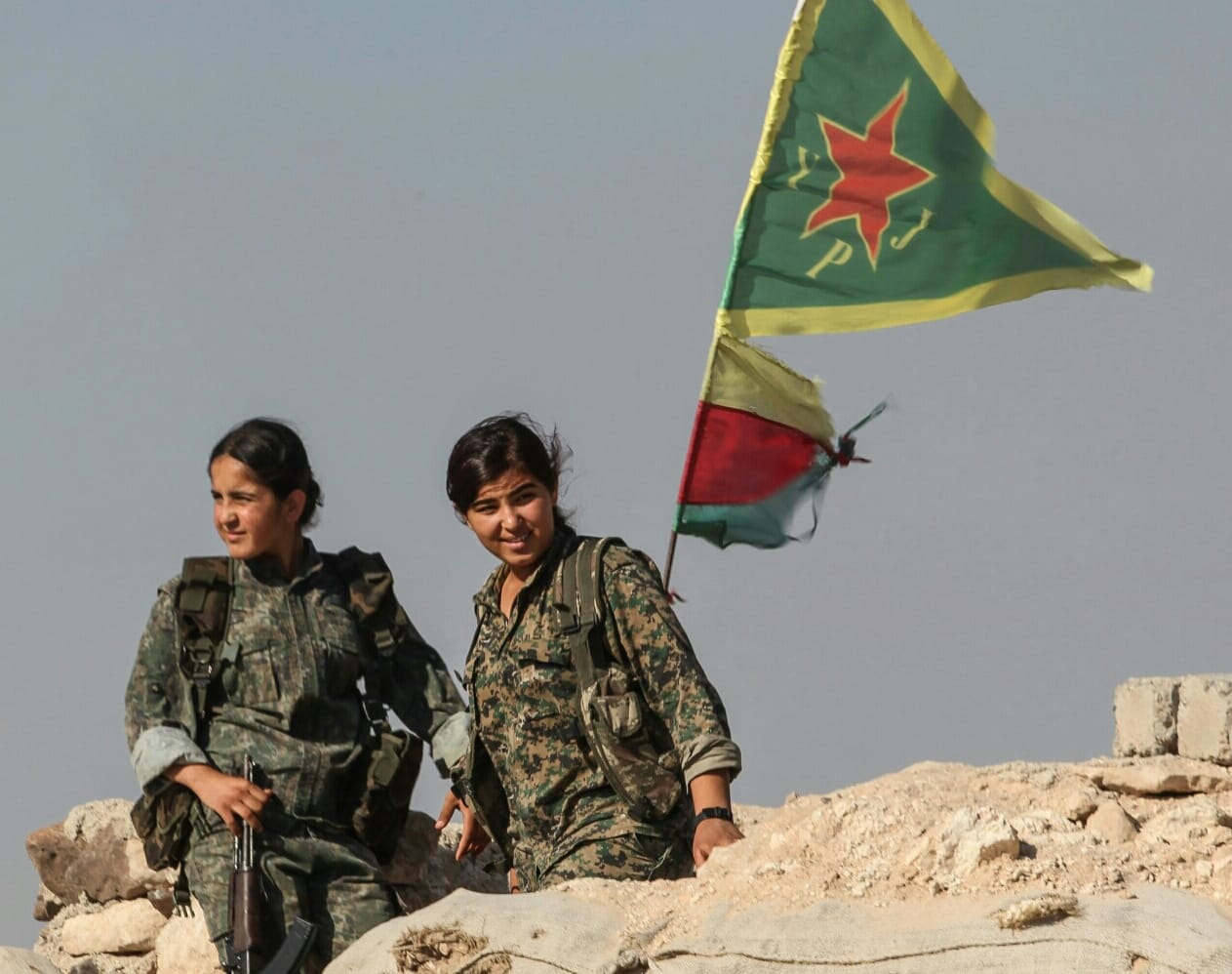
The rise of the Islamic State in 2014 gave Kurdish forces a much larger military role. ISIS captured Mosul, conquered large areas of Iraq and Syria, and carried out a genocidal campaign against the Yazidis of Sinjar. The Kurdish response was not uniform. Peshmerga units, the armed forces of Iraq’s autonomous Kurdistan Region, withdrew from much of Sinjar as ISIS advanced in August 2014, leaving Yazidi communities exposed to mass killing, enslavement, and forced displacement. Syrian Kurdish YPG fighters and forces associated with the Turkey-based Kurdistan Workers’ Party (PKK) subsequently helped establish an escape route from Mount Sinjar. Kurdish forces in both Iraq and Syria then became increasingly important in the wider campaign against ISIS.
In Syria, the YPG and YPJ played a central role in the defense of Kobani, and the later Syrian Democratic Forces became the principal local partner of the U.S.-led coalition in much of the campaign against ISIS. In Iraq, Peshmerga forces fought alongside Iraqi and coalition forces across a long front. The war demonstrated that Kurdish institutions were capable of fielding organized military forces and cooperating extensively with Western governments even in the absence of an independent Kurdish state.
That experience contributed to the Kurdistan Regional Government’s decision to hold an independence referendum on September 25, 2017. The ballot covered the recognized Kurdistan Region as well as disputed territories then under Kurdish control, including Kirkuk. According to the regional electoral commission, 92.73 percent of participating voters supported independence, with turnout above 70 percent. The size of the majority provided unusually clear evidence of support for statehood among those who voted, although the inclusion of disputed territories made the referendum more contentious.
The referendum had little international backing. Iraq rejected it as unconstitutional. Turkey and Iran, both of which have large Kurdish populations of their own, strongly opposed it. The United States also opposed holding the vote at that time, arguing that it could destabilize Iraq and complicate the final stages of the war against ISIS. The United Nations likewise warned against a unilateral referendum.
The stronger contemporary case rests on self-determination and demonstrated political capacity.
The consequences came quickly. In October 2017, Iraqi federal forces moved into Kirkuk and other disputed territories that Kurdish forces had controlled since the collapse of the Iraqi army in 2014. Divisions between the two main Iraqi Kurdish political parties, the KDP and PUK, contributed to the rapid Kurdish withdrawal. The referendum therefore produced an unusual result: an overwhelming vote for independence followed almost immediately by a reduction in Kurdish territorial and political leverage.
These episodes form an important part of the modern case for Kurdish statehood. They show repeated attempts to establish political institutions across several parts of the Kurdish-populated Middle East, as well as sustained popular support for self-government.
Kurdish-majority territory remains divided among four existing countries; many of the areas claimed by Kurdish nationalists contain substantial Arab, Turkmen, Assyrian, Armenian, Yazidi, and other populations.
Institutions and Governing Capacity
Past persecution supplies only part of the argument for Kurdish statehood. The stronger contemporary case rests on self-determination and demonstrated political capacity. The Kurdistan Region in Iraq in particular has functioned as a largely self-governing political entity since 1991 and as a constitutionally recognized federal region since 2005. Its institutions have serious deficiencies, but they have also endured for more than three decades. The 2017 referendum showed that independence has broad support among its electorate. Whether those facts justify changing Iraq’s borders is ultimately a political and moral judgment.
The Kurds have repeatedly shown they can establish institutions when the geopolitical space allows. Sheikh Mahmud’s short-lived government around Sulaymaniyah combined personal, religious, tribal, and administrative authority, but remained narrow and fragile. The Republic of Mahabad went further, creating a government, political administration, Kurdish-language education, publishing, and organized national institutions before Iranian forces reoccupied the area.
After 1991, the Kurdistan Region in Iraq developed the most durable example: parliamentary elections in 1992 produced an elected legislature, a regional government, and a judicial council; after 2005 these institutions, as well as universities, gained formal recognition within Iraq’s federal constitution. In Rojava (Syria), Kurdish-led authorities developed local councils, civilian administrations, security forces, and other institutions we commonly associate with modern governance, including gender parity and multiethnic participation.
These relatively recent experiments with Kurdish statehood in Iraq and Syria do not prove that a future Kurdistan would necessarily be democratic, but they do show that Kurdish political life has already produced institutional experiments that can be evaluated, criticized, and improved rather than dismissed as purely hypothetical.
[ad_2]
Source link


