
[ad_1]
Juan Cole for Informed Comment
The announcement by President Trump on Friday that he had decided not to pursue further attacks on Iran for the moment after a round of tit for tat strikes midweek provoked two different reactions in Iran
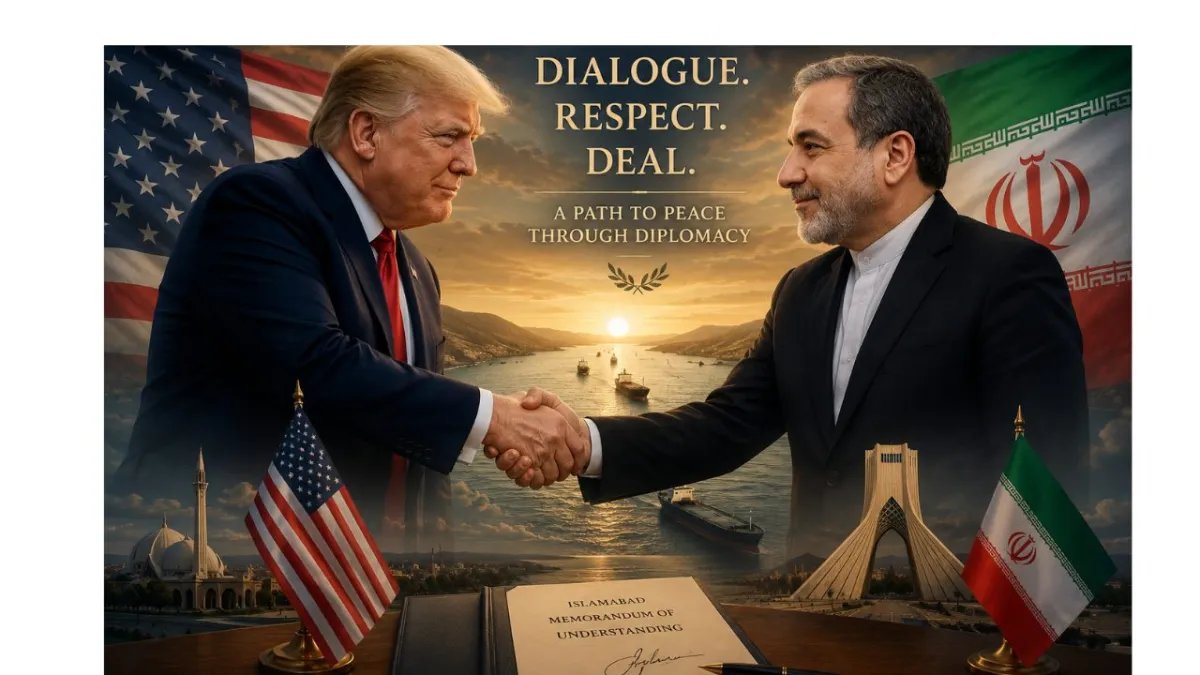
Foreign Minister Abbas Araghchi confirmed that negotiations are nearing success, saying that the Islamabad MOU “has never been closer. “This sort of response from Tehran is rare. Often Trump announces breakthroughs in the talks that are denied by Tehran, and the American public suspects he is just manipulating the stock market. But this time, the Iranian foreign minister concurred. In part, this alacrity may have been intended to forestall further American strikes, some of which hit radar installations and so blinded the Iranian Revolutionary Guards Corps in their attempt to keep tight surveillance on civilian vessels in the Gulf so as to maintain as much of its Hormuz blockade as it can. That blockade is Iran’s only leverage over the US, and it is eroding.
In an incredible development, Donald Trump actually reposted Araghchi’s message on his Truth Social. For Trump to retweet Araghchi is an unexpected and remarkable development.
Earlier, on June 11, sources close to the hardliners in the Iranian Revolutionary Guards Corps (IRGC) denied that a new round of talks had begun. It is not clear what this assertion meant, since talks have been ongoing, with Pakistani, Qatari and other mediation. It could just be that the IRGC sinply did not want to look weak while Iran was being attacked. Another IRGC source denied that a final draft of the agreement was ready. ( H/t to BBC Monitoring for links.)
During the most recent two days of exchange of fire between the US and Iran, the IRGC had announced the the Strait of Hormuz was completely closed to shipping. As the US was striking Iranian infrastructure, including petrochemical plants and a water reservoir in the south (a war crime), the head of Iran’s Air Force or as they style it “Aerospace Forces,” Brig. Gen. Majid Musavi, warned the US against meddling with the “sacred [muqaddas] Strait of Hormuz,” saying that Iran could make the region “hell” for America.

Photo by Alireza Akhlaghi: Pexels
I thought Musavi’s terminology here interesting. I hadn’t seen an Iranian official call the Strait “holy” before, and there isn’t really a good basis for so considering it as far as I know in Islamic or Shia sacred geography. There is of course an old, pre-Islamic Zoroastrian notion that all of the land of Iran, Iranzamin, is holy. And French Islam specialist Henri Corbin argued that Iranian Shiism accepted many Zoroastrian ideas and symbols. Corbin was certainly right; even some Zoroastrian angels are accepted.
It is a reminder of the different stakes for Iran and the United States. The Iranian government is fighting for control of its own soil, which Netanyahu and Trump tried to deny it. From Tehran’s point of view, that is sacred territory.
Juan Cole is the founder and chief editor of Informed Comment. He is Richard P. Mitchell Distinguished University Professor in the History Department at the University of Michigan He is author of, among many other books, Muhammad: Prophet of Peace amid the Clash of Empires and The Rubaiyat of Omar Khayyam. Follow him on Twitter at @jricole or the Informed Comment Facebook Page
Editor’s Note: At a moment when the once vaunted model of responsible journalism is overwhelmingly the play thing of self-serving billionaires and their corporate scribes, alternatives of integrity are desperately needed, and ScheerPost is one of them. Please support our independent journalism by contributing to our online donation platform, Network for Good, or send a check to our new PO Box. We can’t thank you enough, and promise to keep bringing you this kind of vital news.
You can also make a donation to our PayPal or subscribe to our Patreon.
Please share this story and help us grow our network!
[ad_2]
Source link
