
[ad_1]
Norliza binti Saleh for Middle East Monitor
The latest exchange between Iran and Israel raises a fundamental question: Who is really driving events in the Middle East – Washington or Jerusalem?
Following Israeli strikes on targets in Beirut, Lebanon, Iran responded with strikes against northern Israel and military facilities around Haifa. Israel then immediately retaliated by attacking Tehran, Tabriz, Karaj and Isfahan. While the ceasefire between the United States and Iran is technically in place, the broader regional conflict continues to intensify. Throughout the crisis, President Donald Trump has repeatedly expressed support for de-escalation and urged all parties to avoid a wider war.
Yet events on the ground suggest that Washington’s desire for stability may not necessarily translate into restraint by its closest ally. The current crisis is becoming a test not only of regional security but also of American influence itself.
The Trump administration appears reluctant to become involved in another prolonged West Asian conflict. Unlike previous periods of direct American military engagement in the region, Washington’s priorities today are largely domestic and economic.
A wider regional war would almost certainly increase energy prices, disrupt global trade routes, and create uncertainty in international markets. Such instability would undermine economic recovery efforts and place additional pressure on American households.
For Trump, who has consistently portrayed himself as a leader focused on domestic prosperity rather than foreign military adventures, another regional war offers few political benefits.
This explains why Washington continues to advocate restraint and emphasize the importance of maintaining the ceasefire framework currently in place.
Israel, however, views the situation through a different lens.
From the Israeli perspective, Hezbollah and Iran remain immediate security threats that cannot be ignored. Israeli leaders claim that military pressure is necessary to weaken these adversaries, regardless of American concerns about regional escalation.
Yet security alone does not fully explain Israel’s actions.
The conflict is also intertwined with political and ideological ambitions. The influential factions within the Israeli regime continue to be influenced by a broader vision of expanding Israel’s strategic footprint in the region, often associated with the concept of “Greater Israel”.
In this reading, Lebanon is not merely a battlefield but part of a wider Israeli expansionist project.
This creates an important divergence between American strategic interests and Israeli security calculations. The result is an increasingly visible gap between what the United States wants and what Israel is prepared to do.
Recent developments have also highlighted Iran’s growing strategic importance. Iran occupies a critical geographical position overlooking the Strait of Hormuz, through which a significant portion of the world’s oil and gas supplies passes. Any disruption to this maritime chokepoint would immediately affect global energy markets and international trade.
More importantly, external pressure has strengthened domestic unity within Iran. The groups that previously disagreed with the government have increasingly rallied around the state in response to external threats. Regionally, Iran has demonstrated both military capability and strategic reach, reinforcing its position as a major regional power whose actions can no longer be ignored. Recent events have witnessed that Iran possesses significant leverage over regional security and global energy stability.
The central issue, therefore, is not whether Trump supports a ceasefire. He clearly does.
The real question is whether Washington possesses sufficient leverage to translate its preference into Israeli behaviour.
If Israeli military operations continue despite American calls for restraint, observers will inevitably question the extent of US influence over its closest ally.
This matters because American credibility remains a key pillar of regional stability. If Washington is unable to shape the actions of partners that depend heavily on American diplomatic, financial and military support, its broader influence across West Asia may also come under scrutiny.
Failure to contain the current escalation carries risks far beyond West Asia. A wider Iran-Israel confrontation could threaten critical energy routes, including the Strait of Hormuz and other regional maritime chokepoints. Rising energy prices would affect economies worldwide, including countries geographically distant from the conflict such as Malaysia.
At the same time, continued instability risks expanding the conflict across multiple fronts involving Lebanon, Syria, Iraq and the Red Sea region. The longer the crisis continues, the greater the likelihood of miscalculation by one or more actors.

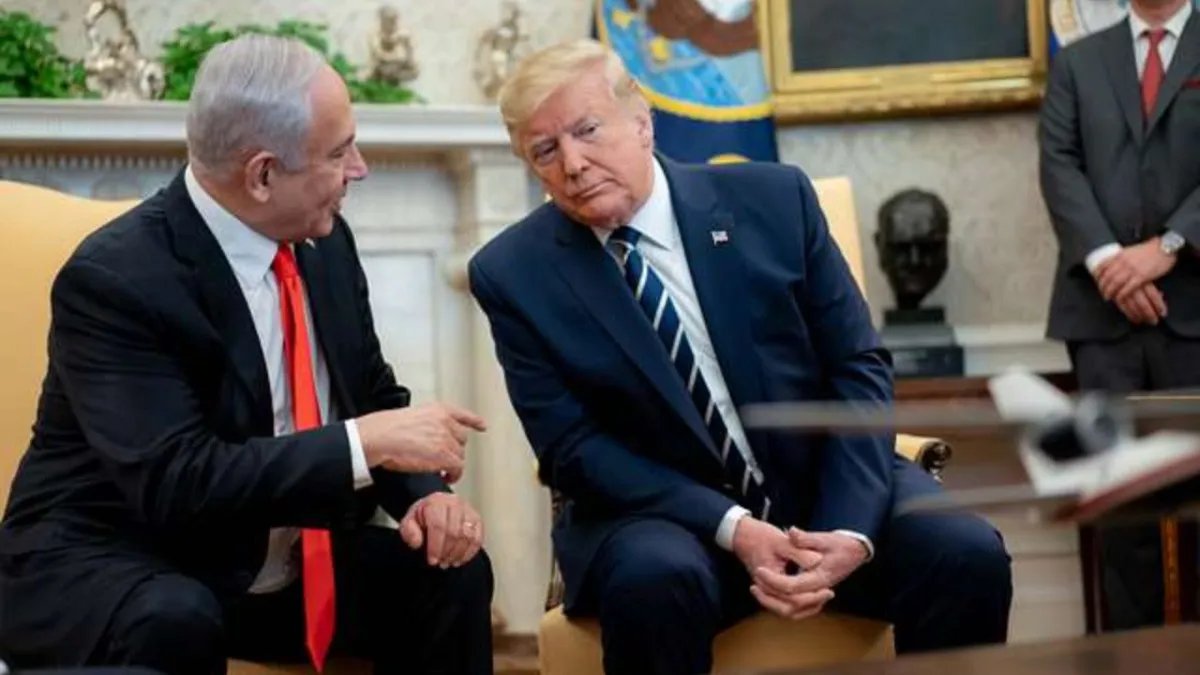
File Photo. Trump and Netanyahu. (Official White House Photo by D.Myles Cullen). Public Domain.
For this reason, calls for a genuine ceasefire must be matched by meaningful diplomatic efforts and credible pressure on all parties involved.
The current crisis has become a test of two things: regional stability and American influence.
President Trump may genuinely prefer de-escalation, but preference alone is insufficient. The true measure of leadership lies in the ability to shape outcomes, not merely express intentions If Washington cannot persuade its closest ally to support a sustainable ceasefire, the risk of a wider regional conflict will continue to grow.
The key question is therefore not whether Trump wants peace. The key question is whether he still possesses the leverage necessary to make it happen.
Editor’s Note: At a moment when the once vaunted model of responsible journalism is overwhelmingly the play thing of self-serving billionaires and their corporate scribes, alternatives of integrity are desperately needed, and ScheerPost is one of them. Please support our independent journalism by contributing to our online donation platform, Network for Good, or send a check to our new PO Box. We can’t thank you enough, and promise to keep bringing you this kind of vital news.
You can also make a donation to our PayPal or subscribe to our Patreon.
Please share this story and help us grow our network!
[ad_2]
Source link
