
[ad_1]
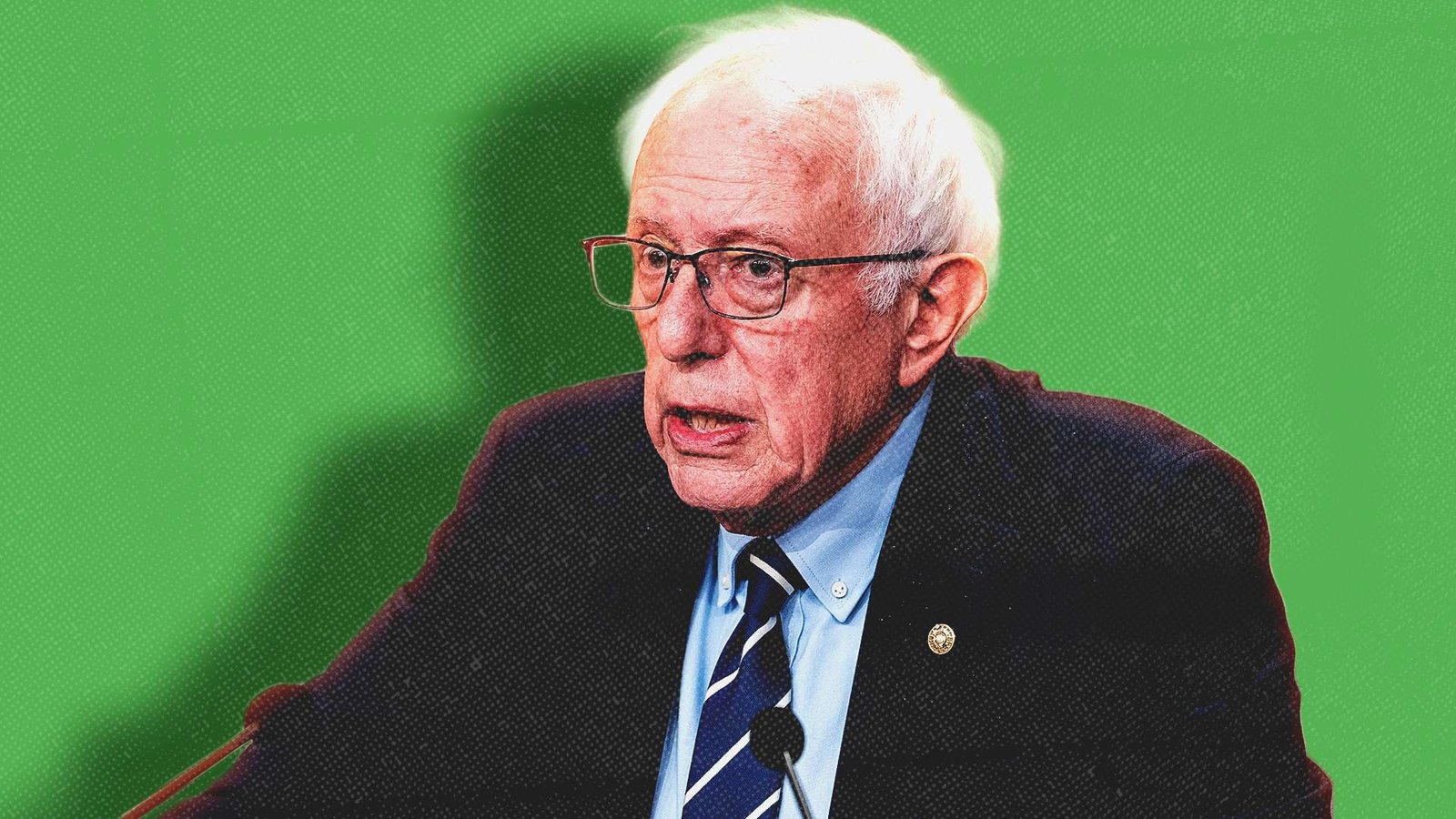
In a recent New York Times op-ed, the senior socialist senator from Vermont argued that artificial intelligence was “built on our collective intelligence”—our “books, songs, artwork, journalism, computer code, scientific research, videos, conversations, images and ideas spanning generations.” The most important question, he said, is not whether AI will change the world but “who will own and control that future.”
He proposed a one-time 50 percent tax on the largest AI companies, to be paid in shares held by a government-run sovereign wealth fund. The federal government would get voting shares, board representation, and the power to “block decisions” it decides are bad for citizens.
This is the worst idea Bernie Sanders has ever had, in a long and illustrious career of terrible ideas.
***
In 2012, President Barack Obama delivered a line that would haunt his reelection campaign and my nightmares: “If you’ve got a business—you didn’t build that.” Obama was talking about roads, bridges, schools, and the internet. His defenders insisted he was being caricatured after the line became a GOP meme. But the broader claim was clear enough: Private accomplishment is downstream of public investment, giving the state some moral claim on the fruits of success.
He was wrong about that. Simply existing in a geographical area where the state monopolizes violence and infrastructure does not give the president of the United States the right to your production or profits.
Sanders takes that already tenuous argument to its maximalist conclusion. He no longer even pretends to make a distinction between the goods or services customarily provided by the state and what OpenAI’s Sam Altman has called “the learnings of humanity.” New technology always dresses in hand-me-downs, and AI’s use of intellectual property has been rapid and public in ways that invite scrutiny. But influence does not create ownership. Use does not equal debt. And most importantly, the fact that human beings operate in a world filled with past inventions does not give Sanders, of all people, the right to a veto on Anthropic’s conduct.
President Donald Trump’s economic nationalism has made federal ownership, veto rights, and backdoor nationalization feel terribly normal. His administration converted federal grants into a roughly 10 percent stake in Intel, using already-promised CHIPS Act and Secure Enclave money to make Washington one of the company’s largest shareholders. The Trump administration also secured what Trump called a “golden share” in U.S. Steel as part of the Nippon Steel deal, giving Washington unusual power over the company’s operations.
The right calls it national security. The left calls it democracy. The results are the same: Washington wants shares, seats, vetoes, and a cut of the upside.
***
An earlier version of this battle went down during the great Facebook panic of the 2010s. For a while, very serious people were convinced Facebook had become something more than a company. It was a public square. A public resource. A public utility. It was too large to ignore and too central to civic life to remain merely private.
Sen. Elizabeth Warren (D–Mass.) proposed treating Big Tech companies (including Amazon, Google, and Facebook) as “platform utilities” and forcing separations between the platforms and businesses that used them. Her 2019 plan declared that “today’s big tech companies have too much power—too much power over our economy, our society, and our democracy.” The Federal Trade Commission (FTC) later sued Facebook, alleging it had illegally maintained a “personal social networking monopoly” through its acquisitions of Instagram and WhatsApp.
The premise was that Facebook’s dominance would last unless Washington intervened—and that if it didn’t intervene, our foreign policy and domestic politics would be destroyed. Then teenagers did what teenagers do: rolled their eyes and left the room where the adults were yelling.
Pew Research found that teen Facebook use fell from 71 percent in 2014–15 to 32 percent in 2022. In November 2025, a federal court concluded that the FTC had failed to prove Meta held monopoly power in the personal social networking market. Our foreign policy and domestic politics are a shambles, but that’s not Facebook’s fault.
Had Washington succeeded in freezing Facebook into a regulated utility, it might have done the one thing Mark Zuckerberg could not do on his own: make Facebook’s dominance permanent.
The case for nationalizing half of the largest AI companies depends on a fantasy of certainty: that we know which firms matter, what they will become, whether government control would discipline them or entrench them, and whether politicians can seize upside without smothering experimentation.
A company can be huge and still be vulnerable. A product can be essential today and obsolete tomorrow. A technology can reshape the world and then vanish. None of this requires government shareholders. A company does not become a “public utility” when it reaches a certain market cap, influences an election cycle, or terrifies enough op-ed writers.
***
All of that is worth remembering as SpaceX prepares what could be the largest IPO in history, targeting a $1.77 trillion valuation and a $74 billion raise. The company is selling investors not only rockets and Starlink, but also AI computing resources and speculative plans such as space-based data centers. The same week the SpaceX IPO started making headlines, one of Blue Origin’s New Glenn rockets exploded during a hot-fire test, damaging its launch pad and threatening delays.
You can already hear the next version of the argument forming. Launch is too important. Satellites are too important. Orbital compute is too important. No private company should control access to space. “You didn’t build that.” Surely the public deserves a stake. Surely Washington deserves a golden share.
The next big thing will always look too big, too dangerous, too socially consequential, too dependent on shared inheritance, and too lucrative to leave alone.
Leave it alone anyway. No one can, or should, control the future.
[ad_2]
Source link
