
[ad_1]
Many of America’s most popular founding myths aren’t factual. George Washington didn’t chop down a cherry tree. Betsy Ross probably didn’t sew the first flag. And Paul Revere didn’t shout, “The British are coming!”
But other times, the truth is stranger than fiction.
Here are five true stories from American history that may make your internal Truth-O-Meter quiver, at least if you don’t know the events behind them. Impress your friends at this year’s Fourth of July party with the following facts.
Johnny Appleseed really planted apple trees everywhere
Among America’s legendary characters, Johnny Appleseed stands out.
Born John Chapman in 1774 in Leominster, Massachusetts, he spent much of his life traveling across the Northeast and Midwest planting apple tree nurseries.
Modern caricatures of him often depict him as a selfless pioneer, scattering seeds across the new American frontier. Stories of him written during his life and shortly after his death do describe him as generous, but history shows he was also a smart businessman. According to Smithsonian magazine, companies selling land in the Northwest territories offered 100 acres of land to pioneers willing to settle permanently. To prove they intended to stay, settlers had to plant at least 50 apple trees, which took about 10 years to bear fruit.
Traveling ahead of the homesteaders, Chapman set up small fenced-in groves to grow seedlings that he could sell to incoming pioneers. Chapman’s trees were known less for the taste of their apples than for the great hard apple cider they produced.
Historical accounts describe Appleseed as passionately Christian and a follower of Swedish scientist and theologian Emmanuel Swedenborg, who believed that all of creation was a manifestation of the divine. Accounts written while he was alive and soon after his death, said Appleseed traveled barefoot, slept outdoors, and dressed in old, and donated clothes. The description of him wearing a tin pot on his head — doubling as a hat and cooking pot — didn’t appear until after his death, so its veracity remains in question.
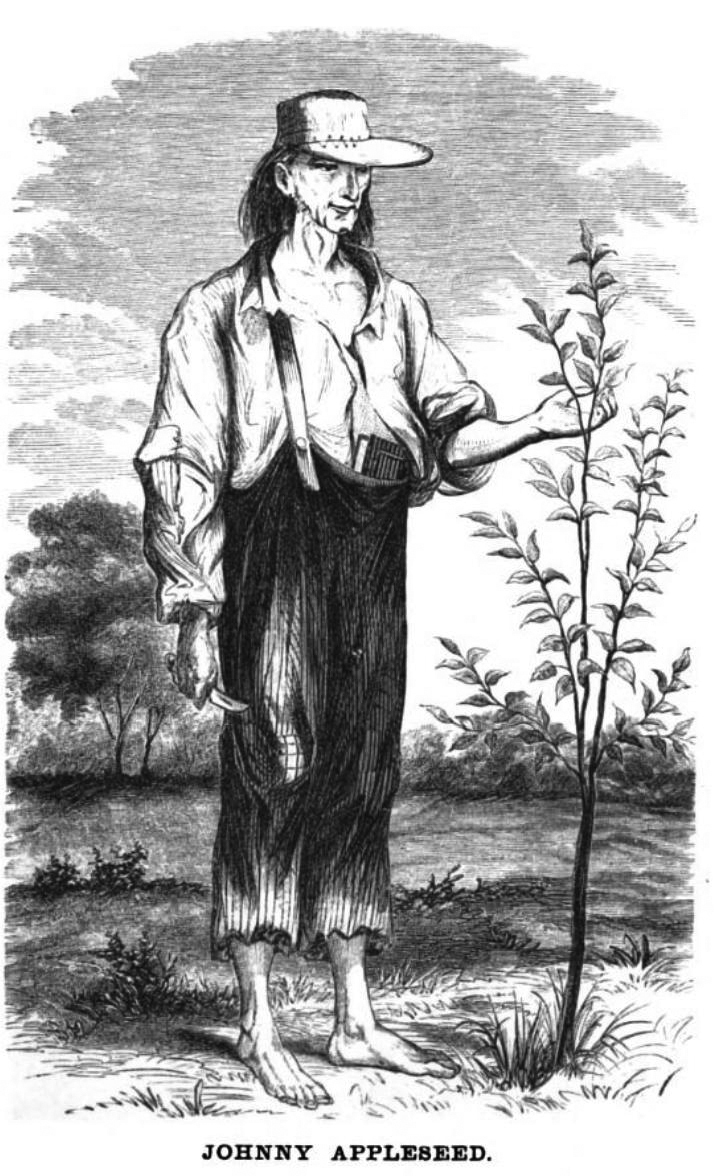
Drawing of Jonathan Chapman, aka Johnny Appleseed, from A History of the Pioneer and Modern Times of Ashland County, 1862 (Wikimedia Commons)
The Teddy Bear was named after President Theodore Roosevelt
On a 1902 hunting trip, Roosevelt was having no luck catching a bear. Trying to help, one of his assistants cornered a black bear and tied it to a tree and said Roosevelt could shoot it. Viewing that as unsportsmanlike, Roosevelt refused to fire his weapon at the animal.
The bear was injured so it was still put down, but the story of Roosevelt sparing the animal spread across the nation.
It even inspired a political cartoon in The Washington Post. After a candy shop owner in Brooklyn named Morris Michtom spotted the comic, he decided to create and sell a stuffed bear dedicated to the president (with Roosevelt’s permission). Michtom called it “Teddy’s Bear.”
The name stuck.
A miniature plastic teddy bear sits atop a stuffed teddy bear in Phoenix, April 14, 2026. (AP)
President Abraham Lincoln created the Secret Service the day he was assassinated
In what became seen as a tragic irony, Lincoln signed legislation authorizing the Secret Service’s creation on April 14, 1865. Later that night at Ford’s Theatre, the president was assassinated.
But even if Lincoln had created the agency earlier, it may not have helped scuttle the assassination.
Although the agency today is associated with presidential protection, it was originally set up as a bureau within the Treasury Department to address rampant counterfeiting during the Civil War. The Secret Service today still investigates financial crimes.
The agency didn’t become responsible for protecting America’s politicians until after President William McKinley’s 1901 assassination. Since then, its role has expanded to include securing the White House, Treasury, and vice presidential residence, along with major political events such as inaugurations, international summits and political conventions.
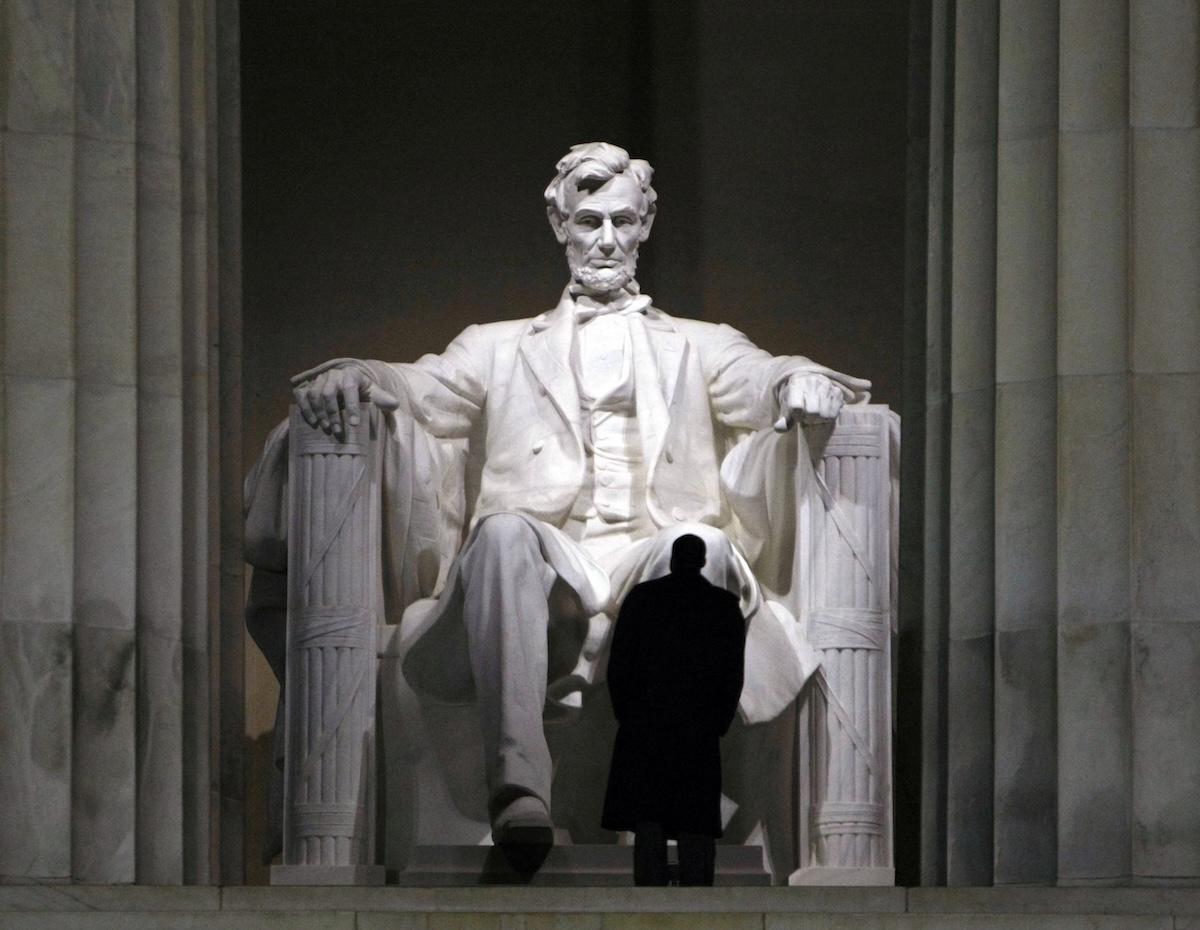
In this Jan. 10, 2009, file photo, a Secret Service agent stands watch while President-elect Barack Obama, not shown, visits the Lincoln Memorial with his family, none visible, in Washington. (AP)
Harriet Tubman led a major military operation during the Civil War
Tubman is most famous for risking her life to bring 70 enslaved Americans to freedom by guiding them along the Underground Railroad.
Less discussed is Tubman’s experience as the first American woman to lead a major military operation.
Under Union Col. James Montgomery’s command, Tubman led 150 Black Union soldiers in a mission now referred to as the Combahee Ferry Raid. During the operation, Tubman and the soldiers rescued over 700 enslaved people.
She also served as a nurse, a scout and a Union spy, gathering intelligence for military operations and cultivating a network of other spies behind enemy lines. Despite her service, the federal government refused to give her a pension for her war work. At age 79, after three decades of fighting for her pension, Congress increased her monthly “widow’s pension” from $8 to $20.
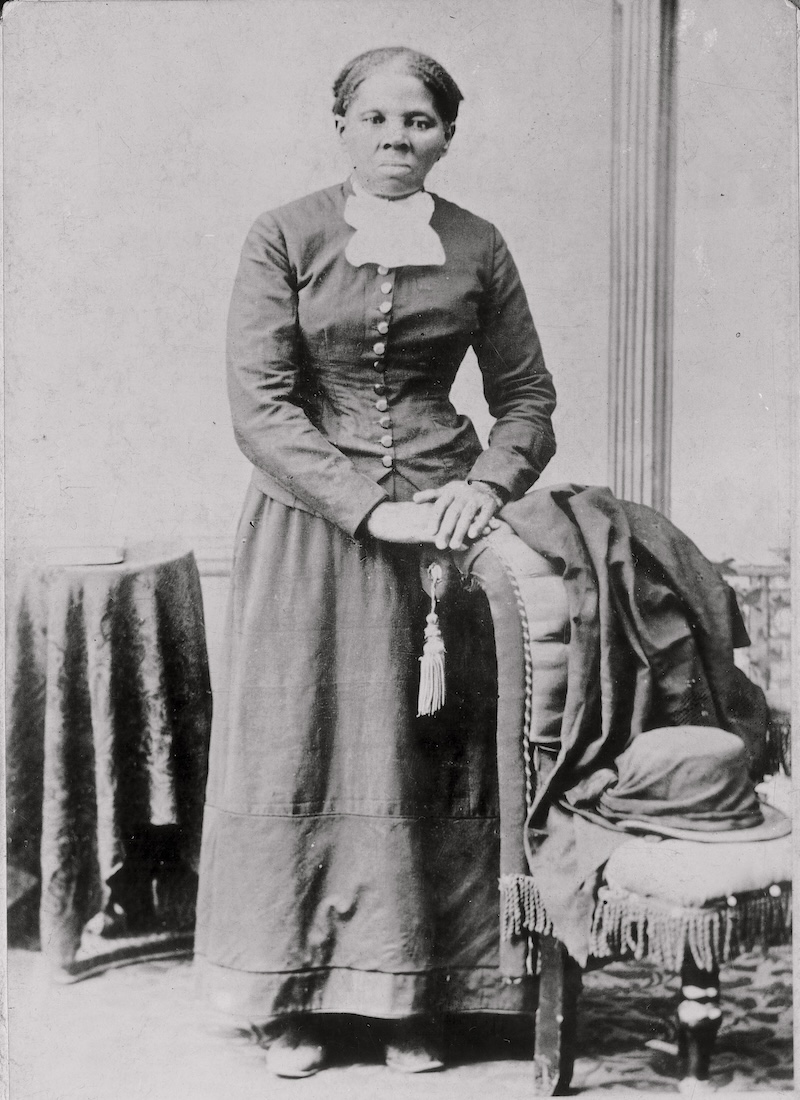
In this photo provided by the Library of Congress, Harriet Tubman in seen in a photograph dating from 1860-75. (Library of Congress via AP)
Before Rosa Parks’ famous bus protest, Claudette Colvin refused to give up her seat
Parks, a famed civil rights leader, is often remembered for refusing to give up her bus seat to a white passenger in an act that launched the 1955 Montgomery, Alabama, bus boycott.
Less well-known is the protest of 15-year-old Montgomery resident Claudette Colvin, who nine months earlier did the same thing when a bus driver asked her to give up her seat to a white woman on March 2, 1955.
Before she died at 86, Colvin spoke and wrote about her experience that day, crediting the history lessons she received in school for inspiring her act of resistance.
“I could not move because history had me glued to the seat,” Colvin said in a 2013 interview. “It felt like Sojourner Truth’s hands were pushing me down on one shoulder and Harriet Tubman’s hands were pushing me down on another shoulder.”
She told the police it was her constitutional right to remain on the bus and was arrested and taken to jail. So why doesn’t she appear more prominently in history books?
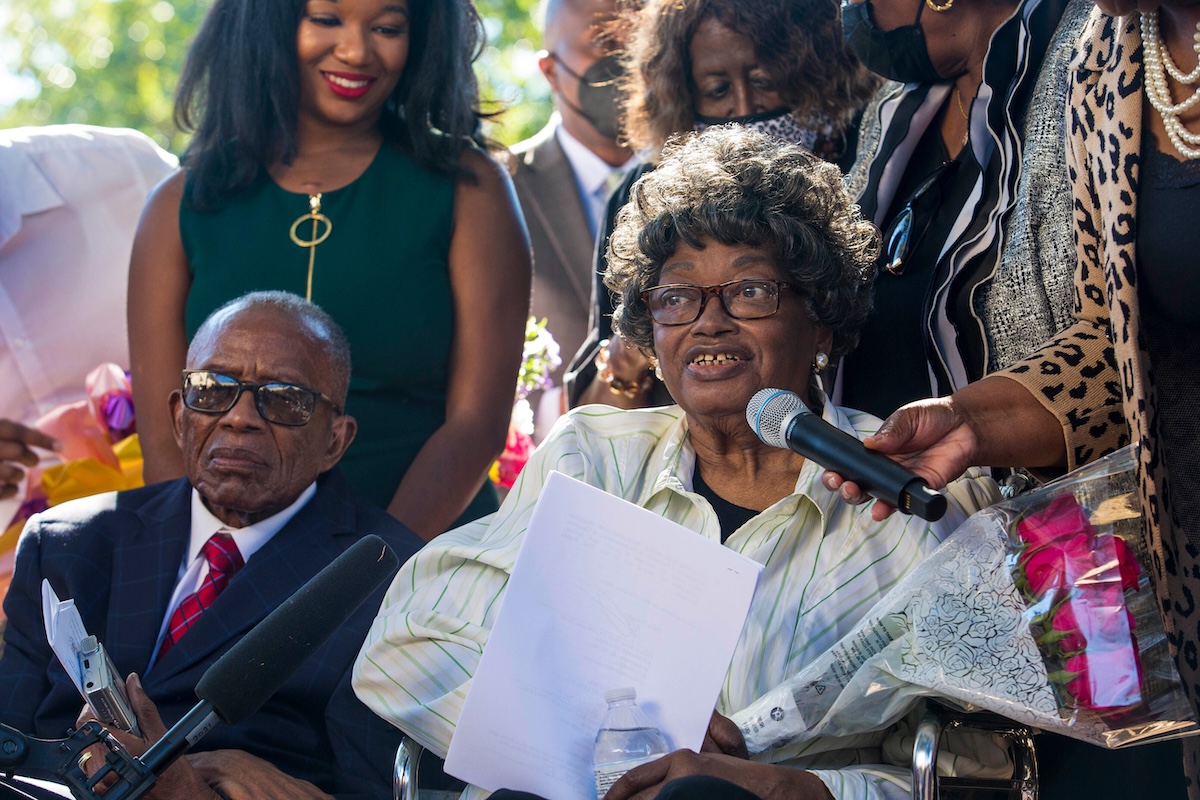
Claudette Colvin answers a question at a news conference after she filed paperwork to have her juvenile record expunged as she sits next to her former attorney, Fred Gray, Oct. 26, 2021, in Montgomery, Ala. (AP)
While the community was outraged over Colvin’s arrest at the time, she later said that civil rights activists weren’t convinced a teenager would be a compelling figurehead for the movement. Not long after her arrest, Colvin became pregnant out of wedlock. “I didn’t fit the image either of a, you know, someone that they would want to show off,” Colvin told NPR in 2015.
Parks, meanwhile, was 42, married and already involved in civil rights organizing when she refused to give up her seat nine months later. Parks, unlike Colvin, was seen as a perfect case to launch the boycott.
“I knew why they chose Rosa,” Colvin said. “They thought I would have been too militant for them. They wanted someone mildly genteel like Rosa. They didn’t want to use a teenager.”
Now that you know what’s true, make sure you don’t repeat these five American history myths!
[ad_2]
Source link
