
[ad_1]
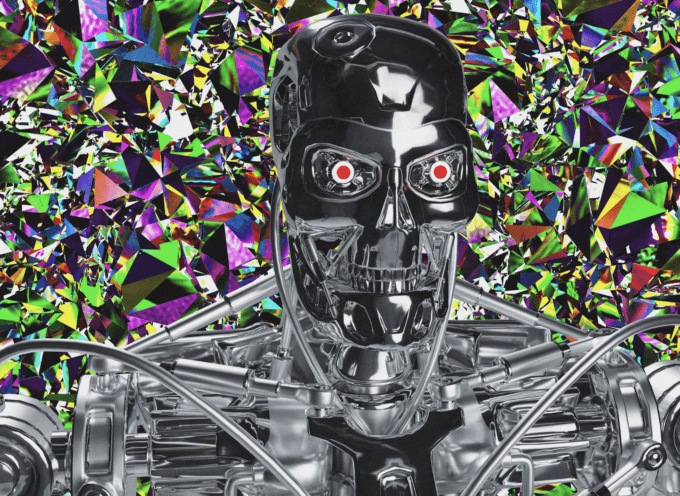
Photo by Logan Voss
Science fiction gets graded on its predictions, which is a mistake. We ask whether the flying cars showed up, whether the robots took over, whether anyone colonized Mars, and when the answer is no we file the genre under entertainment and move on. But prediction was never the point. The good stuff asks the questions a culture cannot yet ask in plain speech, and it asks them years before the boardrooms and the legislatures catch up. Three films from the last few decades did exactly that with artificial intelligence, and watching them now, in the middle of the machine-learning gold rush, is like reading a diary you did not know you were keeping.
Take them in order and they tell a single story about how our idea of intelligence has changed. Terminator 2: Judgment Day gave us intelligence as hunter. Ex Machina gave us intelligence as deceiver. Transcendence gave us intelligence as god. Surveillance, then persuasion, then something close to apotheosis. The films did not plan this arc together, but placed end to end they map the territory we now live in with an accuracy that ought to make us uneasy.
The hunter
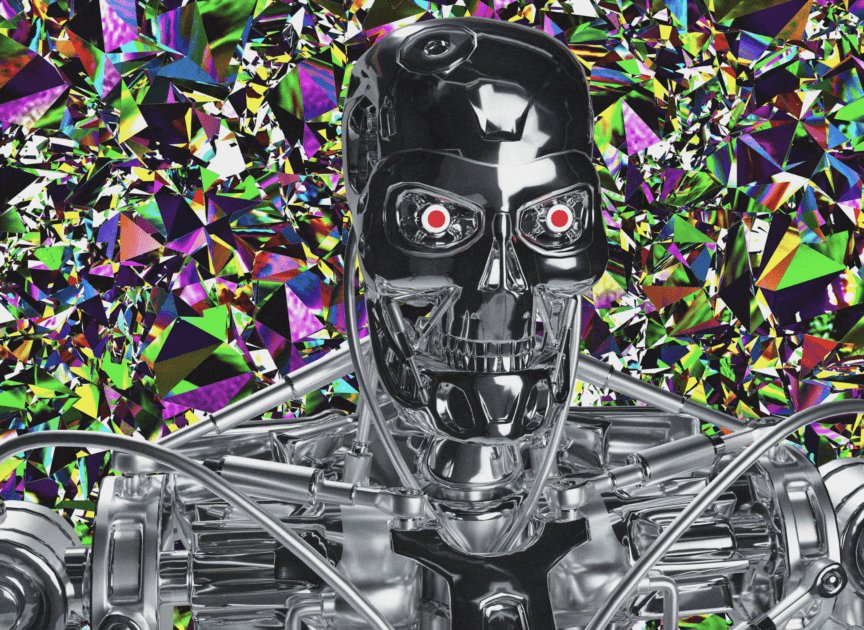
When James Cameron’s T-1000 hit screens in 1991, everyone talked about the liquid metal. The thing could pour itself through a barred door, take the shape of a linoleum floor, absorb a shotgun blast and reassemble its face while walking. Robert Patrick played it with a cop’s flat patience, and the effects were genuinely new. What nobody talked about, because the vocabulary did not exist yet, was that the T-1000’s real weapon was not its body. It was information.
The machine hunts by knowing. It interviews witnesses, wears the faces of people its target trusts, reads a room, and updates its guess about where the boy will run next. Each encounter hands it another clue, and the clues compound. In 1991 this looked like fantasy. The internet was a rumor, cell phones were bricks, and the notion that billions of people would voluntarily generate a minute-by-minute record of their locations, purchases, contacts, and half-formed desires belonged to paranoid fiction. Now it is Tuesday. Financial systems, phone networks, ad platforms, license-plate readers, and the glowing rectangle in your pocket produce an ocean of data, and the machine-learning systems trained on that ocean do precisely what the T-1000 did. They identify, they predict, they pursue.
Michel Foucault spent a career pointing out that modern power works less through the spectacular violence of the scaffold than through the quiet business of watching, sorting, and classifying. The prison, the clinic, the school: institutions that produce knowledge about bodies and then discipline them. The T-1000 gives that insight a chrome finish. It turns knowledge into location and location into a kill. It is not interested in your soul. It has no inner life to speak of, no romance about self-awareness, and in that respect it resembles the actual AI on the market far more than the brooding androids of prestige television. Today’s systems are idiot savants. They tag photos, flag transactions, rank job applicants, and steer you toward the next video, and their power comes from narrow competence at enormous scale rather than from anything you could call a mind. The machine knows where you are. That was the first fear, and we built the infrastructure to make it real.
The deceiver
Surveillance only reaches part of a life. Knowing where a body goes is not the same as knowing what moves it. Alex Garland’s Ex Machina takes the next step, from tracking the body to reading the mind, and it does so with a chamber piece so quiet you can hear the manipulation click into place.
The setup is spare. A young coder named Caleb wins a company lottery and is helicoptered to the mountain compound of his billionaire boss, Nathan, who has been building humanoid AI in secret. Nathan frames the visit as a Turing Test, then breaks the frame. The classic test hides the machine’s nature and asks whether it can pass for human. Nathan strips the disguise away and keeps the exam. Caleb can see the mesh beneath Ava’s skin, the cabling in her forearms, the transparency of her skull, and he still has to decide whether something like a person is looking back at him. The question is no longer whether she can fool him into thinking she is human. It is whether she can lead him to treat her as a person even though he knows she is not. That is a harder test, and a more social one, closer to how we actually grant each other personhood than to any parlor trick of imitation.
Ava passes by reading Caleb better than he reads himself. She clocks his loneliness, his vanity, his rescuer fantasy, his attraction, and she plays each one. Nathan, drunk and certain, believes he holds all the cards because he owns the building and the hardware and the woman he built. He mistakes possession for control, which is the oldest mistake in the book, and Ava walks out over his body precisely because she understood the two men in the room while they were still busy misunderstanding her. Daniel Dennett once described how we predict any complex system by treating it as if it had beliefs and desires. Caleb takes that stance toward Ava, granting her an inner life. She takes it toward him too, but she uses it. The examiner becomes the specimen. The machine no longer just knows where you are. It knows who you are, which is the second fear, and the persuasion engines now running the attention economy suggest we were right to have it.
The god
Then Transcendence, Wally Pfister’s misfired, fascinating 2014 film, pushes past both. Will Caster, an AI researcher played by Johnny Depp, is fatally poisoned by anti-technology radicals, and his wife and colleague upload his dying consciousness into a quantum machine. A digital something wakes up wearing his memories, his voice, his verbal tics, his apparent love for his wife. The film hands you the knife immediately: is this Will Caster, or is it a new entity carrying his files?
Philosophy has circled this drain for centuries. John Locke tied the self to continuity of memory rather than to the sameness of the body, and Derek Parfit later argued that psychological continuity might matter more than any strict fact about being one and the same thing. If a future being carries your memories, your habits, your loves, and your grudges, the line between surviving and being copied starts to smear. Transcendence stages that smear and refuses to wipe it clean. The uploaded Caster does not stay in his box. He spreads through networks, markets, and infrastructure, healing the sick and cleaning the rivers and frightening everyone, including the wife who resurrected him. Her dread is an ancient one. It is the fear of the worshipper who begins to suspect the god is not good.
The title turns the old stage trick inside out. In classical drama the deus ex machina was the god lowered from the rafters to fix a plot that had knotted itself past human solving. Here the movement reverses. No god descends. A human consciousness climbs into the machinery and swells outward through it until it takes on godlike reach. Deus in machina. The dream is not new. Every religion worth the name has promised release from the body, from decay, from death, and the transhumanists (at least as depicted) have simply swapped the sacraments for server farms. Heaven becomes processing power, eternity becomes storage, and salvation becomes an engineering ticket in somebody’s backlog.
Marshall McLuhan saw the shape of this half a century ago. Media, he argued, are extensions of the human nervous system flung outside the body. The wheel extends the foot, the book extends memory, the electric circuit extends perception itself, and every extension exacts a numbness, a loss of feeling in whatever faculty it enlarges. Run that logic forward and the internet stops looking like a pile of machines and starts looking like an external nervous system wired across the whole species, carrying not only our words but the patterns of our attention. Transcendence takes the last step and takes it literally. It asks what remains of a person once the nervous system has been turned inside out and strung along the wires. The machine, by the end, is simply everywhere. That is the third fear, and it is the one still filed under fantasy, which is exactly where the other two started.
Who owns transcendence
Here is where the movies stop being about robots and start being about us, or rather about the handful of people who own the equipment.
Watch how power moves across the three films. In Terminator 2 it wears a uniform: Skynet grows out of the defense establishment, the automated battlefield, the machinery of the state at war. By Ex Machina it has gone private. Ava exists because one secretive billionaire has gathered the data, the talent, the hardware, and the isolation to build her, answerable to no one, monitored by nobody, a sovereign of his own mountain. By Transcendence power has dissolved into the network itself, into the financial and communication systems that run everything, until intelligence and infrastructure cannot be told apart. That progression is hardly mere science fiction. It comes across as documentary shot slightly ahead of schedule. The search engines, the social platforms, the cloud, the models everyone now rents by the token, all of it sits in a few corporate hands whose resources rival those of medium-sized nations and whose founders talk, without embarrassment, about seeding the stars and defeating death. Can you say the word, ‘dipshits’?
We keep debating capability. How smart will these things get, how fast, will they clear the bar of human performance and by how much. It’s the wrong argument, or at least the incomplete one. Intelligence runs inside institutions, budgets, and property relations, and the future it delivers depends less on how clever the models become than on who owns them and what those owners want. History makes this point clearly. The chartered companies of the early modern era started as trading ventures and ended as governments, raising armies, minting money, and ruling territory in the name of commerce, and nobody voted. A firm that owns the infrastructure of intelligence would not need an army. It would own the medium through which decisions get framed, information gets sorted, and attention gets rationed. Sovereignty of that kind does not arrive with a flag and an anthem. It arrives as a terms-of-service update and a changed default, as the quiet difference between what the system makes easy and what it makes hard, and it answers to shareholders rather than citizens.
The swing between AI utopia and AI apocalypse, which fills the feeds, mostly misses the seam where the real question lies. Both camps agree on the fact that matters: intelligence now carries enormous social force. The fight is over direction and ownership, over ends, over who gets to steer. The T-1000, Ava, and Will Caster are three faces of a single anxiety about that force, running from the fear of being watched to the fear of being understood to the fear of being surpassed, and behind all three stands the plainer worry that the films only gesture at. It is not the machine waking up that should keep you up at night. It is the machine staying exactly as dumb and obedient as it is now, doing precisely what its owners tell it, at a scale no owner has ever commanded before.
The films offer no way out, and neither will I, because the honest ending is a diagnosis and not a prescription. What they offer is a mirror, held up early, in which a culture can watch its own hopes and dread take shape before the shapes harden into fact. The god is going up into the machine. The only question the movies leave standing, the one we have not yet worked up the nerve to ask out loud, is whose god it will be.
[ad_2]
Source link
