
[ad_1]

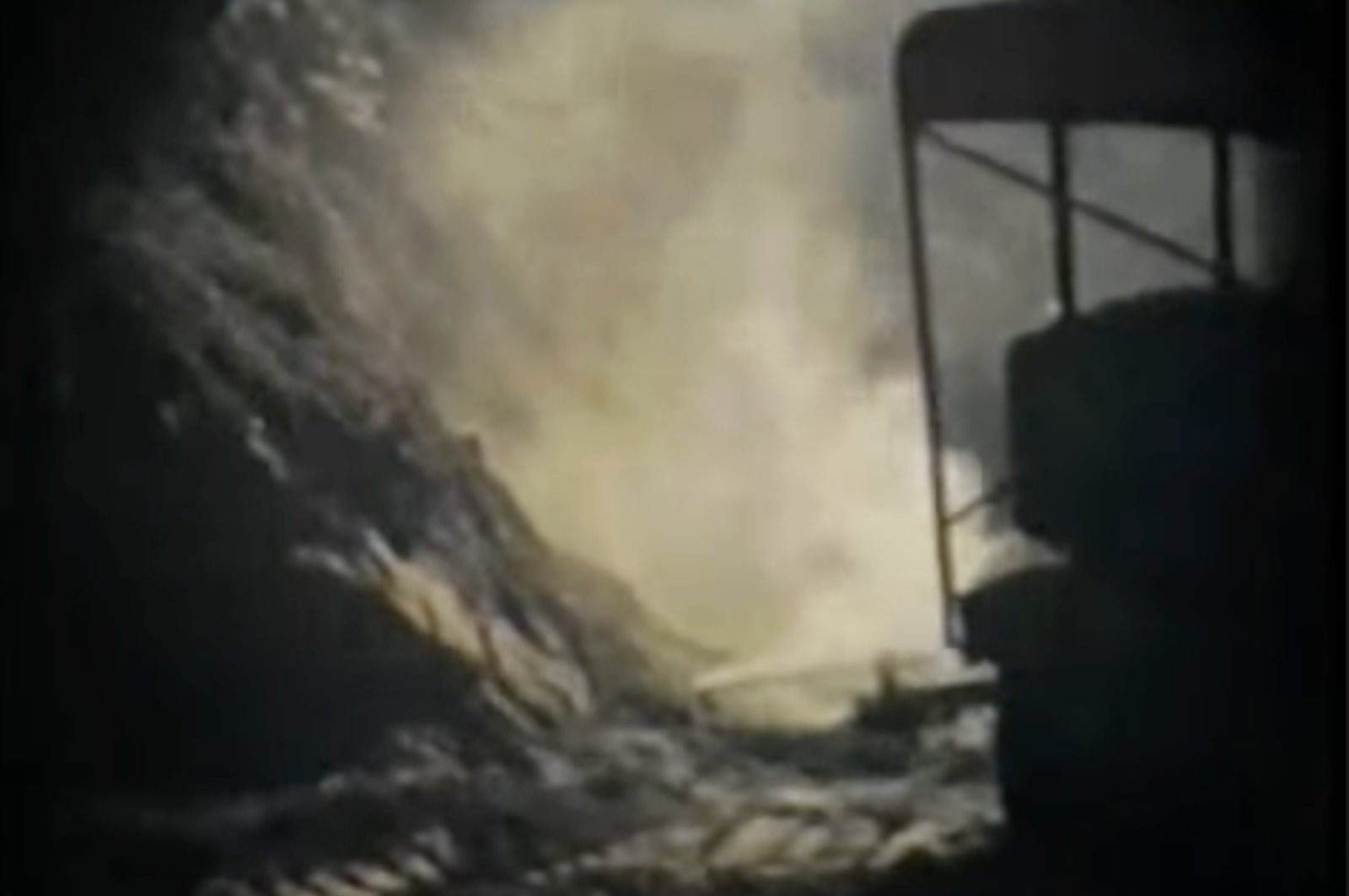
Toxic dust from the vermiculite mine in Libby, Montana. (Screen capture from Libby, Montana–Working the Mine. POV, PBS)
Let’s learn from Libby, where, tragically, over 400 people have already died and thousands have been sickened from asbestos lung disease caused by microscopic fibers in mining dust from the mineral tremolite that was naturally mixed in with the vermiculite ore as well as the wall rock matrix that got mined.
At the Darby Sheep Creek mine, actinolite, closely related to tremolite, also occurs in the ore as well as the wall rock. Montana Bureau of Mines and Geology reports that Sheep Creek mine actinolite “forms masses of radiating fibers surrounding other crystals.” Geologists at Montana Tech report that actinolite is one of the most common matrix minerals and the veinlets that cut across the host rock are “actinolite-rich”.
US Critical Materials, the Sheep Creek mining company, has submitted a plan to the Bitterroot National Forest. https://www.fs.usda.gov/r01/bitterroot/projects/65203 They identify four sites to drill or mine. All four sites contain actinolite. Site #2 has a sample that showed 9.4% actinolite. Much more sampling and analysis need to be done to determine if and how much asbestos occurs at various dust emission points and then arrive at a valid independent human health risk analysis.
The BNF has done that before. Late in the game, after the Final permitting EIS had been released for Hamilton’s Skalkaho vermiculite mine, the BNF decided to take a look before leaping at the threat of possible actinolite asbestos. It was a groundswell of impassioned public demand that finally brought action. The mining company dropped the permitting right at the finish line when a health risk analysis was required.
The Roadside Geology of Montana says, “Several early attempts to mine vermiculite in the Skalkaho intrusion went poorly. While at one time that seemed unfortunate, now it’s clear that we narrowly escaped having another major environmental disaster.”
Human health issues, including known radioactive waste and possible asbestos, deserve thorough analysis at Sheep Creek. The layers of analysis are described and filed at the BNF Darby Ranger Station.
We need a firm public groundswell to demand that human health risk analysis be completed prior to making dust and spreading it around, at the mine site and all sources of dust emission. Once dust gets spread, by wind or whatever, it is nearly impossible to clean up.
Many people died or were sickened in Libby at the mine, in homes and along the haul route. Forests were contaminated. Dust was blowing in the wind for many miles and was brought home on workers’ clothing. More fastidious house cleaning only worsened the problem because the microscopic asbestos fibers moved through vacuum filters while getting stirred up.
Imagine workers inside the adit (mine tunnel) as they blast and mine three thousand tons of ore and an undisclosed amount of waste rock over 300 feet, according to the plan. Dust suppression will not eliminate dust. Mining is a dusty business. At the mine, along the haul route and at the stockpile in Conner.
BNF West Fork Ranger Dan Pliley is asking for public comments to be sent to: [email protected]
The USCM website: https://sheepcreekproject.com/ says, “The company also recognizes that projects involving natural resources should involve meaningful opportunities for public input and dialogue. As a result, the Sheep Creek Project is focused on creating multiple avenues for community members to learn about the project, ask questions, share concerns, and participate in ongoing discussions.” So far there have been no “meaningful opportunities for public input” or “ongoing dialogue”.
Sounds like they want to chat. Their yet-to-be-occupied office is at: U.S. Critical Materials, 206 S. Main, Unit B., Darby, MT 59829
Stop the mine; don’t let Darby bite the dust.
[ad_2]
Source link
