
[ad_1]
Voting where you live in the city, or your place in the countryside?
Can New Yorkers with two homes really choose where to cast their ballot?
A group called MoveIndigo wants New York Democratic voters who have second homes to vote where their second homes are located if those properties are in swing districts.
“New York State law is clear,” the group claims. “Citizens with dual residences have the right to choose where they want to vote. They do not have to vote where they maintain their primary residence.”
Is that true?
The New York State Board of Elections publishes updates on state election law, and its 2026 guidance quotes a key court case from 1983, Ferguson v. McNab. The case found that a person with two residences “may choose one to which she has legitimate, significant and continuing attachments as her residence for purposes of the Election Law.”
New Yorkers with more than one residence can vote from one, and only one. According to case law, this residence does not have to be a primary residence, or a “domicile,” which is a permanent home, one suitable for year-round use.
Judges have found that when voters can decide where to vote, it lessens the burdens on elections staff, “who in most cases need only verify an address,” as well as the burden on voters with more than one residence, “who otherwise might be turned down at both places and have to go to court in order to be able to vote anywhere.”
A board of elections spokeswoman confirmed that.
“New York State Election Law does permit an individual with two residences to choose one or the other to register to vote from,” said Kathleen McGrath, director of public information at the board. McGrath said the facts of each situation matter.
“New Yorkers may have multiple residences but must only claim a right to vote from one,” she said.
We also consulted with election lawyer Jerry Goldfeder, senior counsel at Cozen O’Connor, on whether there are exceptions.
“The election law in New York is perfectly clear: voters may choose from multiple residences from which to vote, as long as they are bona fide homes,” Goldfeder said.
A 2015 case, Maas v Gaebel, found that if a voter has a position on a political issue, and that issue motivates them “to register to vote in a place where he or she has established a bona fide residence does not render such a residence a ‘sham.’”
These laws of course do not permit voters to lie to a Board of Elections official, or write down a fake address on voter registration forms.
Some observers have questioned New York’s more permissive approach. There have been few cases of false registration in New York, and “the absence of such guidance gives” people with multiple residences “a greater chance of manipulating the rules,” wrote Kevin Frazier, who has taught constitutional law, in the Appalachian Journal of Law.
MoveIndigo provided relevant evidence from the Board of Elections on its website to support its claim.
Our ruling
A group claims that voters with two homes in New York can vote at either one. New York state case law supports this claim, as does the state Board of Elections.
It remains the case that voters cannot mislead elections officials. But when voters with two or more homes do follow the law, they are permitted to choose where they want to vote, even if that is for a politically motivated reason.
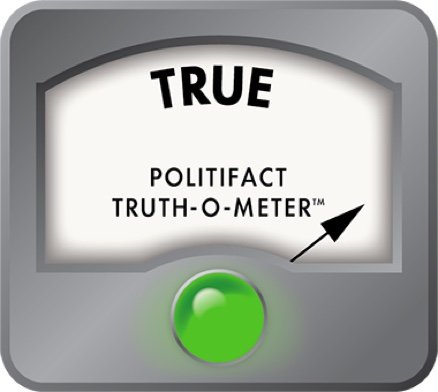
We rate this claim True.
[ad_2]
Source link
