
[ad_1]
Three cruise ship passengers died and several others fell ill because of a suspected hantavirus outbreak. The disease is typically caused by inhaling infected mouse droppings on land and isn’t usually considered a risk for ship passengers.
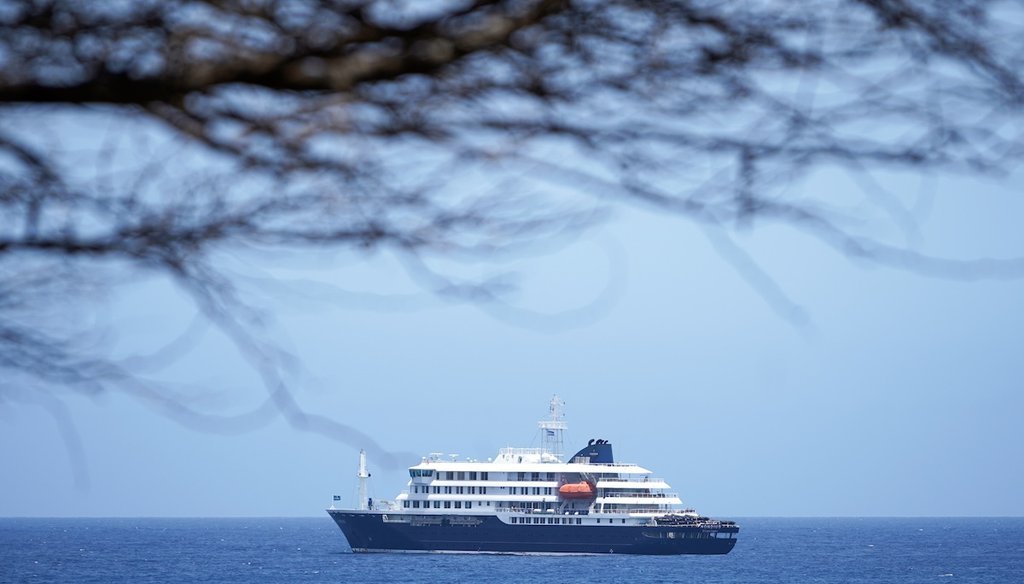
The outbreak occurred on board the MV Hondius, which is now anchored off the coast of Cape Verde in western Africa. The ship, operated by Oceanwide Expeditions, had about 150 passengers, embarking from Ushuaia in Argentina about three weeks ago, The New York Times reported. From there, it stopped in Antarctica, the Falkland Islands, South Georgia Island, Nightingale Island, Tristan, St. Helena, Ascension and Cape Verde.
A 70-year-old man and his 69-year-old wife, both Dutch, died, as did an unidentified third passenger. The World Health Organization said five other passengers are suspected to have contracted the virus.
It’s unknown whether the people affected by hantavirus had a common exposure somewhere before boarding the ship or whether there were rodents on the ship that sickened them, said Tara C. Smith, a Kent State University epidemiologist.
A case of hantavirus on a cruise ship is puzzling, said William Schaffner, a Vanderbilt University professor of preventive medicine.
Here’s what we know about hantavirus and its transmission.
What is hantavirus?
Hantavirus is generally spread through rodent urine and feces that is aerosolized and inhaled, Smith said. But there is a strain in Argentina that has some evidence of person-to-person transmission, she said.
Hantavirus first attracted attention in 1993 with an outbreak in the Four Corners region of Arizona, Colorado, New Mexico and Utah. Between then and the end of 2023, the Centers for Disease Control and Prevention counted 890 cases in the United States.
A common form of transmission in the U.S. occurs when someone cleans out a shed or basement where rodents have been living. Feces may become airborne if disturbed in this way, and if so, the person can inhale or swallow infected particles.
One of the dangers of hantavirus is that the illness proceeds slowly and unremarkably at first, with symptoms such as fever, chills, achy muscles and a headache.
“You think you just have the flu for a couple of days, and then you crash when the virus gets into your lungs and heart,” Schaffner said. “You can get very seriously ill very rapidly.”
A scenario like this may have contributed to the 2025 hantavirus death of Betsy Arakawa, the wife of actor Gene Hackman, Schaffner said. The couple lived in New Mexico, and their isolated residence may have delayed her receiving early medical intervention, Schaffner said.
Although the illness cannot be treated directly, supportive care can help patients recover — if begun early enough, he said.
There are at least 38 types of hantavirus, of which 24 cause human disease, according to Lancaster University anatomy professor Adam Taylor. These fall into two categories: old world hantaviruses, which are endemic to Europe and Asia, and new world hantaviruses, which are from the Americas.
The European and Asian varieties tend to cause hemorrhagic fever with renal syndrome, which harms the kidneys. The American varieties may cause a pulmonary syndrome that affects the lungs and heart. All hantaviruses are carried by rodents, though the American variety appears to be capable of person-to-person transmission.
Possible ways the ship passengers contracted the hantavirus
Cruise ships have prompted infectious disease concerns in recent years, but usually for noroviruses, which cause gastrointestinal disease and are highly contagious from touching surfaces. They are rarely deadly.
Hantaviruses are much more worrisome. About 15% of people who contract the old world hantaviruses can die; the mortality rate goes up to 40% for those who get the new world hantaviruses.
John Drake, director of the University of Georgia’s Center for the Ecology of Infectious Diseases, said there are three plausible scenarios for how hantavirus made it onto the ship.
One is a person-to-person infection, initiated by someone who came into contact with the hantavirus before the cruise. A second possibility is that the ship carried infected rats; rodent stowaways are a longstanding problem on ships.
The third possibility involves passengers being infected during a shore stop. Drake said the most likely place for this would have been at the cruise’s initial location, Ushuaia, because the subsequent stops are not known to harbor hantavirus or even rats, and because the two-week incubation period is consistent with that timeline.
Large ships have rodents, Schaffner said, “but the hygiene on ships is so elaborate because of the norovirus reputation that if I had to bet, I would say it may have been acquired on land rather than at sea.”
Experts said the biggest risk for a hantavirus infection involves contact with mouse droppings on land, such as in poorly ventilated spaces.
Despite the outbreak on the cruise ship, the spread remains contained to the passengers and the risk to public health is low, the WHO said.
[ad_2]
Source link
