The question is not whether a president is strong enough to exercise power, but whether the president is restrained enough to obey the laws he has sworn to uphold, writes Judge Andrew Napolitano.
A U.S. destroyer firing a Tomahawk missile as part of the Trump administration’s start of unauthorized war on Iran on Feb. 28. (DoD/Wikimedia Commons/Public Domain)
By Andrew P. Napolitano
 A failed war does not end when the drones stop flying. It creates a new danger: A government that refuses to admit defeat and a president who, having failed abroad, seeks muscular victories elsewhere.
The war against Iran is a case study in the limits of military power, the dangers of presidential overreach and the enduring wisdom of the Constitution’s separation of powers. It was unauthorized, unconstitutional, illegal, strategically incoherent and — by the standards by which wars must be judged — a geopolitical failure.
The American people were told that force would achieve clear objectives. Iran would be compelled to surrender. Somehow, American security would be enhanced. The region would become more stable.
Instead, the United States expended enormous resources, consumed scarce munitions, deepened regional instability and failed to produce the political outcome President Donald Trump promised. Senior military officials just last week warned him that extending large-scale operations risked exhausting critical military capabilities and weakening America’s ability to respond elsewhere.
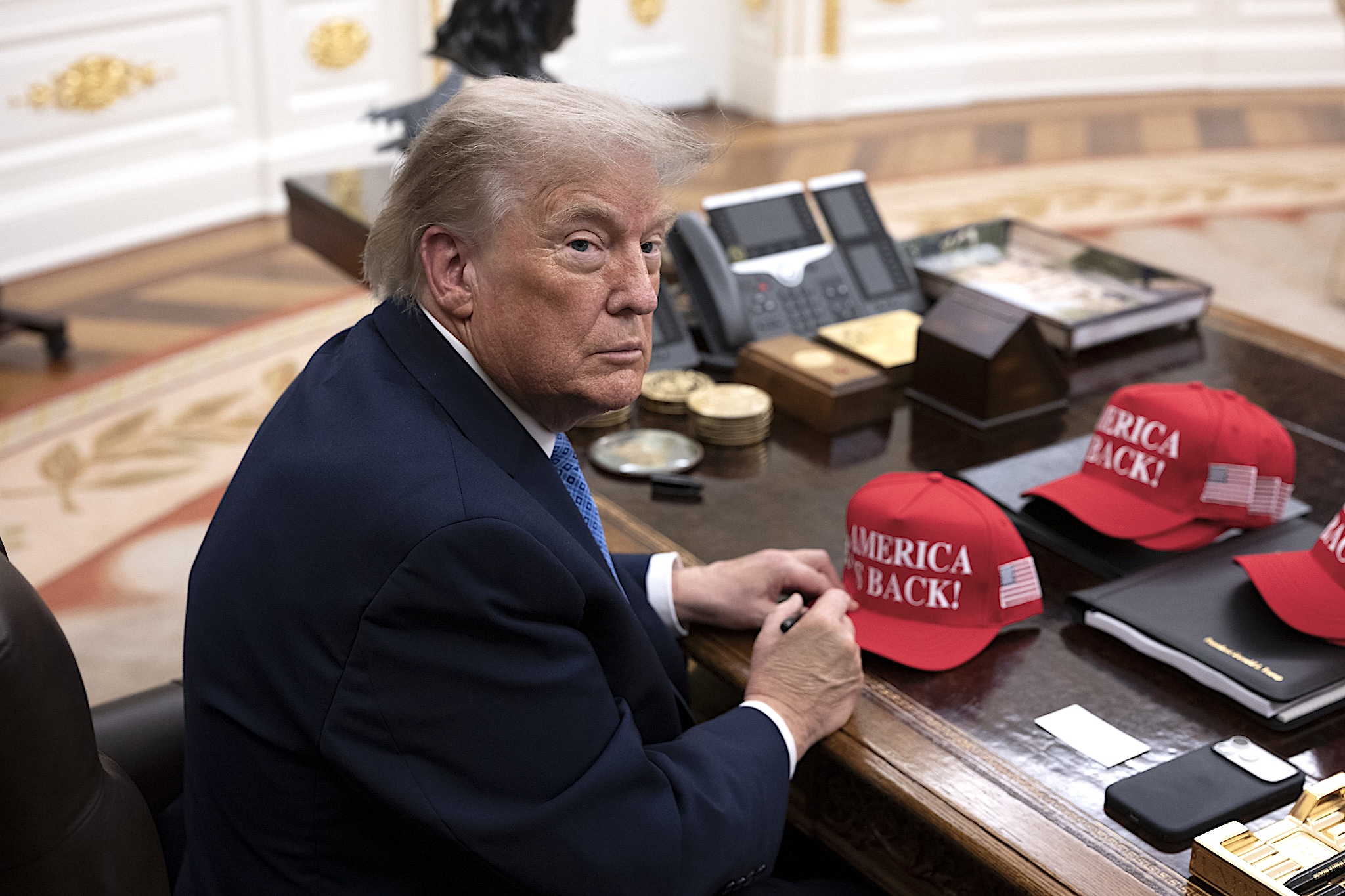
Trump in the White House, June 26, 2026. (White House / Joyce N. Boghosian)
The United States can destroy buildings, eliminate targets, deploy aircraft, ships, missiles, drones and troops anywhere on the planet. But war is not a video game in which the destruction of enemy assets automatically produces political surrender. War is a contest of wills, societies, culture and endurance.
And here is the constitutional question that should have been asked before the first bomb was dropped: Who gave the president the authority to begin this war? The Constitution did not.
Article I, Section 8 gives Congress — not the president — the power to declare war. The framers deliberately rejected the British model in which kings could drag nations into conflicts based upon personal judgment, ambition or political convenience. James Madison warned that the executive branch was “the branch of power most interested in war,” and therefore the Constitution placed the decision to enter war outside the president’s constitutional reach.
The president is commander in chief. He commands forces after lawful congressional decisions have been made. He does not possess the power to transform his title into a personal authority to begin wars.
That principle has been repeatedly recognized by the Supreme Court. In cases such as Youngstown Sheet & Tube Co. v. Sawyer, the Court rejected the idea that President Harry Truman had unlimited power simply because he claimed national security. Justice Robert Jackson’s famous concurrence warned that executive power is most dangerous when it operates in a “zone of twilight” where presidents attempt to expand authority beyond constitutional boundaries and without congressional concurrence.
The Iran war belongs precisely in that twilight — where executive ambition collides with constitutional restraint.
The administration may argue that modern threats require flexibility. That argument has been made by presidents of both parties for decades. But flexibility is not the same as unlimited authority. The Constitution was written for difficult moments, not easy ones. It was designed to restrain presidents even when they believe they have compelling reasons to act.
The military failure abroad has created a political dilemma at home. A president who promised victory must now confront the reality that victory was never achieved.
The danger is what happens next.
History teaches that political leaders who suffer public humiliation abroad often seek demonstrations of strength elsewhere. Foreign-policy failure can produce domestic overreach. Leaders who cannot achieve the desired result overseas may attempt to prove their power through actions at home.
That is where the war comes home.
The president, frustrated by military limitations, may turn toward radical immigration enforcement, Supreme Court-prohibited tariffs, statutorily prohibited domestic deployments of military forces, stealing foreign-owned oil and assertions of executive authority that collide with free speech and free association.
But the Constitution does not permit a president to substitute disappointment for law.
The Fifth Amendment guarantees that no person — not just Americans — shall be deprived of life, liberty or property without due process of law. The Sixth Amendment guarantees all persons — not just Americans — from whom the government seeks life, liberty or property the right to a public trial before an impartial jury and other constitutional protections. These protections apply not because accused persons are necessarily innocent but because government power is too dangerous to operate without restraints.

U.S. Immigration and Customs Enforcement, ICE, agents on top of the Broadview ICE Detention Center in Chicago on Sept. 9, 2025. (Paul Goyette /Wikimedia Commons/ CC BY 4.0)
Evidence is not conviction. Accusation is not guilt. Presidential assertion is not judicial judgment.
The executive branch cannot simply identify alleged criminals in speedboats or elsewhere, declare them enemies and impose punishment without trial. That is a system the American Revolution rejected.
The same principle applies to the use of military force inside the United States. The founders were deeply suspicious of standing armies being used for law enforcement. That suspicion produced constitutional protections and later statutes prohibiting the military’s role in civilian law enforcement.
The military exists to defend the nation from foreign threats. It is not a presidential police force.
Likewise, Congress — not the president — defines crimes and establishes punishments. A president cannot create new categories of enemies and decide their fate by executive command. The Constitution does not authorize a monarchy with aircraft carriers.
Every generation faces a temptation to exchange freedom for security. Every generation is told that normal rules cannot apply because a crisis is too serious, an enemy too dangerous and a moment too urgent.
The founders knew that argument well and they rejected it.
The Constitution was written precisely because government officials would sometimes believe that their objectives justified employing extraordinary power. The separation of powers, congressional war authority, judicial review and due process protections are not obstacles to effective government. They are safeguards against government becoming the threat it was created to prevent.
The ultimate question is not whether a president is strong enough to exercise power. The question is whether the president is restrained enough to obey the laws he has sworn to uphold.
That is the fear of a republic when the war comes home. To paraphrase the author Herman Melville, beware the president weeping when he bares an iron hand.
Andrew P. Napolitano, a former judge of the Superior Court of New Jersey, was the senior judicial analyst at Fox News Channel and hosts the podcast Judging Freedom. Judge Napolitano has written seven books on the U.S. Constitution. The most recent is Suicide Pact: The Radical Expansion of Presidential Powers and the Lethal Threat to American Liberty. To learn more about Judge Andrew Napolitano, visit here.
Published by permission of the author.
COPYRIGHT 2024 ANDREW P. NAPOLITANO
DISTRIBUTED BY CREATORS.COM
The views expressed are solely those of the author and may or may not reflect those of Consortium News.
Please Donate to
CN’s Summer
Fund Drive!