
[ad_1]
Time, they say, is a flat circle.
That’s certainly true of the Russia–Ukraine war. This week’s headlines could have been written last October, when I was in Kiev, or on many other occasions stretching back to the Biden years. “Russia’s missile and drone attacks on Ukraine kill at least 22,” read one from the Associated Press.
During my trip, I had heard from Ukrainian officials, former officials, and military analysts that Kiev was running dangerously short on “interceptors,” or anti-missile missiles. Perhaps they were exaggerating the scarcity to press for U.S. assistance. Or perhaps not. After one unnerving night of air attacks, word on the street was that not a single ballistic missile had been shot down.
The more things change….
“The Ukrainian Air Force says a ‘serious shortage’ of interceptor missiles meant none of the 23 ballistic missiles fired by Russia at Kyiv on Sunday night were shot down,” the BBC reported this Tuesday.
The time-circle is flat indeed, with no downturns or upswings that truly change the basic shape of the Russia–Ukraine war. If it isn’t wrapped up soon, more of Ukraine will be flat too.
That’s why I was especially perturbed on Tuesday to read this reporting from Axios: “European officials say the message from Washington in recent weeks has been that Ukraine now has the upper hand on the battlefield, giving the White House less urgency to launch a new diplomatic initiative.”
How, you might ask, does that newfound optimism square with Russia’s deadly attacks and Ukraine’s fraying defenses? As Kiev has absorbed major blows, it’s also managed to launch missiles and drones deep inside Russian territory, raising hopes in European capitals, and apparently in Washington, that Moscow will give up its supposedly “maximalist” aims.
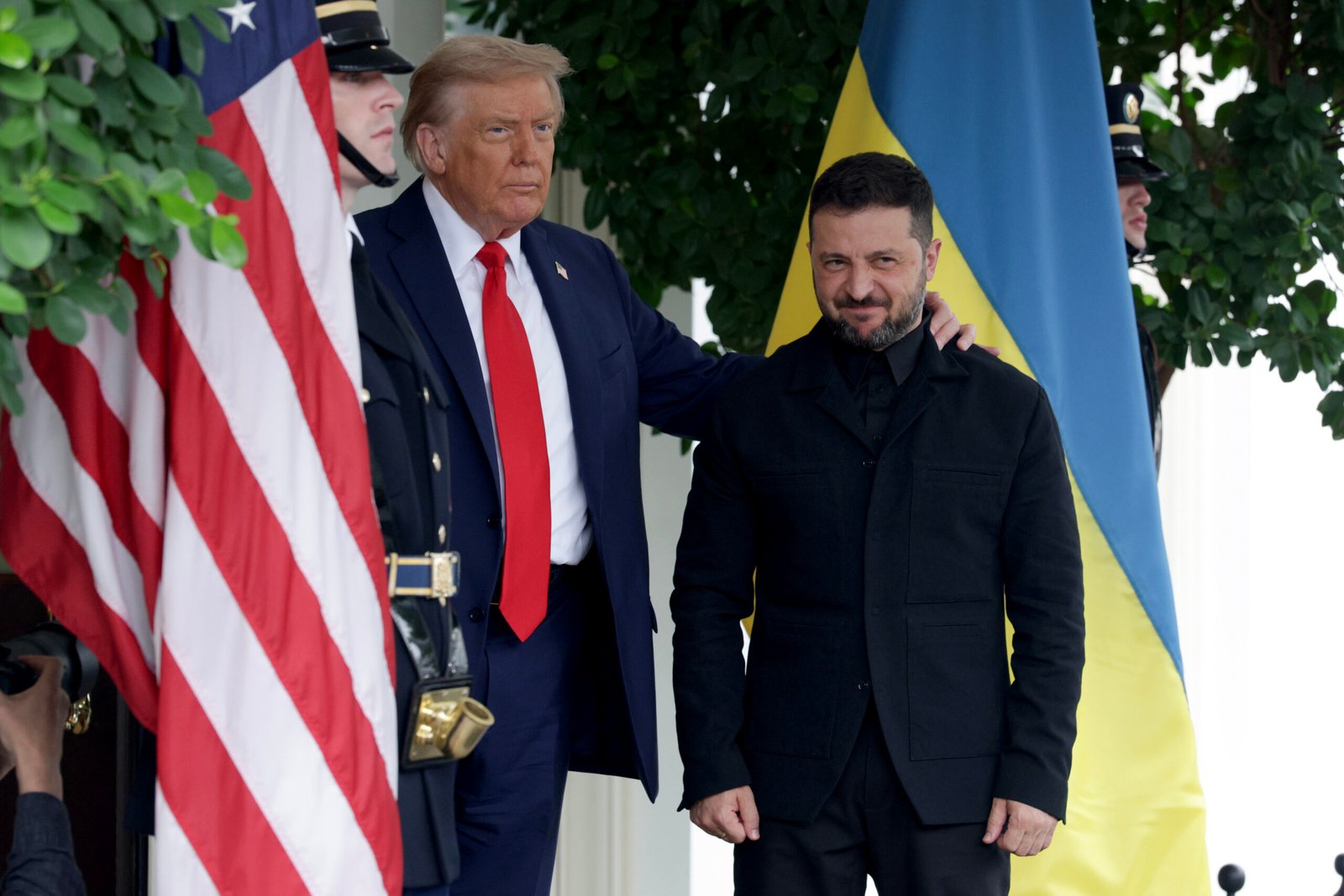
President Donald Trump appears to be repeating a serious mistake of his predecessor.
Way back in November 2022, disagreement broke out inside the Biden administration about the implications of recent military gains made by Ukraine. Mark Milley, the chairman of the Joint Chiefs of Staff, advised pushing hard for a diplomatic settlement to lock in those gains. He warned that Ukraine’s battlefield position—and thus also its bargaining position—was likely to worsen in the coming months.
Biden listened instead to Secretary of State Antony Blinken and National Security Advisor Jake Sullivan. They counseled against peace talks while Ukraine had the momentum and a chance to roll back the Russian invaders. Milley—at the time, America’s highest-ranking general—turned out to be right about the war’s trajectory. Tough luck for Ukrainians.
Now, nearly four years later, Western media again are saying that “the tide has turned” against Russia. And the White House has again concluded that it’s therefore a bad time to push for peace. But sooner or later, the tide will turn again, and the next big wave could drown Ukraine.
Don’t take it from me. Jennifer Kavanagh, a senior military analyst at Defense Priorities, wrote this week, “The pendulum is likely to swing back in Moscow’s favor soon enough.”
To be sure, Ukraine has found some dramatic success striking inside Russia. But, Kavanagh writes, Russia’s firepower superiority enables Moscow to climb higher than Kiev up the escalation ladder—hence the rather dire recent headlines—and its manpower advantage is what matters in the attritional war on the ground. Indeed, Ukraine’s losing strategically important territory even now.
Still, the moment can’t be a comfortable one for Russia’s President Vladimir Putin. A recent poll by the Levada Center, a Moscow think tank, found that 67 percent of Russians said peace talks should begin—a record high—while only 24 percent said military action should continue. I doubt Putin would call a general mobilization amid such war fatigue, and Russia, for the first time in years, seems to be losing more troops each month than it recruits.
Ukraine’s deep strikes on Russian oil refineries have contributed to the fatigue, generating fuel shortages and ominous images. This week in Russian-occupied Crimea, a Ukrainian attack on energy infrastructure knocked out power across the peninsula. “The situation is catastrophic. We have blackouts, water cuts, the beaches are empty,” one resident told the BBC. “People thought the war would be far away in Ukraine. But now, it’s here.”
Moreover, global oil prices plummeted following a ceasefire agreement between the U.S. and Iran (granted, an ever more tenuous-looking arrangement), robbing Putin’s government of revenue. That’s money the Kremlin can’t pour into the Russian economy as the wartime sugar high fades. Sixty percent of Russians say their local economic conditions are getting worse, according to a recent Gallup survey. It was the first time in the survey’s 20-year history that a majority of Russians had expressed that view.
Subscribe Today
Get daily emails in your inbox
Contra the White House’s apparent reasoning, now would seem a relatively propitious time to seize the diplomatic initiative. Moreover, Trump has reduced American direct support for Ukraine’s war effort, and Europe has shouldered more of the burden, making Washington a more plausible mediator than it had been under Biden or even last year.
Of course, negotiating an end to the Russia–Ukraine war is easier said than done. Deep distrust between the belligerents makes diplomacy that much harder. And, as I have reported, Trump never put together the kind of professional diplomatic team that could create space for agreement between the two sides.
But resolving the war was a key campaign promise for Trump. As Biden should have known, the best time to push for peace is when the wheel turns in Ukraine’s favor. At some point, the Ukrainians won’t get another turn.
[ad_2]
Source link
