
[ad_1]
The U.S.-Israel relationship has never been less popular in America, but at the same time that support for Israel is cratering in American public opinion, Congress appears to be fast-tracking an effort to entrench the relationship and give Israel enduring access to both our most sensitive technologies and our most sensitive intelligence—in exchange for nothing more, it seems, than a thank you note from Israel’s Prime Minister Benjamin Netanyahu.
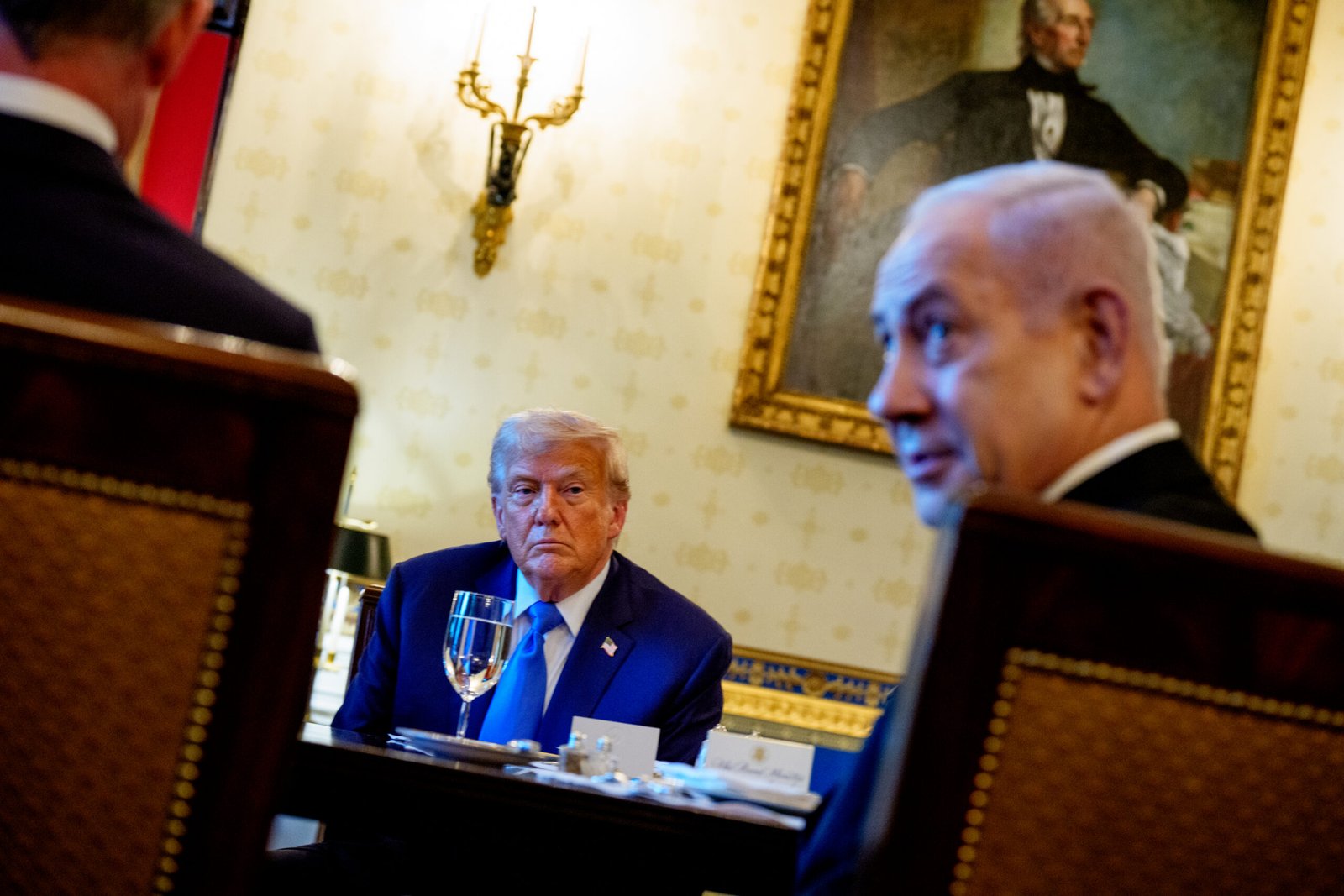
At the same time, the U.S. is at war, stuck in an unpopular and unnecessary conflict whose political and economic impacts create mounting and unanticipated obstacles for the Trump administration’s agenda. While this week Trump has seemed intent on escalating the conflict, he’s also shown a desire to end it—and a recognition of one major roadblock to peace. The president’s frustration at Netanyahu—who played a key role in convincing him to enter the conflict, and who can now act as a spoiler to prevent him from exiting it—has become evident in recent weeks.
Given the challenges posed by the Israeli leader, a common complaint on both the right and the left of American politics is that Israel exerts far too much power in U.S. politics. But a closer look at the facts demonstrates that Netanyahu is actually in an incredibly weak position—or would be, if the administration was willing to assess and deal with the entire U.S.-Israel portfolio holistically.
Trump’s interests are relatively clear: to extract the U.S. from the war in Iran, reduce Israel’s dependency on American military support, and get Israel to make real progress towards Palestinian self-determination in order to have a chance of getting the Abraham Accords back on track. As Trump’s apparent frustration with Netanyahu entered the headlines in recent weeks, the president seemed to understand the ways in which Israel’s prime minister undermines these interests.
Netanyahu’s own objectives are not shaped as much by geopolitics, or even national interest, as much as they are by the growing urgency of presenting himself as a winner in time for Israel’s elections this fall. To do this, he has to leverage U.S. military power to deliver something resembling a win in Iran (which seems less and less likely), do the same in Lebanon (now a quagmire), and demonstrate that despite the collapse of U.S. public support and the foreseeable end of U.S. grant military assistance, he has guaranteed a means of enduring Israeli influence in Washington that doubles as a financial boon for Israel’s tech sector and broader economy.
In short, his back is against the wall. By October, he may be out of a job. And by January, after the 120th Congress is seated, the odds of the U.S. enacting laws that entrench Israel in our defense and intelligence systems may drop precipitously.
Netanyahu, as is typical for him, is projecting strength, to the point of hubris (which is also typical for him). His advantage to this point has rested on keeping the two negotiations (Iran and framework legislation) separate. In the Iran context he can exercise significant leverage as a spoiler, and in the legislative context he can exercise significant leverage through Republican congressional endorsement of a plan for which he has publicly taken credit. For as long as these lanes stay apart, he would seem to have the advantage.
But as a businessman, Trump knows the value of writing his own script and re-framing the situation in a way that benefits his—and America’s—interests. In this context, the way to do that is by combining all three tracks in the U.S.-Israel relationship—Iran, Palestinian self-determination, and the future of security cooperation—into one.
There are signs he may already have recognized this. Although the White House pushed back on recent reporting from NBC and the New York Times regarding Israeli espionage against the United States, those stories may have been a shot across the bow following an incredibly contentious call between the two leaders. Or in other words: “Play nice on Iran, or the intelligence cooperation under consideration by Congress gets pulled.”
There’s no reason for the White House not to lean into this further. Netanyahu has not shown himself to be a helpful partner for the U.S.—indeed, from Gaza to Iran he has undermined U.S. regional and global influence and interests. There’s no reason to think a future Israeli government under his leadership would be any more compliant, particularly once laws are passed by the U.S. guaranteeing Israel lasting influence over U.S. national security equities. In short, while Israel may be able to punch above its weight when it comes to shaping U.S. diplomacy (and warfare) on Iran, in the bigger picture Netanyahu needs Trump far more than Trump needs Netanyahu.
The administration should leverage this opportunity by linking all three tracks together. Specifically, it should signal to Israel that continued progress on the pending U.S. legislation is premised on Israeli compliance with U.S. efforts to wind down the regional conflict and with U.S. efforts to drive forward a real diplomatic pathway for Palestinian self-determination. To demonstrate he holds the upper hand, Trump should also work with Republican leadership in Congress to slow-roll the current legislative vehicles so that Netanyahu cannot present them as a “sure thing” prior to Israel’s elections.
Subscribe Today
Get daily emails in your inbox
Such an approach would not only incentivize Netanyahu to work more constructively with the administration, but could also inform the policies and campaign strategies of Israel’s opposition leaders, resulting in a more compliant Israelis after the fall elections.
U.S. presidents have always had the upper hand, in theory, when it comes to dealing with Israel. They can suspend arms transfers or soften their diplomatic support for Israel, opening it up to both sanctions risk and legal peril through the ongoing proceedings at the International Court of Justice and International Criminal Court. Trump would be right to consider integrating these pressure points into his strategy as well, though he’s unlikely to take that path. But there’s a unique opportunity now between Netanyahu’s domestic political position as Israel enters election season, and Israel’s potential moment of crisis when it comes to transitioning U.S. security assistance into some form of enduring influence.
This is a winning hand for President Trump, should he choose to play it. There is no need to give away the game, as Congress now seems poised to do, just as the cards have been dealt. Trump can use Israel’s desperation for defense and intelligence integration as leverage to constrain Netanyahu on Iran. After Israel’s elections and the U.S. midterms, he will still have time to assess if the current legislative work to integrate Israel needs to proceed, or if further concessions are needed from Netanyahu or a new Israeli government, before signaling his assent to Congress.
[ad_2]
Source link
