
[ad_1]
This summer, the world has come to America.
Fans from dozens of countries have crossed oceans for a chance to watch the World Cup on American soil. The nearly six-week-long spectacle culminated on Sunday as Spain lifted the trophy above defending champs Argentina after an epic overtime battle. But what many fans found during their stay was something they didn’t quite expect: the sheer marvel of America itself. Viral videos have lit up social media with Europeans wandering slack-jawed through Bass Pro Shops, captivated by Buc-ee’s, and discovering ranch dressing dispensed by machine. They’ve paid more than $100 for concessions at matches. They’ve booked $500 hotel rooms in cities they’d never heard of before. They’ve spent thousands, happily, for a once-in-a-lifetime American experience – and by most accounts, they are delighted.
This is what bucket-list tourism looks like. These visitors are not price-sensitive. They came for America, and America is delivering.
The same has been true of our national parks for more than a century.
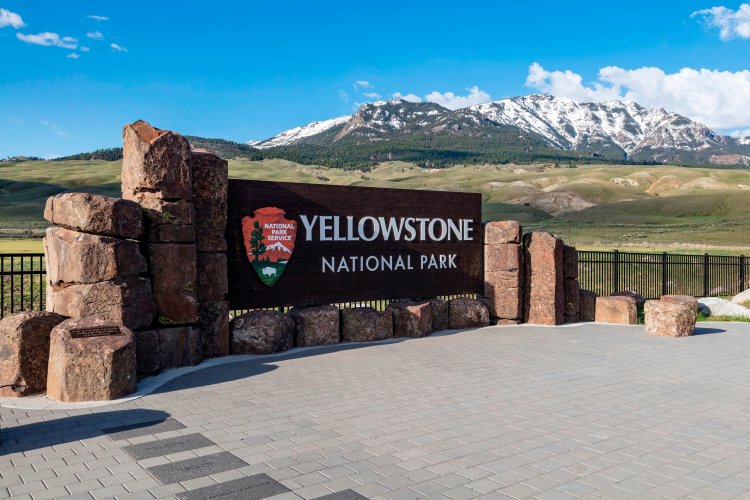
Long before any World Cup, international visitors began making pilgrimages to see the wonders of parks like Yellowstone, the Grand Canyon, the Great Smoky Mountains, and Glacier. About 14 million overseas travelers visit U.S. national parks each year – roughly one in three international tourists to the United States visits at least one site within the National Park Service. They fly thousands of miles, rent cars, and book lodges. At Yellowstone, the average international visitor spends an estimated $4,500 on their trip. They are not casual sightseers. They’re bucket-list tourists, and they know it. Until this year, they were also paying the same $35 entry fee as the Wyoming family driving into the park for the afternoon.
That changed on Jan. 1, when the Department of the Interior implemented a $100 international visitor surcharge at 11 of the most popular parks – an idea that the Property and Environment Research Center (PERC) has championed for years. Our research shows why it makes sense: Demand for parks like Yellowstone is extraordinarily inelastic. Even a $100 surcharge is projected to reduce total visitation by just 1.3%, while generating significant new revenue for park stewardship. When you’ve already spent thousands to cross an ocean, an entry fee is a rounding error. The World Cup fans paying $23 for a stadium beer already understand this math.
The surcharge is a start. But executive actions can be undone – and a few in Congress have already opposed the fee, citing immigration enforcement concerns, which a bipartisan group of legislators rightly dismissed. An entry fee is not an enforcement tool. Congress now has the chance to make this permanent and, more importantly, to ensure that revenue is dedicated to fixing the parks themselves.
The America the Beautiful Act, which recently cleared committee in both chambers with overwhelming bipartisan support, would inject $1.9 billion annually for five years into the National Park Service’s Legacy Restoration Fund, funded in part by codifying the international visitor surcharge into law. The need is urgent. Our parks carry more than $24 billion in deferred maintenance. Yellowstone’s backlog alone tops $1.2 billion – with failing wastewater systems, crumbling bridges, and trails in disrepair. The Grand Canyon’s trans-canyon water line has broken 85 times since 2010. The 2020 Great American Outdoors Act helped, but the maintenance hole has kept growing. We are not keeping up.
House Natural Resources Chairman Bruce Westerman called the America the Beautiful Act “a birthday gift to America.” Despite the surge in momentum, it’s not across the finish line just yet. As we mark our 250th, our parks need our help to fully realize their promise as America’s Best Idea.
National parks are where patriotism meets place. They remind us that loving America means caring for the landscapes that tell our shared story. The fans who have flocked to our country this summer for the World Cup, and the millions who come every year for the parks themselves, deserve to find America at its best. Before the glow of the World Cup fades, Congress should prioritize sending the America the Beautiful Act to the president’s desk.
[ad_2]
Source link
