
[ad_1]
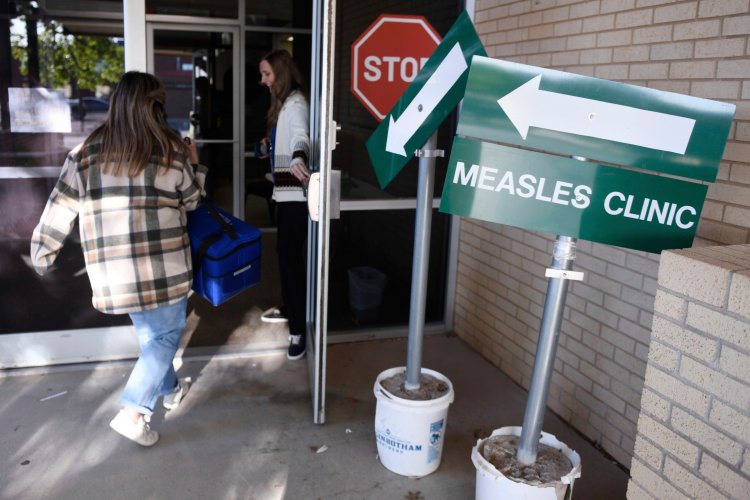
What’s happening with measles in Pennsylvania? There is currently a disagreement between local health officials and the feds over whether there are one, two, or no measles deaths in the ongoing outbreak there. Also perplexing is the state reporting nearly 90 recent measles hospitalizations – that is more than all of Canada and half as many as the rest of the U.S. so far this year. The Pennsylvania hospitalization numbers are a conspicuous outlier.
Whatever the truth, the neglected story of the 2025-26 American/Canadian measles epidemic is that while the virus is proliferating, the disease gives indications of being less severe than ever before. This trend of milder cases has become so prevalent that the current Centers for Disease Control and Prevention (CDC) website might require updating.
Last year, the U.S. had nearly 2,300 measles cases, its highest total in 35 years. In 2026, that number has already been exceeded as the U.S. now has nearly 3,000 cases, roughly 9 cases per million population, a number in line with that of most of Western Europe. In Canada, measles spread has now slowed considerably, but the country had more than 5,000 cases in 2025, 125 cases per million population – far outdistancing the U.S. Although new measles cases have dropped to single digits in Canada in the past month, the overall number of measles cases per capita in 2026 remains three times that of the U.S.
In the past two years, the two countries have had a combined 12,000 cases. Of these, roughly 8,000 fall into the pediatric age range. Despite the high numbers, so far they have resulted in historically low totals of the two most severe measles outcomes: hospitalizations and deaths.
The CDC website currently says 20% of unvaccinated people with measles would be expected to be hospitalized. That is far removed from what is actually happening in both the U.S. and Canada: The percentage of hospitalized measles cases has been less than half that since the outbreak started, even when the new anomalous high-outlier numbers from Pennsylvania are included. The vast discrepancy between what the CDC has published and the reality on the ground cannot be accounted for by underreporting – the divergence is too great. Nor can it be by chance – the odds of the discrepancy being such a random event are negligible.
A similar phenomenon is occurring with death statistics. The CDC quotes the high-end expected mortality of measles to be 1 in 300 cases (mortality 0.3%) and the low end to be 1 in 1,000 (mortality 0.1%). Depending on how the two deaths in Pennsylvania are classified, pediatric deaths from measles in the U.S. and Canada are either five, six or seven out of 8,000 cases in 2025-26.
Based on what is going on in the two countries, the published CDC pediatric mortality of 0.3% would be far too high an estimate and again is essentially impossible. It indicates the CDC upper limit of mortality in measles should be revised to 1 in 1,000. In other words, 0.1% should be considered the high, not the low, estimate.
Obviously, an unexpected spate of deaths could change this – just as a .200 hitter in baseball can raise his batting average significantly with several three-hit games. But, put simply, the historical figures for measles hospitalizations and deaths in the U.S. and Canada currently appear to be too high – prima facie evidence that despite the worst outbreak in years, measles cases in the two countries may be milder than ever before. The disease itself may be getting weaker.
This is likely the continuation of a trend that has been going on for over a century, even before the measles vaccine was introduced. In 1919, 13,000 people in the U.S. died of measles. By 1960 – several years before the vaccine was distributed to the public – that number had fallen to under 400. The advent of the vaccine essentially eliminated measles for those who were vaccinated and accelerated the already declining trend of measles deaths. Today, measles deaths across the U.S. have been reduced to single figures or even zero in many years.
Once random chance is eliminated, this is the result of three possibilities: new treatments, a weakened measles virus, or healthier hosts. After World War II, antibiotics probably reduced deaths from measles complications. But since the vaccination era began, no new treatments have been proven to prevent hospitalization or improve mortality in measles.
The observed lower hospitalization and death rates beginning in the last 50 years, and now evident, may come from either a less virulent measles strain or healthier hosts – possibly a combination of these two. Whether the current strain of measles is less dangerous than those in the past is a complicated scientific question and should prompt ongoing research by virologists and epidemiologists. An increasingly healthier cohort, benefiting from better sanitation and nutrition, probably plays a role in fewer complications.
It bears emphasizing: Even with fewer complications from measles, vaccination remains the mainstay of measles prevention, and, absent medical contraindications, everyone should be vaccinated. The risks of measles, while less than in the past, still far outweigh those of vaccination. Vaccination is still required because severe measles complications, while less common, are still present – even 1 in1,000 people dying is too many.
In addition, it is unknown whether the delayed neurologic and pulmonary complications of measles, as well as future loss of immunity measles can cause, will follow the same pattern as deaths and hospitalizations. Finally, measles outbreaks still entail significant economic and, especially for children, social and emotional costs.
Viral diseases evolve and hosts also evolve. It behooves us to learn more about how and why. The main reason the COVID pandemic was so devastating was that there was scant information on how that novel virus would behave or how a population that had never been exposed would respond. As the COVID pandemic progressed, the populace developed immunity through infection and vaccination, with deaths and hospitalizations decreasing dramatically. Is this same phenomenon happening on a much slower scale with measles?
The current fight in Pennsylvania over the reliability of public health data reporting should not obscure the good news that in the midst of the current American/Canadian epidemic, fewer serious measles complications, as measured by hospitalizations and deaths, are occurring than in the past. The CDC should revise their estimates and in the interim we should all be grateful.
[ad_2]
Source link
