
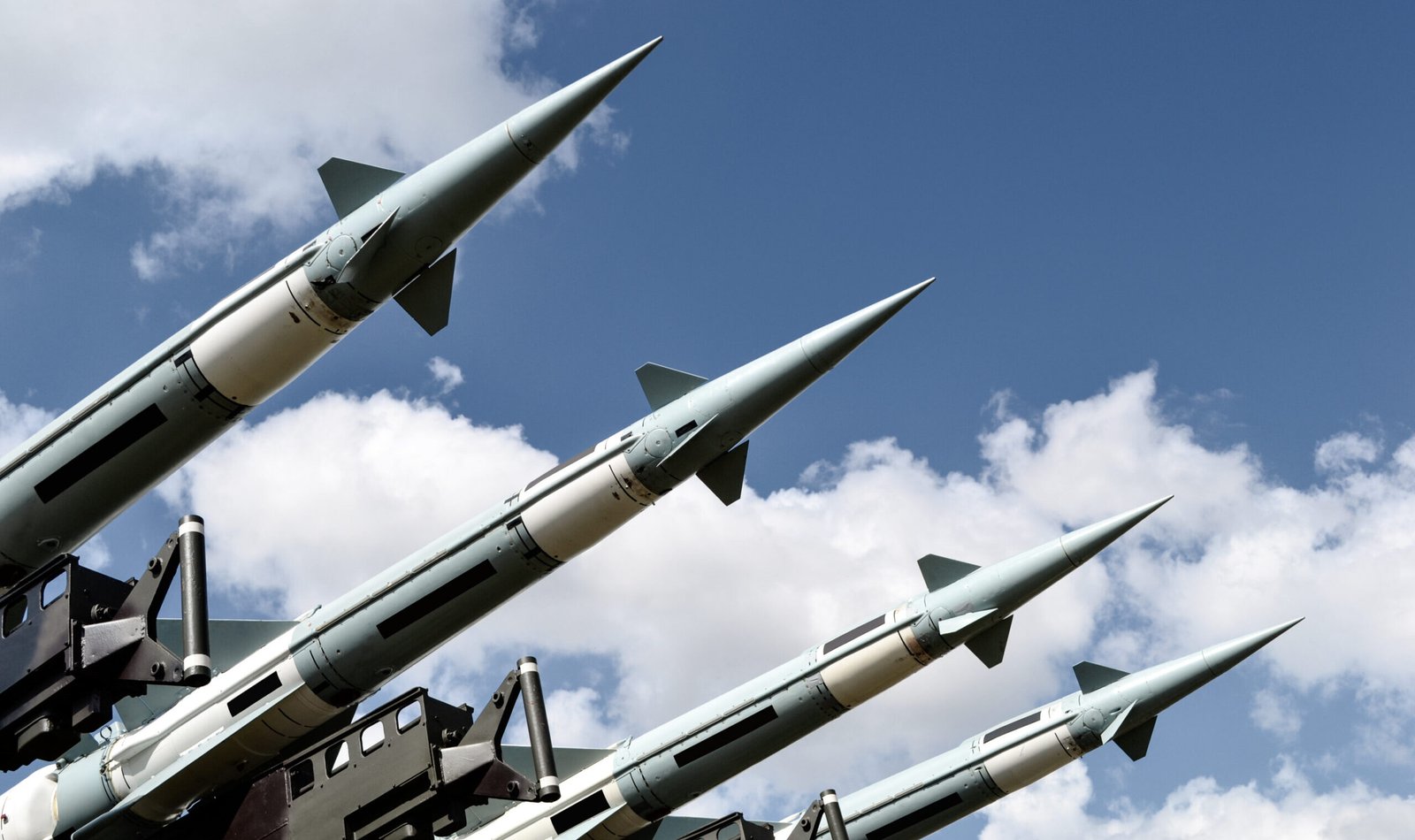
Of the many indications that Donald Trump’s Iranian adventure has spun out of control, perhaps the most telling—and significant—is the demand from members of Congress that the U.S. acknowledge Israel’s nuclear weapons arsenal and its unchallenged status as a longtime member of the nuclear weapons fraternity.
The current initiative, led by Rep. Joaquin Castro (D-TX) and supported by more than a score of House Democrats, calls upon Washington openly to discuss Israel’s nuclear doctrine and capabilities in order to “hold Israel to the same standard as other countries and provide transparency on Israel’s nuclear capabilities, ending decades-long ambiguity.”
“We are, in the fullest sense, fighting this war side by side with a country whose potential nuclear weapons program the United States government officially refuses to acknowledge,” the signatories note. “A policy of official ambiguity about the nuclear capabilities of one party to this conflict makes coherent nonproliferation policy in the Middle East impossible. Congress has a constitutional responsibility to be fully informed about the nuclear balance in the Middle East, the risk of escalation by any party to this conflict, and the administration’s planning and contingencies for such scenarios.”
Shining a bright light on Israel’s nukes was certainly not on Washington’s—and certainly not Jerusalem’s—war agenda. Indeed, a quick, complete victory over Iran was meant to secure Israel’s status as the region’s only nuclear power, enabling it to wield strategic influence over a region defined by Ariel Sharon as spanning from North Africa to Pakistan.
Israel’s aspiration to create and maintain a nuclear monopoly over its Arab and Iranian enemies is almost as old as the Jewish state itself. The nuclear program began during the 1950s, led by Ben Gurion and his deputy Shimon Peres in league with the French. A nuclear weapons capability was viewed in Jerusalem as Israel’s ultimate protection against Arab intentions to annihilate the nascent Jewish state and a key instrument of strategic dominance.
In the aftermath of Israel’s tremendous military victories in June 1967, discussion between Washington and Jerusalem, led by the Pentagon official Paul Warnke and Israel’s U.S. ambassador and soon-to-be prime minister, Yitzhak Rabin, agreed upon a formula that, despite some American misgivings even then, remains at the heart of U.S.-Israel strategic relations—the formula that Castro and others now want to terminate.
The agreed blueprint was simple and elegant—the U.S. would commit to maintain Israel’s conventional military superiority over any combination of enemies—known in the trade today as “Qualitative Military Edge” (QME). In return Israel’s continued development of its nuclear arsenal, which is now estimated at 90 bombs based upon a triad of land, sea, and air delivery capabilities, would be kept “in the basement,” ambiguous and undeclared.
During the 1973 October War, Moshe Dayan seriously considered deploying nuclear weapons to stop a feared Syrian breakthrough from the Golan Heights to the Galilee.
Dayan reportedly spoke in apocalyptic terms about the possible “destruction of the Third Temple”—biblical shorthand for the State of Israel. Prime Minister Golda Meir authorized preliminary nuclear readiness measures. These reportedly included preparing Jericho surface-to-surface intermediate-range nuclear capable missiles, readying nuclear-capable aircraft, and signaling heightened strategic alert status.
Israel soon recovered the initiative on the Golan and Sinai. Israel’s bomb remained “in the basement”—ever-present but undeclared and undeployed.
Israel, noted Shimon Peres in an off-the-cuff remark that became Israel’s official, standard refrain, would not be the first to “introduce” nuclear weapons to the region.
The strategy of ambiguity, combined with a relentless effort to short-circuit Arab and Iranian nuclear programs, served Israeli interests as well as Washington’s.
All efforts over the years, whether in Washington or in the international arena, have failed to undermine the United States’ and Israel’s fidelity to this formula. Note the ritualistic declarations of the “ironclad” American commitment to QME over the decades.
No longer. Castro and others may not realize it, but what they are demanding is a wholesale reconsideration of Israel’s nuclear, conventional, and defense capabilities and Washington’s role in supporting them. Their effort risks shining a critical light on the nuclear centerpiece at the heart of the U.S.-Israel security partnership which has flourished in darkness for more than half a century.
Taking away the support for Israel’s doctrine of nuclear ambiguity risks undermining the historic bargain supporting Washington’s extraordinary supply of non-conventional weapons—the bombs and planes that continue to rule the region—and provide the foundation for Israel’s QME.
Subscribe Today
Get daily emails in your inbox
Israel’s continuing, ferocious attack against Palestinians and Lebanese has already created unprecedented problems for Israel on Capitol Hill and among large segments of the American public. Prime Minister Benjamin Netanyahu prides himself on his ability to read the mood in Washington and move it in his direction. By any measure his efforts have been extraordinarily successful—viz. the (failed) joint assault against Iran now playing out in the region.
But the metastasizing failure that is the war against Iran is now forcing Israel, sparked by the changing mood in Capitol Hill, itself a reflection of a changing national mood—to rethink core elements of the U.S.-Israeli conventional arms supply relationship.
This was certainly not what Netayhau or Trump had in mind when they launched the assault on Iran.
