
[ad_1]
They say everything’s bigger in Texas. The latest proof is a federal court case that could lead to the biggest shakeup of American labor law in three quarters of a century – a shakeup that workers urgently need.
That’s the reality of a May decision by a U.S. district court in Fort Worth in the case Aunt Bertha v. National Labor Relations Board. The court ruled that the NLRB – the main government agency overseeing union organizing and collective bargaining in the private sector – is unconstitutional on multiple counts. This case seems destined to head to the Supreme Court, and if it does, Congress may have to rewrite federal labor law to meet workers’ needs in the 21st century.
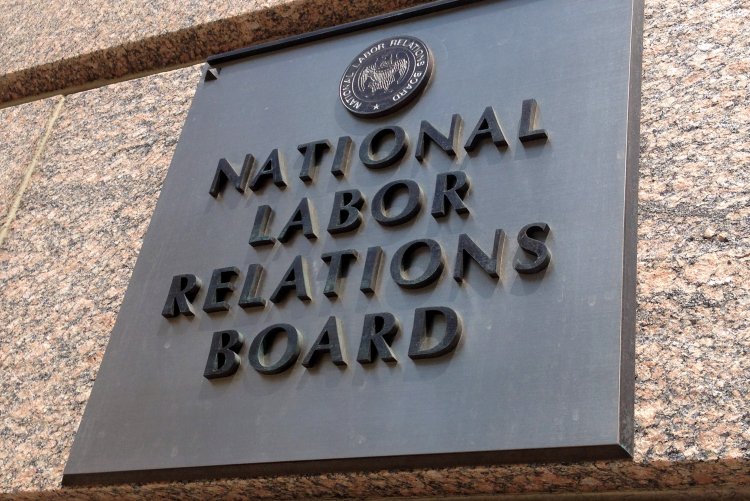
The National Labor Relations Board has been a fixture of the federal government since the 1930s. The agency oversees unionization elections at workplaces, investigates and prosecutes unions and businesses for unfair labor practices, and issues regulations and decisions covering most of the private sector. Yet as the district court made clear, the NLRB has been unconstitutional from the start.
All told, the court found that the NLRB’s structure violates the Constitution in three major ways. First and foremost: Its leadership isn’t subject to the public’s control – which is to say, it’s undemocratic.
The NLRB is led by up to five board members. While these officials are appointed by the president of the United States, the law prevents the president from firing them over policy disagreements. Yet the Constitution vests all executive power in the presidency, which includes the NLRB’s rulemaking ability. If a president can’t fire board members because he disagrees with their decisions, his constitutional power has been weakened, which in turn weakens the public’s ability to control their own government by electing a different president. The board members are unaccountable no matter who the American people vote into the White House.
The district court ruled that a president – whether Republican or Democrat – must have the full authority to get rid of NLRB board members. And the court said the same must be true of the NLRB’s administrative law judges, who are at the center of the second constitutional violation.
Most Americans have never heard of administrative law judges, but these bureaucrats exert enormous power over workers and businesses. Essentially, they have the authority to decide when unions or businesses have violated federal labor law. But like the NLRB’s board members, they can’t be fired for policy reasons. They’re insulated by multiple levels of bureaucracy. Once again, the basic democratic and constitutional principle of political accountability is nowhere to be found.
But the third constitutional violation is surely the biggest, and it centers on the administrative law judges, too. The district court found that the board’s enforcement process, overseen by these quasi-judges, violates the constitutional guarantee of a jury trial, which is plainly true. When these bureaucrats hear cases involving a union or a business, they act as jury, judge, and executioner. But when someone is accused of violating federal law, they have a constitutional right to a trial by jury.
Thanks to the district court’s ruling, the NLRB can no longer bring charges against unions or businesses in central-north Texas and northwest Texas. The NLRB may appeal to the Fifth Circuit, which has a history of protecting workers from NLRB overreach. That could extend the ruling across all of Texas, Louisiana, and Alabama. And if this case reaches the Supreme Court – which is hyper-focused on restoring constitutional boundaries – the NLRB could soon be effectively unable to act nationwide.
But a ruling from the highest court in the land wouldn’t be the end of the story. Without the NLRB, much of the private sector would effectively have no enforceable labor law. So Congress would need to write better labor laws – ones that uphold the Constitution while better protecting workers’ rights. Lawmakers should start preparing for this momentous challenge. In particular, they should be thinking about how to guarantee workers’ right to a secret ballot election, improve worker privacy protections during unionization campaigns, and let all workers negotiate their own contract with employers.
This local case has received almost no coverage, but it could lead to the nationwide changes that workers need, so long as the Supreme Court and Congress are up to the challenge. Everything may be bigger in Texas, but this case may be one of the state’s biggest contributions to America yet.
[ad_2]
Source link
