
[ad_1]
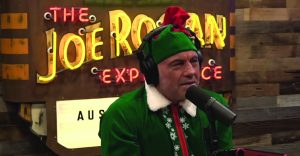
The years 2024 and 2025 must have been a heady experience for documentary filmmaker Ky Dickens. In September 2024, she began releasing the ten-episode first season of her The Telepathy Tapes podcast. By December, the show started to appear on year-end lists of the best podcasts of 2024. Then lightning struck on Christmas Day. Based on hearing just two episodes, Joe Rogan (the undisputed king of podcasting, with millions of followers, who on this occasion happened to be wearing an elf costume) gave a brief favorable review of The Telepathy Tapes and expressed his belief that telepathy is real. Suddenly The Telepathy Tapes shot up the charts, briefly hitting number one and eclipsing the Joe Rogan Experience. By the end of January 2025, Dickens and the podcast had been signed with a talent agency (Katcy 2025).
In January 2025, Dickens released a series of “Talk Tracks” episodes that followed up with people from season one and introduced new paranormal ideas. Whereas season one had been released without advertising, Dickens’s new fame brought national sponsors and commercials for car insurance, mail order clothing, brassieres, CBD, microdose psilocybin (“magic mushrooms”) tea, and food delivery subscriptions. Later in 2025, The Telepathy Tapes website began offering a “backstage pass” subscription at $5.99 per month or $9.99 for “All Access” and various forms of merchandise, including hats, hoodies, and t-shirts. While on her summer tour, singer Ani DiFranco promoted the podcast and announced that she would be doing the music for the upcoming The Telepathy Tapes documentary film (KGNU Music 2025). Finally, as a tangible indication of its success, The Telepathy Tapes ended 2025 as the forty-first most popular podcast on Spotify, just below Pod Save America (forty) and three spots above Conan O’Brien Needs a Friend (forty-four) (Spangler 2025). Among 2025 Apple Podcasts, The Telepathy Tapes was the top podcast series, was the most shared podcast, and had the top podcast episode of the year: season one episode one.
All this is evidence that pseudoscience sells. As I have described in a previous article, season one of The Telepathy Tapes made the bold claim that nonspeaking individuals with profound autism are capable of communicating telepathically with their parents and teachers, as well as with each other (Vyse 2025a). Some could also communicate with the dead. As exciting as this sounds, there is one huge hitch: The purported telepathic messages were obtained using various forms of facilitated communication, the thoroughly debunked communication technique opposed by many professional and advocacy organizations, including the American Speech-Language-Hearing Association (see facilitatedcommunication.org). For telepathic messages to be valid, the communication method used to report them must be valid. As a result, Dickens and the parents and teachers featured on the podcast exhibit two levels of unfounded belief: first in facilitated communication and second in telepathy.
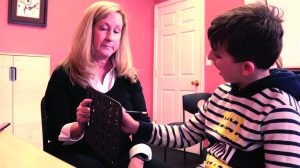
An important secret of the success of The Telepathy Tapes is that it’s an audio podcast; listeners hear amazing descriptions of what is going on, but they can’t see the communication methods in use. Because Dickens’s original intent was to make a documentary film, all the material of season one was filmed, and for a ten-dollar fee, visitors to the podcast website are able to see a few video clips of what was happening. For analysis of some of those videos, see Janyce Boynton’s article “Debunking The Telepathy Tapes: The Role of Facilitator Behaviors” elsewhere in this issue.
Beyond Season One
Because most of the material of season one centered around a group of profoundly autistic children and adults, most of the paranormal phenomena presented was limited to them. But after season one, the guard rails fell off. Now it appears that any form of amazing woo is grist for The Telepathy Tapes mill. Along the way, we meet a long list of gurus, intuitives, and religious and spiritual guides. Inspirational writer and bestselling author of Eat Pray Love, Elizabeth Gilbert, makes an appearance (S2E21), but perhaps the best known of these thinkers is none other than Deepak Chopra, who is a classic purveyor of what psychologist Gordon Pennycook and colleagues call “pseudo-profound bullshit” (Pennycook et al. 2015). For example, in season one episode twenty-eight, Chopra insightfully declares that “consciousness does not exist in spacetime. Spacetime exists in consciousness. And if you start with that premise, that consciousness is the ontological primitive of the universe, then everything is easily explainable.”
Throughout the podcast, this kind of gauzy New Age talk is taken at face value, and anyone who has a scientific or skeptical approach is kept off stage and labeled a “materialist.” Ironically, this is the same epithet that was leveled at skeptics during the Spiritualist craze of the late nineteenth century. If your beliefs were based in nature and bounded by science, you were a materialist. In contrast, spiritualists believed that consciousness is not tied to the body and could both travel between bodies and persist after death. Interestingly, for people such as early psychologist and psychical researcher William James, telepathy was a bad thing because it represented an obstacle to proving the existence of an afterlife. If the medium at a séance were reporting information about a deceased target by reading the mind of the sitter rather than communicating with the dead, it would be an amazing skill, but it would not support the spiritualist hypothesis of life after death (Vyse 2025b). In the case of The Telepathy Tapes, the project is less about communication with the dead—although, there is some of that, too—and more about communication with parents and other people with autism who are still living; in that case, telepathy is just fine.
Magical Phenomena
Season two of The Telepathy Tapes credulously reports on many dazzling phenomena. Dickens introduced the new season by saying, “We’re opening up the next channel,” which seems to have been an understatement. Here are a few examples:
Telepathy with animals: A young competitive rider’s horse telepathically told her that he would not complete a particular jump because he was afraid it would hurt her. The rider was discovered to have juvenile arthritis, and when the arthritis was properly medicated, the horse was willing to do the jump (S2E5).
Telepathy with plants: A nonspeaking teen “says she’s been telepathically connected to plants since birth … offers herbal remedies no one taught her, identifies health issues her family hasn’t shared, and describes plant communication as naturally as breathing” (S2E6). Of course, these revelations were all obtained through a form of facilitated communication.
Remote viewing: Without ever having been to Korea, a New Jersey therapist was able to accurately describe a woman’s home in Korea, as well as where the woman was sitting at a particular moment. In addition, the therapist identified a corner of the house behind where the woman was sitting that was full of “very toxic energy” (S2E8).
Psychic surgery: A man described painlessly having a wisdom tooth removed by a Beijing dentist without anesthesia in less than a minute. Although no testimonials were provided in this case, the dentist also claimed to be able to extract teeth remotely (S2E8).
Energy healing: Actor Tim Daly (Wings, Madam Secretary) broke both his legs in a skiing accident, but he was up against a TV production schedule. He approached an energy healer who moved her hands over his legs, and he was able to go back to work “in about a week to ten days” (S2E8).
Telepathy with dementia patients: A man claimed people suffering from Alzheimer’s and other forms of dementia sometimes contact him telepathically while he is driving his car. He was also able to communicate psychically with an Alzheimer’s patient with whom he did not share a common language (S2E10).
Mind sight: Children are said to be able to see things, read books, and identify objects while blindfolded. According to the podcast, even blind people can be taught to see with their minds (S2E11). Much of this mind-sight work is done with children, which raises ethical questions for me. What are the practical implications of teaching children (a) that they have magical powers or—assuming their powers aren’t magical—(b) to fool adults?
Near death experiences (NDEs) resulting in cancer cures (S2E12): There are many NDEs in The Telepathy Tapes, and most involve the typical features of bright white light, a feeling of warmth and love, and timelessness.
NDEs resulting in sudden savant artistic talents (S2E17 and S2E18): The importance given to sudden savant abilities in The Telepathy Tapes seems to be aimed at making an analogy to the sudden unexplained literacy of people who use facilitated communication. Given the great rarity of savants and the widely produced results of the spelling methods, the analogy seems quite weak to this listener.
The mechanism by which NDEs might cure cancer or produce sudden savantism is not explained, but these miracles both contribute to and draw upon the mystery surrounding NDEs.
When the podcast moved into health-related topics, the episodes began to include the necessary legal disclaimers, including “not FDA approved” and “don’t begin or stop any medical treatment without consulting your physician,” etc., but all manner of outlandish belief is given credulous coverage. Early in the podcast, Dickens describes herself as a skeptic, but after just a few episodes, she appeared to leave her skepticism behind. She often ends her episodes by saying “Please remember to stay kind, stay curious, and that being a true skeptic requires having an open mind.” She seems to have forgotten the full version of the motto adopted by many skeptics: “Keep an open mind, but not so open your brains fall out” (Farley 2014).
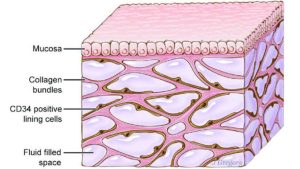
Throughout season two, these wild phenomena are bolstered by three philosophical frameworks. First, consistent with the rather vacuous statements by Deepak Chopra above, Dickens and others promote the view that consciousness is not attached to anything physical. Rather, it is the foundation of the universe. The physical world is a manifestation of our consciousness. To me this sounds like a rather egoistical and myopic assertion, but it is often repeated by various personalities on The Telepathy Tapes and proposed as a primary support for the reality of telepathy and communication with the dead. Second, Dickens and her guests frequently point to the untapped knowledge of ancient or indigenous peoples. Extracting teeth without anesthesia was accomplished with Qigong, which is part of traditional Chinese medicine; the herbal remedies of the nonspeaking girl are related to Native American medicine; and the remote viewing of the house in Korea was attributed to reiki, a form of Japanese energy healing that is also drawn from Qigong. Finally, there are several references to the newly discovered interstitium, a network of fluid-filled tubes throughout the body (Rettner and Livescience 2018). Dickens and guests argue—unpersuasively, in my view—that the discovery of this new organ somehow opens up new pathways of communication between individuals and new mechanisms for energy healing.
The Response to The Telepathy Tapes
Given the remarkable popularity of The Telepathy Tapes, it is likely that this podcast has done more than any other recent event to promote “spelling” (the term used to describe the latest variations of facilitated communication). This is nothing to sniff at. The parents and teachers who use these discredited methods mean well, but the profoundly handicapped children and adults subjected to them are being turned into marionettes to please the adults in their lives. The true humanity of these disabled individuals is being rejected in favor of a fantasy, and they are forced to endure many hours of manipulation rather than getting an appropriate education that would help them live as independently as possible.
Thankfully, this uplifting story of untapped intelligence and magical powers has not been greeted with uniform approval. An article on the British Psychological Society website in early November 2024, “Just Believe: The Strange Story of Facilitated Communication,” appears to have been the first strike against the podcast (Fisher 2024). Jonathan Jarry (2024) of the McGill University Office of Science and Society was next in line with an article in mid-December 2024, “The Telepathy Tapes Prove We All Want to Believe.” Additional critical articles appeared in the Guardian (Ryan 2025; Sawyer 2025), Vice (Busby 2025), and this magazine (Vyse 2025a). In addition, several podcasts and YouTube videos were quick to point to the podcast’s basis in a discredited form of communication.
Yes, there were also many adoring interviews with Dickens about The Telepathy Tapes, but the podcast’s great success also drew the attention of critics, which is a welcome development. Over the many years that facilitated communication and its variants have appeared in the news, the stories have almost always uncritically presented miraculous tales of discovered literacy and talent. The uplifting appeal of these stories—like the appeal of The Telepathy Tapes podcast itself—is just too attractive for news outlets to probe too deeply. I once met a documentary filmmaker who joked about “the fact too good to check.” That attitude appears to be a reality with so many of the writers of stories about facilitated communication. As a result, it is an encouraging sign that The Telepathy Tapes has received as much backlash as it has.
Status of the Documentary Film
Dickens’s background is in filmmaking, and from the beginning she said that the podcast was preliminary to the goal of making a documentary film about the users of these new forms of facilitated communication, people she calls “spellers” or “nonspeakers.” She has said she wants to do whatever she can to promote the use of these discredited methods, which she appears to accept as valid.
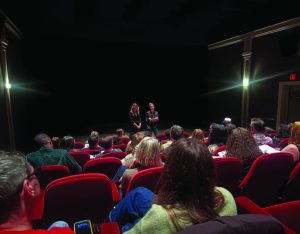
Dickens has periodically kept her listeners updated on the film’s progress, initially suggesting that it would be released in spring 2026; however, in an “ask me anything” segment of the podcast (S2E14), she indicated that various last-minute edits had pushed the completion date to summer 2026. According to posts on Dickens’s Instagram account, by February 2026, the film was very nearly completed. Ani DiFranco was indeed providing the music, and Dickens had held a few private screenings of an early cut of the film. As of this writing, there is no listing of the film on the Internet Movie Database (IMDb), and I have found no media mentions of distribution rights or theatrical release dates. It is possible Dickens intends to submit the film to festivals before settling on a distributor. In any case, people on both sides of this controversy will be anxious to see the completed documentary.
Conclusion
We live in dark times. In the United States, once-trusted government science agencies now spread anti-science, and conspiracy theories and paranormal beliefs long considered fringe are coming back. In this environment, The Telepathy Tapes may be more a symptom than a cause, but the success of the podcast is troubling. In addition to the forthcoming film, Dickens has said that there will be a season three of the podcast, and the show has already spun off a new YouTube program called “Now What?” which is aimed at parents of children with severe autism who are interested in the spelling techniques and want to explore the possibility that their children have telepathic abilities. It is also noteworthy that, in the second season of the podcast, Dickens began running commercials for an online homeschooling curriculum. Many parents who have sufficient resources have circumvented the rejection of facilitated communication by their local school systems by pulling their children out of school and teaching them at home. (See more on the homeschooling–facilitated communication connection in Katharine Beals’s article in this issue, “Telepathy via Facilitated Communication in Profound Autism: A 21st-Century Delusion.”)
If there is a bright spot to all this, it is that The Telepathy Tapes has not emerged unscathed. Many critics in the press and elsewhere are not falling for the world of woo presented in the podcast. To some degree, the success of The Telepathy Tapes has been its downfall, because its popularity has encouraged greater scrutiny, and I am confident that the release of the documentary film will be greeted with a new wave of reasoned critique. As Janyce Boynton’s article in this issue demonstrates, it is much harder to hide the flaws of facilitated communication on film than in an audio-only podcast. Whereas most previous presentations of facilitated communication in the press have been inspirational stories of miraculously discovered literacy, the response to The Telepathy Tapes has educated many people about the dangers of this pseudoscientific technique. Let’s hope that trend continues.
References
Busby, Mattha. 2025. The problem with the ‘magical children’ of the Telepathy Tapes. Vice (March 20). Online at https://www.vice.com/en/article/telepathy-tapes-podcast-autism/.
Farley, Tom. 2014. A skeptical maxim (may) turn 75 this week. Skeptic (November 4). Online at https://archive.skeptic.com/archive/insight/open-mind-brains-fall-out-maxim-adage-aphorism/.
Fisher, Naomi. 2024. Just believe: The strange story of facilitated communication. The British Psychological Society (November 7). Online at https://www.bps.org.uk/psychologist/just-believe-strange-story-facilitated-communication.
Jarry, Jonathan. 2024. The Telepathy Tapes prove we all want to believe. McGill Office for Science and Society (December 13). Online at https://www.mcgill.ca/oss/article/critical-thinking-pseudoscience/telepathy-tapes-prove-we-all-want-believe.
Katcy, Stephan. 2025. UTA signs ‘The Telepathy Tapes’ podcast and host/creator Ky Dickens. Variety (January 30). Online at https://variety.com/2025/biz/news/uta-telepathy-tapes-podcast-ky-dickens-1236289229/.
KGNU Music. 2025. Interview: Ani DiFranco (August 21). Online at https://kgnu.org/music-posts/interview-ani-difranco/.
Pennycook, Gordon, James Allan Cheyne, Nathaniel Barr, et al. 2015. On the reception and detection of pseudo-profound bullshit. Judgment and Decision Making 10(6): 549–63. Online at https://doi.org/10.1017/s1930297500006999.
Rettner, Rachael, and Livescience. 2018. Meet your interstitium, a newfound ‘organ.’ Scientific American (March 27). Online at https://www.scientificamerican.com/article/meet-your-interstitium-a-newfound-organ/.
Ryan, Jackson. 2025. ‘It can break you’: Life for parents of autistic children can be exhausting. One podcast is offering hope. Is it real? The Guardian (April 12). Online at https://www.theguardian.com/society/2025/apr/13/it-can-break-you-life-for-parents-of-autistic-children-can-be-exhausting-one-podcast-is-offering-hope-is-it-real.
Sawyer, Miranda. 2025. The week in audio: The Telepathy Tapes; self help; thinking allowed: playgrounds—review. The Guardian (January 25). Online at https://www.theguardian.com/tv-and-radio/2025/jan/25/the-week-in-audio-the-telepathy-tapes-ky-dickens-self-help-scottee-thinking-allowed-adventure-playgrounds-review.
Spangler, Todd. 2025. Spotify unveils top 50 podcasts of 2025, led by Joe Rogan, Theo Von, Mel Robbins. Variety (December 3). Online at https://variety.com/2025/digital/news/spotify-wrapped-top-50-podcasts-2025-joe-rogan-theo-von-mel-robbins-1236597755/.
Vyse, Stuart. 2025a. The Telepathy Tapes: A dangerous cornucopia of pseudoscience. Skeptical Inquirer 49(3) (May/June): 16–20.
———. 2025b. Ky Dickens, William James, and the four possibilities. Skeptical Inquirer (June 17). Online at https://skepticalinquirer.org/exclusive/ky-dickens-william-james-and-the-four-possibilities/.
[ad_2]
Source link
