
[ad_1]
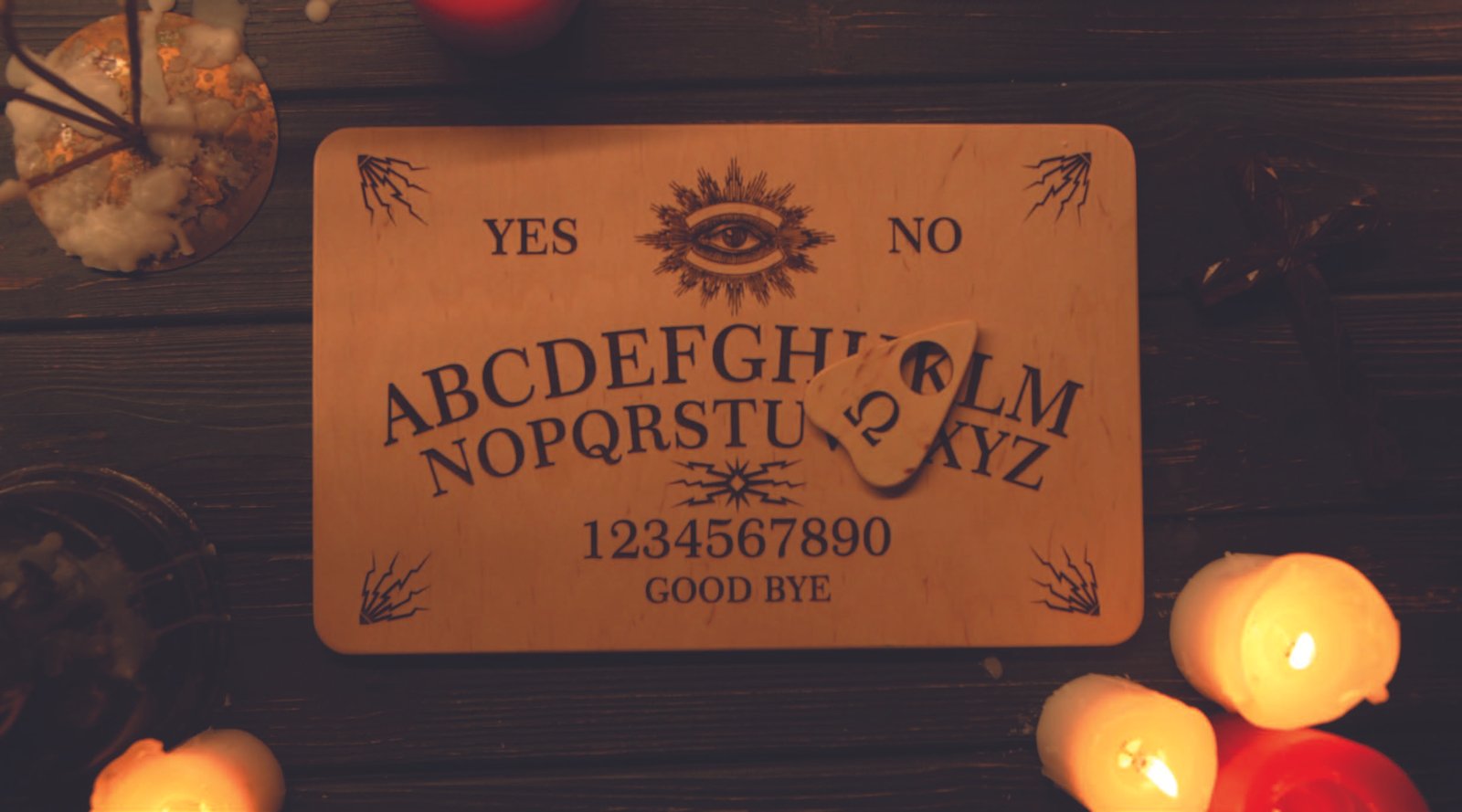
There is a science to the Ouija board that also applies to other divination tools, such as dowsing rods and pendulums. (The science even applies to facilitated communication for nonspeaking individuals, discussed throughout this issue.) In this article, we’ll describe the neurological basis of a phenomenon called the “ideomotor response.” The root of this process starts with our desire for control. So, let’s begin there.
The Psychology: Our Desire for Control Leads Us to the Paranormal
According to evidence found in clinical studies (Leotti et al. 2010), field research, and neuroimaging work, when one believes they have control over their immediate environment, their mental health is better than it would be if they felt they did not have control. These studies indicate that having at least some amount of control is a biological necessity for well-being. Because of this, when we feel we don’t have control in our lives, we start looking for it anywhere and everywhere. This is where divination tools come in.
As elegantly stated in an article by Stuart Vyse (2024) discussing the Ouija board, divination tools have been around for centuries. When something is completely out of our hands, it feels cathartic to take what little control we can. We can do this by tricking ourselves into believing we are gaining information. After all, having information is a source of control, and divination objects of all types are ways for us to feel as if we are accessing a greater power that can help us take control of our lives when we feel most powerless. Simply put, they allow us to feel relief because we think we are gaining insights on a topic from an invisible force we have no other way to understand. We visualize an outcome (such as the planchette moving on the board). Here is where the ideomotor response comes in.
Neurophysiology: Creating Phantoms with the Ideomotor Response
The ideomotor response is what happens when your neurological processes create imperceptible involuntary motor movements from predetermined expectations (Thomaschke 2012). In other words, it creates a bidirectional association between small subconscious movements of the body and your expectations of what will occur. This effect is nothing new in the realm of science; it was first mentioned by William B. Carpenter in 1852 in his attempts to demystify divination tools.
The ideomotor response has been used throughout studies specifically linked to Ouija boards (and other spirit boards) in which people’s expectations become small subconscious actions, which can be replicated in tests. small subconscious actions, which can be replicated in tests. In turn, these actions reinforce the illusion of control (Shin et al. 2023).
How Does the Ideomotor Response Work Functionally in Our Brain?
Because the ideomotor response has been a point of discussion since 1852, it is perhaps surprising that little is known about its underlying neurophysiological properties. Sensory phenomena can both trigger and result from an action—and vice versa. Sometimes referred to as a feedback loop, our neural circuitry allows signals to be encoded and reinforced in both directions. Therefore, once an action has been sufficiently ingrained, perceiving an action, even just the idea of the action, produces the same response in the brain as actually performing the action—and vice versa (Ridderinkhof 2014).
A study conducted by Roland Pfister and colleagues (2014) used functional magnetic resonance imaging (fMRI) to investigate the neuropsychological foundation of action control via ideomotor response anticipations to identify the neural circuitry responsible for transforming anticipated sensory data and goals (i.e., beliefs and expectations) into overt motor action (i.e., hand movements). Their results suggested that parietal areas were activated for action control. Specifically, they found that in contrast to parahippocampal activity thought to be related to spatial awareness (see Figures 1 and 2), activity in the right temporo-parietal junction (see Figures 3 and 4) may play a prominent role in focusing attention on the expected location of anticipated actions, or even in the sense of agency over such actions.
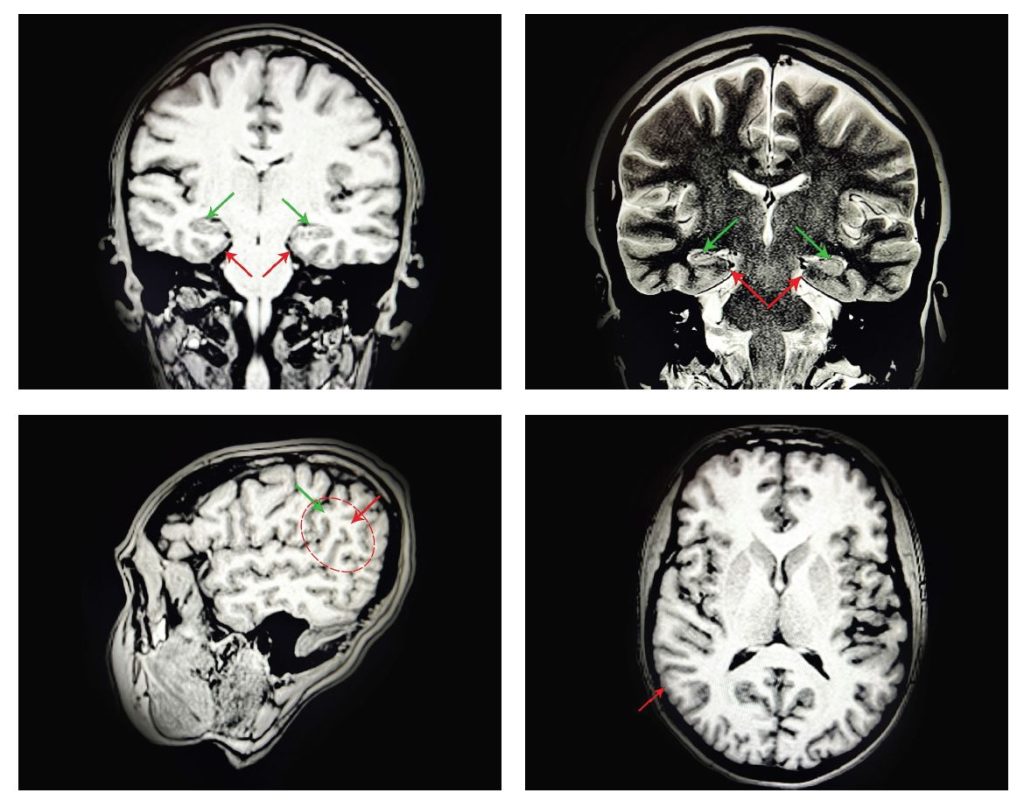
T2-weighted MR image through the temporal lobes depicting the hippocampus (green arrows) and parahippocampal gyrus (red arrows). Figure 3 (bottom left). Sagittal T1-weight MR image
depicting the right inferior parietal lobule and parieto-temporal junction (red dashed oval), angular gyrus (red arrow), and supramarginal gyrus (green arrow). Figure 4 (bottom right). Axial
T1-weighted MR image through the level of the right inferior parietal lobule depicting the angular gyrus (red arrow). All photos by the authors.
Furthermore, the inferior parietal cortex has recently been identified in a direct cortical stimulation study by Michael Desmurget and colleagues (2009) as being involved in the generation of motor intentions. Interestingly, activity of the superior parietal lobe was relatively absent, which suggests that actions controlled through sensory anticipation are routed to higher cortical centers prior to engaging motor centers and may result in a multisensory map of anticipated events before any action has taken place. While further research is needed to truly understand the neuropsychological and neurophysiological underpinnings of ideomotor responses, initial attempts to map out these fascinating phenomena neuroscientifically provide much insight into the bidirectional nature of the ideomotor response and hopefully encourage a higher degree of humility when encountering ideomotor sensations through divination tools in the real world.
How Does This Manifest in Life?
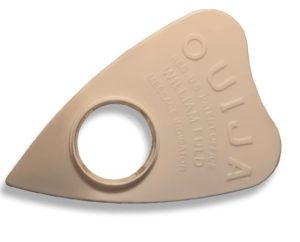 When you expect the planchette to move, the pendulum to swing, or the dowsing rods to turn, you can create the smallest of motions to allow for it to happen, unbeknownst to your conscious mind. When you visualize yourself doing a task, such as tapping your fingers, the neurological processes involved in planning and executing the movement fire as if you are tapping. As mentioned above, the circuits coursing through parietal regions are thought to have an important role in the anticipatory phase of generating the action effect (Pfister et al. 2014). Based on the findings of that study, this preparatory phase likely takes place in the right temporo-parietal junction. However, the subjective internal experience of tapping your finger in your mind may be enough to control the neural pathways responsible for translating sensation to action. These triggers are enough to cause the most minuscule of movements—movements that inevitably nudge the planchette, sway the pendulum, and twitch the dowsing rods—while remaining below the threshold of your conscious mind. These movements go unnoticed by our conscious minds and appear magical in nature.
These imperceivable actions caused by the ideomotor response explain why the Ouija board’s planchette will not move without our hands touching it. Couldn’t a spirit move the planchette without our help if the board is really a tool that can access the spirit world? But suddenly it moves while a group of people are touching it, though no one claims to be moving it. That’s likely because none of us believe we are moving it. Yet because we expect it to move, it moves through the combination of our small subconscious ideomotor movements. And in the case of the Ouija board, it is perhaps amplified by the group’s collective ideomotor movements. It’s not magical at all; our neurological processes fire, and we create the smallest of movements unbeknownst to our conscious minds, creating the illusion of magic, ghosts, and the paranormal masking the true neuropsychological and neurophysiological underpinnings of the ideomotor response.
References
Desmurget, M., K.T. Reilly, N. Richard, et al. 2009. Movement intention after parietal cortex stimulation. Science 324(5928): 811–813.
Leotti, Lauren A., Sheena S. Iyengar, and Kevin N. Ochsner. 2010. Born to choose: The origins and value of the need for control. Trends in Cognitive Science 14(10): 457–463.
Pfister, R., T. Melcher, A. Kiesel, et al. 2014. Neural correlates of ideomotor effect anticipations. Neuroscience 259: 164–171.
Ridderinkhof, Richard K. 2014. Neurocognitive mechanisms of perception-action coordination: A review and theoretical integration. Science Direct (October 2014). Online at https://www.sciencedirect.com/science/article/abs/pii/S0149763414001250.
Shin, Yun Kyoung, Seonggyu Choe, and Oh-Sang Kwon. 2023. Strong evidence for ideomotor theory: Unwilled manifestation of the conceptual attribute in movement control. Frontiers in Psychology 14: 1–12.
Thomaschke, Roland. 2012. Investigating ideomotor cognition with motorvisual priming paradigms: Key findings, methodological challenges, and future directions. Frontiers in Psychology 3: 1–15.
Vyse, Stuart. 2024. How does the Ouija board work? Skeptical Inquirer (July 29). Online at https://skepticalinquirer.org/exclusive/how-does-the-ouija-board-work/.
[ad_2]
Source link
