
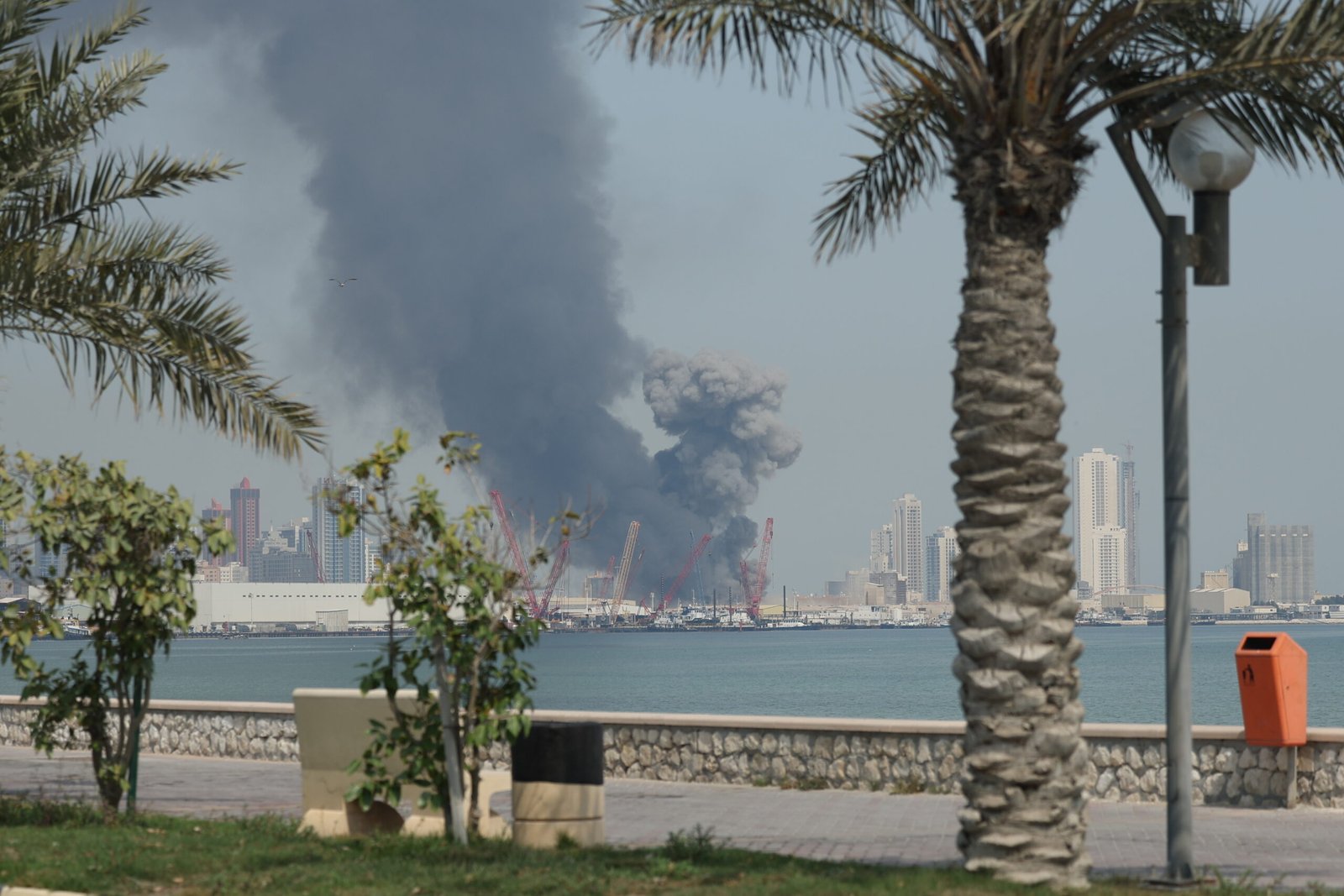
The recent war with Iran has been fought largely without the support of traditional European allies as well as aspirational Asian ones. Middle Eastern allies, however, have been far more willing partners. Israel is the most notable, but the Gulf states should not escape notice. They spent the last several decades sidling up to Western governments and capital, an approach that seemed broadly successful. They were able to maintain just enough interest in radical Islam to keep their people at bay, which meant the system broadly worked. But the most recent gamble of lowkey support for the war was one too far. The Gulf states planned on America taking out Iran and shielding them from the aftermath, and instead learned their place in the pecking order was far lower than imagined.
The Gulf states, especially the Saudis, have been competitive with Iran for influence in the MENA region since Islamic Republic’s 1979 revolution. Saudi Arabia and Iran are in some sense a funhouse mirror version of each other. One was America’s strongest ally until it was toppled by a religious theocracy, and the other tried to harness religious theocracy to retain the American alliance. The Saudis have tried to play both sides of this by being just extreme enough to satisfy their populace and rich enough to satisfy their allies. After the Grand Mosque in Mecca was seized in 1979 by religious extremists, there was a massive upsurge of government-sponsored religious extremism in some Gulf states as a way to reassert control over the population.
Yet alongside this, there has also been cooperation with Western governments. This has been a hard line to toe. Some monarchies in the region have fallen due to an inability to manage this balance. A critical part of this type of relationship is weapons sales, along with a certain level of support for CENTCOM and the buildup of American bases across the region.
Gulf allies rightly expected to have a voice in the debate about war with Iran; using it, as Prince Mohammad bin-Salman of Saudi Arabia did, to tacitly support the war was a risky gamble. On the one hand, there was an opportunity to remove an opponent and assert supremacy in the region after more than 40 years of cold (and occasionally hot) war. On the other hand, the bill has come due in the form of significant damage dealt to the oil and energy industry in Gulf countries opposing Iran—with the final card being Iran’s threat to destroy the desalination plants that provide the Saudis with more than two-thirds of their drinking water.
Geographic conditions meant that this was always a significantly riskier war for the Gulf countries to support than it was for Israel. The latter is partially protected by the Iron Dome, not to mention American policy supporting Israel’s maintenance of a “Qualitative Military Edge” in the Middle East under a law that has been on the books since 2008. Gulf countries, meanwhile, are separated by just that—the Persian Gulf—and have no similar legal authority to ensure their military superiority.
Subscribe Today
Get daily emails in your inbox
They are by no means sitting ducks; these countries have spent hundreds of billions of dollars on military equipment over the years and have succeeded in intercepting many Iranian missiles. Yet the war has been far from a success for any of them. Many are resorting to stringent laws suppressing information around missile attacks as well as coordinated influencer campaigns, neither of which inspire confidence.
The entire episode is deeply tragic, especially given the loss of human life in the region. It is also deeply ironic. The Iranians had a goal of destroying not the physical city of Dubai but the idea of it. With Western companies and capital fleeing the region, it is hard to say there has not been a measure of success achieved towards that goal. While Iranian missiles may have dealt the blows to brick and mortar, the seeds of this were set in motion by joining an ill advised military adventure to which other American allies were wise to say “no, thank you.”
