
[ad_1]
Freddie DeBoer in a Monday Substack post noticed a tic among advocates for more aggressive home-building policies (“YIMBYs,” for “Yes in My Back Yard,” in contrast to “NIMBYs,” for “Not in My Back Yard”). When confronted with opposition, these YIMBYs dismiss the possibility that the other side may have good-faith reasons of its own, instead resorting to ridicule and abuse.
DeBoer points out that this is not really how democratic politics works: You have to get people on board with what you want to do by the usual methods of persuasion and incentive-creation. Telling your fellow citizens that their concerns about the environment or their neighborhood’s character are stupid and wrong doesn’t move your ball down the field at all.
You’d think everyone would have learned this lesson after the last presidential election, when the Democratic strategy was to tell voters their unhappy feelings about the cost of living were baseless and that, in fact, the economy was roaring along.
That tack, as we found out, was not particularly effective.
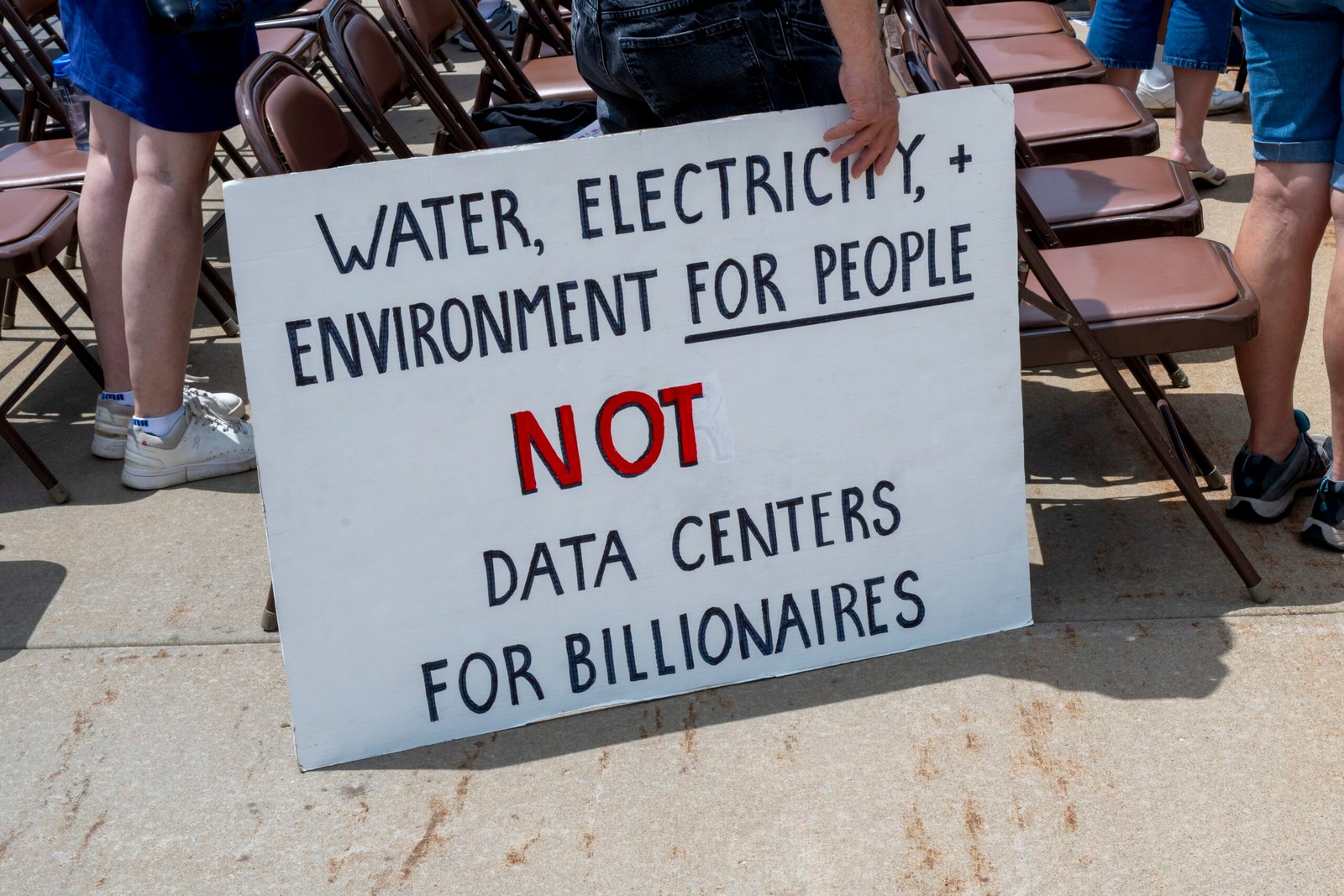
But I very much fear the titans of industry and their abettors in high office are making the same mistake. Businessmen and politicos are bewailing growing bipartisan opposition to the construction of the data centers needed to generate dumb pictures of cats and wildly inaccurate search engine results. A lot of this stuff overlaps with YIMBY housing arguments, since much of the opposition is coming from the same place—people getting touchy when you try to monkey with where they live.
I confess this isn’t much of a surprise. The entire pitch for AI has been wildly shortsighted. If you believe the fellows at the top of the industry, their technology will either cause a labor apocalypse, particularly for white-collar workers—that is, for the set with some money and some political clout to defend its interests—or it will take over the world and kill everybody.
Yet the AI maximalists seem to think that, if they gesture vaguely toward the Maoist menace (to which, it should be noted, many of these same CEOs are itching to sell their products) and throw in a few ominous warnings about the stock market crash that will surely happen if we don’t do everything they want, this adds up to a compelling argument for turning the wheel toward the future and slamming the accelerator. Ah, but the good news: To arrive at these utopian vistas, you only have to put up with an eyesore that makes annoying noises, raises your utility bills, and provides few, if any, permanent new jobs in your community.
Now, I am just a journalist, callow and unlearned in the dark arts of the press agent, but I feel pretty comfortable in the assessment that this strategy is not very clever. Calling people stupid or stooges for the Red Chinese when they fail to grasp its charms is even worse. On the merits, data center boosters may be right—concerns about water usage may be overstated, there may be good national strategic reasons for pursuing dominance in the industry, and, in some cases, data-center development may even lower utility costs—but being right does not actually get things done. While crushing one’s opponents by main force is tempting, the use of money, coercion, lawyers, and backroom tactics also does not tend in the long term to get things done. Persuading people gets things done. It’s not difficult to imagine AI development going the way of nuclear power: set back for a generation because of a catastrophic failure to make the case to the public.
Subscribe Today
Get daily emails in your inbox
My own attitude, officially, is bemusement. While I do think AI will make the masses lazier and more ignorant—a process that was already well under way, thanks to a host of other material and cultural causes—I doubt it will cause a white-collar extinction event. (If AI gets really good at pushing paper, why do we think we are getting rid of the paper-pushers instead of increasing the amount and complexity of the paper to be pushed, necessitating human oversight of the automated processes? Has anyone ever noticed how bureaucracies actually work?) I also entertain suspicions that AI will not wipe out the human race, which, for all its evils and follies, has managed to keep a handle on far more directly menacing items, like thermonuclear weapons and medical research facilities—sometimes barely managed, but managed just the same.
Yet, despite my reservations about the parousia of the silicon god, I think it would be a bad thing if one of the liveliest sectors of American technical and economic development were to be crushed out of hand because its overseers couldn’t read a room.
People don’t like being told their feelings are wrong and baseless. The AI boosters might take note. They are notionally capitalists, after all; if the market doesn’t want what they’re selling, maybe they should try a little harder.
[ad_2]
Source link
