
[ad_1]
Elon Musk became the world’s first trillionaire June 12, his net worth rocketing to $1.2 trillion when his space exploration firm SpaceX became publicly traded, valued at more than $2 trillion.
The historic wealth milestone renewed calls from some politicians to address wealth inequality and raise taxes on the richest Americans. Sen. Bernie Sanders, I-Vt., said Social Security taxes are capped for ultra-high earners like Musk.
“Today, Elon Musk, a trillionaire, pays the same amount into Social Security as someone making $184,500,” Sanders said in a June 12 X post, calling the situation absurd and in need of reform.
Sanders’ statement accurately reflects a real feature of Social Security taxes. The federal government stops collecting the tax after a person’s wages reach a certain amount. In 2026, that cap is $184,500.
Musk couldn’t pay more than the maximum, but his income structure is unique and heavily weighted toward stocks. It’s unclear what his liability for Social Security taxes is each year.
For most wage earners, Social Security taxes, along with Medicare taxes, are paid through payroll deductions. Workers and employers each pay 6.2% of the worker’s income into Social Security, up to the cap.
That means the maximum Social Security tax liability in 2026 for someone earning $184,500 or more is $11,439. Self-employed people must pay the full 12.4% rate on their income, so their Social Security taxes would max out at $22,878.
Whether someone earns $200,000 or $2 million, they don’t pay taxes over the income cap. Benefits are also capped, so earnings above the maximum don’t increase a person’s future benefits.
“That maximum is identical for a worker earning $184,500 and for the richest person in the country,” said Teresa Ghilarducci, a labor economist and professor at the New School for Social Research, in an email to PolitiFact.
Medicare taxes, the other portion of payroll taxes, have no income cap. Employees and employers each pay 1.45%, and an additional 0.9% surcharge is imposed on wages over $200,000 a year.
Sanders’ spokesperson Jeremy Slevin said Sanders’ post was promoting the changes proposed in his Social Security Expansion Act. The bill would eliminate the cap on Social Security taxes over $250,000 and apply the full Social Security payroll tax to more forms of income, including capital gains.
What income counts for Social Security taxes?
Social Security taxes are imposed only on income classified as wages, which is a regular paycheck for most workers. Bonuses and stock-based compensation like stock options or restricted stock units — if classified as wages — are subject to the tax once they’re exercised (bought or sold) or vested.
But the tax doesn’t apply to non wage-related income such as capital gains from investments, said Jessica Riedl, a Brookings Institution budget and tax fellow.
Musk’s wealth is tied up almost entirely in stock in Tesla, his electric car company; and SpaceX, the spaceflight company that also houses satellite telecommunications company Starlink and xAI, the social media and AI company behind X and Grok.
When Musk sells that stock or takes out a loan against it, that’s not counted as wages, so it isn’t subject to payroll tax.
Increases in stock value also don’t trigger Social Security taxes. The recent jump in Musk’s net worth from around $800 billion to over $1 trillion was not because he was paid billions of dollars, but because SpaceX increased in value once it went public.
When does Musk pay Social Security taxes?
It’s impossible for us to determine Musk’s total liability for federal payroll taxes, but public disclosures give a window into some of his income.
Musk does not take a salary from Tesla, so he owes no taxes there. A Securities and Exchange Commission filing from SpaceX ahead of its initial public offering shows that he received a salary of $54,080, which was tied to California’s minimum wage for exempt employees. His other companies, The Boring Company and Neuralink, are private, so they do not disclose his compensation.
Musk’s major payroll tax liability in recent years has come from exercising stock options that were paid as compensation. In 2021, he exercised an option to buy Tesla stock at a major discount based on a 2012 compensation package, which resulted in more than $20 billion in taxable income.
Although his income tax bill was likely over $11 billion that year, his Social Security tax burden would have been far less because of the cap. He would have been on the hook for about $8,853, the same as someone who earned that year’s taxable maximum of $142,800.
There’s one caveat to Sanders’ statement: It’s possible that in some years Musk could pay even less than someone earning the maximum, Ghilarducci said.
In years when his stock-based compensation doesn’t incur payroll taxes, “his wage income can be near zero,” she said. “In such a year he pays less into Social Security than a salaried worker earning $184,500, possibly far less.”
Our ruling
Sanders said Musk “pays the same amount into Social Security as someone making $184,500.”
Social Security taxes are imposed only on income up to a set maximum, which is $184,500 in 2026, so Sanders is right that any wages over that limit aren’t taxed. But since we can’t know how much wage-based income Musk will receive this year, it’s not clear that he’ll hit that maximum. He could pay even less.
Increases in Musk’s net worth are often caused by increasing stock value, rather than compensation. Such unrealized gains aren’t subject to Social Security taxes.
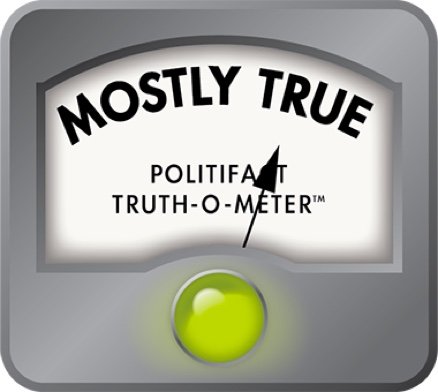
Sanders’ statement is accurate but could use a little more information. We rate it Mostly True.
[ad_2]
Source link
