
[ad_1]
President Donald Trump’s mercurial nature has been on display at the G7 summit in France this week.
On Tuesday, Trump met with Ukrainian President Volodymyr Zelenskyy at least three times, telling reporters he would “do whatever” he could to end the conflict, according to CNBC. Yet, in the same discussion, the president also said the war has “no impact” on the U.S., other than the sale of weapons, according to the New York Times. Then, on Wednesday, the president signed onto a statement that promises “unwavering” and “further support” for Ukraine and increased pressure on the Russian economy—likely through sanctions on its oil—now that the war in Iran is over.
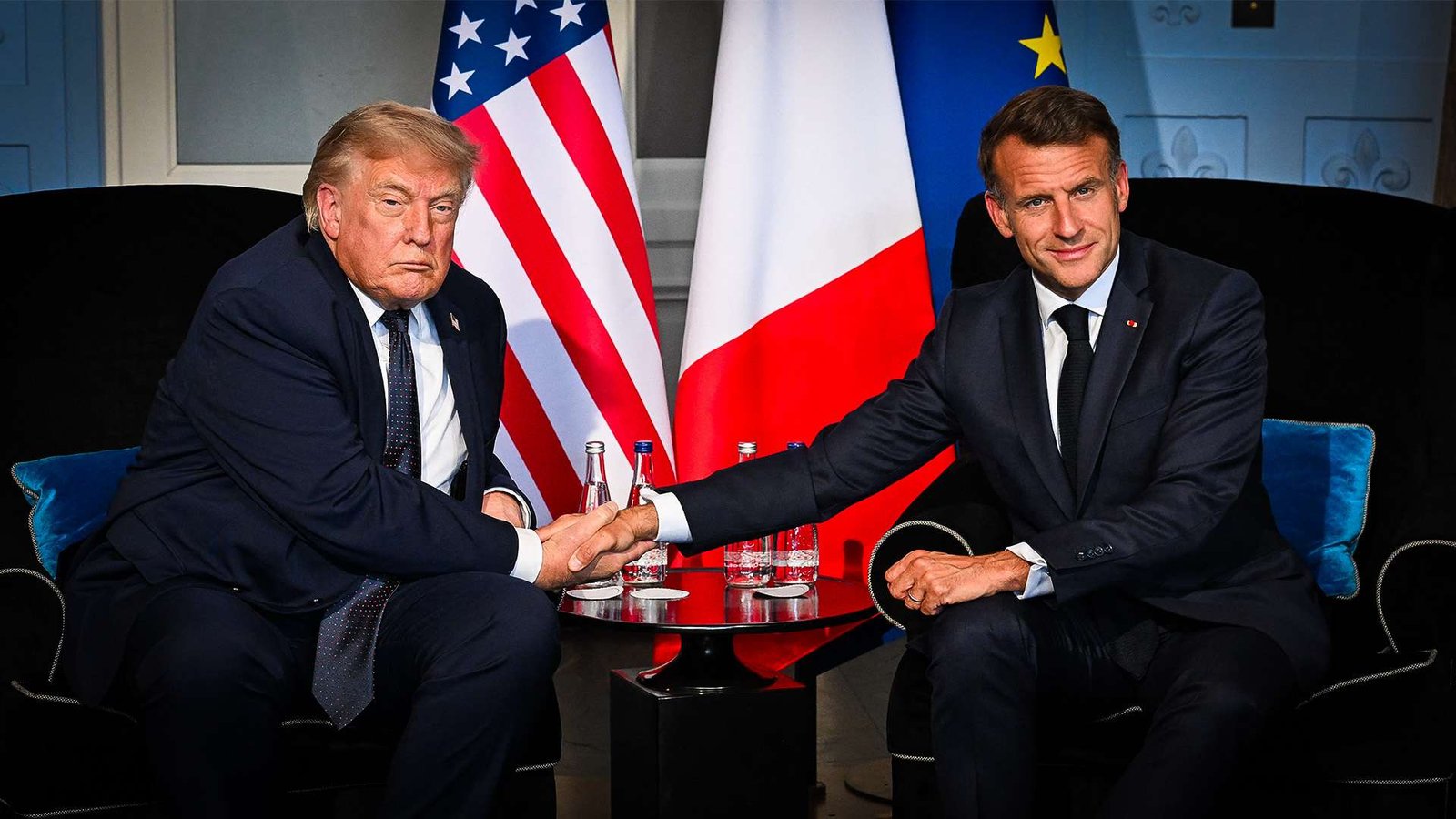
While European leaders are surely relieved that the president has engaged on the issue, his ever-changing position on the war in Ukraine has been a point of tension with U.S. allies. Europe has, in turn, drawn the ire of Trump—starting with the continent’s reliance on American military power in NATO and the bloc’s refusal to join the war in Iran. French President Emmanuel Macron and German Chancellor Friedrich Merz openly chided the administration’s prosecution of the Iran war, though they have since changed their tune.
Still, American taxpayers can look to one silver lining in Trump’s indecisiveness with European foreign policy: It’s encouraged the continent to become more self-sufficient, especially in its military.
In April, while unveiling a new military strategy aptly titled “Responsibility for Europe,” Germany declared its intent to “assume a leading role in NATO” and “become the strongest conventional army in Europe” by 2039.
In the same month, the French government updated its military planning law, adding $42 billion to the $483 billion already allocated to its defense budget for 2024–2030. Armed Forces Minister Catherine Vautrin said the impetus was to ensure French forces were “capable of responding” to unpredictable engagements, according to Le Monde. Meanwhile, British Defense Secretary John Healey resigned in protest earlier this month, spurred by Prime Minister Keir Starmer’s failure to increase defense spending.
Separately, the European Union is also taking steps to “transform” its defense industry and establish a military mobility area that would allow “troops, equipment and military assets” to be rapidly deployed where needed. Member states have also committed to raising around $927 billion by 2030 as the bloc takes responsibility for its “own security means.”
With the U.S. set to withdraw a third of the fighter jets it has provided to NATO and American approval of NATO in decline, it seems Europe is adjusting to the Trump administration’s doctrine of self-reliance, which should be welcome news to taxpayers. The U.S. spent $880 billion on NATO in 2023 and $753 billion in 2024. Under the current cost-sharing model, America will remain the chief financier of Europe’s defense, accounting for 15 percent of NATO’s budget through 2027. Considering there are 31 other NATO member countries, the president’s call for member nations to increase defense spending to at least 5 percent of their gross domestic product (GDP) is a reasonable ask.
The circumstances under which it happens have not been ideal. Still, Europe now recognizes that it must take ownership of its defense, rather than rely on the generosity of American taxpayers.
[ad_2]
Source link
