
[ad_1]
Economic growth alone cannot secure genuine sovereignty in Asia; a platform for coordination is vital to safeguard the region against imperialism and neocolonialism.
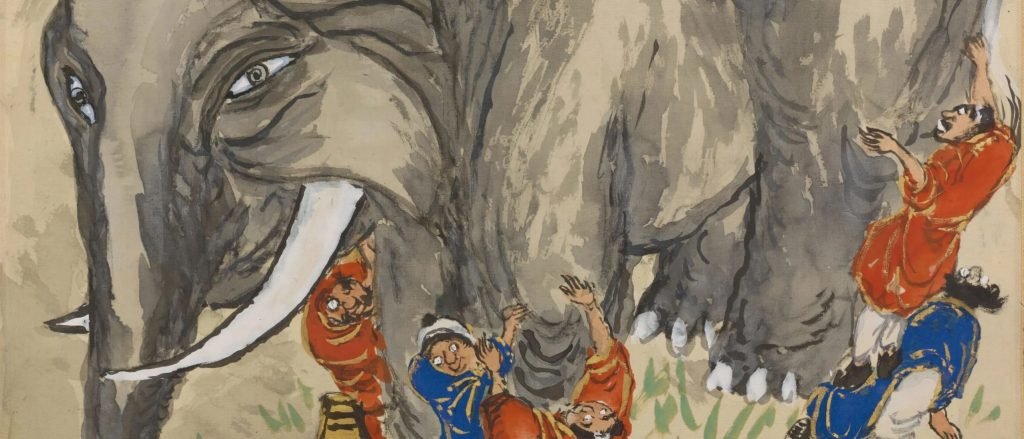
Tomioka Tessai, Japan, Blind Men Appraising an Elephant, 1921. (Via Tricontinental Institute for Social Research)
By Vijay Prashad
Tricontinental: Institute for Social Research
 I had the great honour of speaking in the Gedung Merdeka (Independence Hall) in Bandung, Indonesia in April. I was struck not by nostalgia, but by urgency. Bandung is not a museum piece, but a living political inheritance.
The questions raised in that hall in 1955, at the gathering of leaders from 29 African and Asian countries, remain unresolved. Can the nations of the Global South act together with sovereignty and dignity? Can they build institutions that serve their peoples rather than global capital?
Can they create forms of cooperation beyond military alliances and market dependency? These are not historical questions alone. They are the central questions of our time, and they are questions that shape the work of the Tricontinental Institute.
To stand again in Bandung, and to speak at Gedung Merdeka, is to feel the weight of that unfinished history. The hall itself carries the mood of the nations that came there in 1955, scarred by colonialism, exhausted by war, but filled with immense hope and anti-colonial confidence. I had Sukarno’s opening speech in mind, his view that what united the people was not their ideologies but their “common detestation of colonialism in whatever form it appears.”
Bandung was not merely a conference but an assertion that history had to be remade by those who had long been denied the right to shape it.
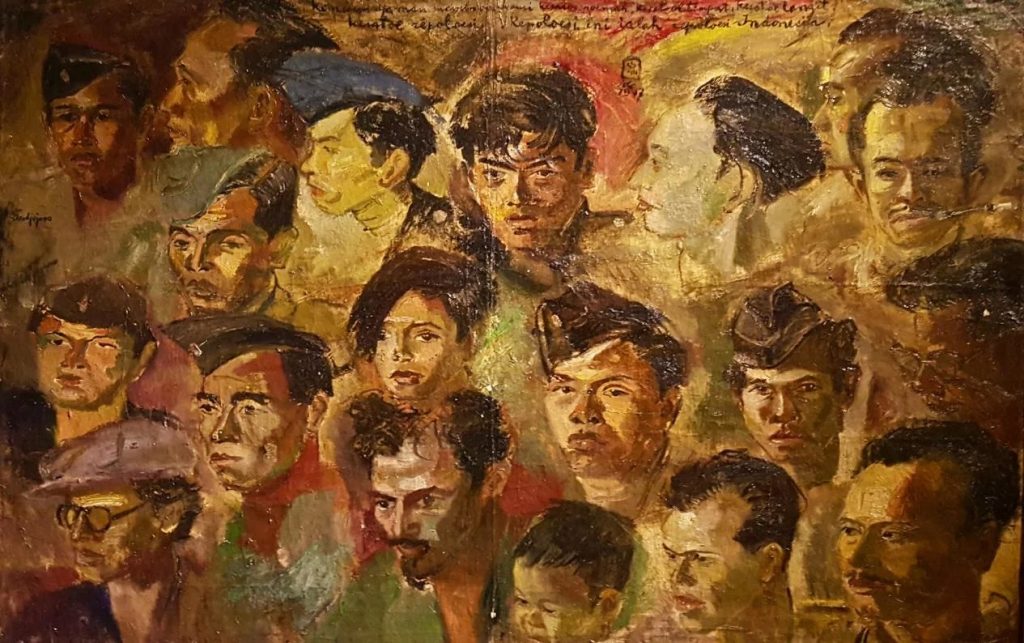
S. Sudjojono, Indonesia, Kawan-kawan Revolusi (Revolution of Comrades), 1947. (Via Tricontinental Institute for Social Research)
Where is the Bandung Spirit today? The flamboyance of such a concept does not exist in our time, where the Global South – apart from increased South-South trade and institutional processes (such as through the BRICS+) – remains fragmented and demoralised. A new mood in the Global South has emerged, a new confidence that has been provoked by the desire for economic independence from Global North-dominated institutions and credit markets.
But this new mood has not been able to overpower the continued fear of the Global North’s punishments (sanctions and war) as well as its opportunities (access to credit and markets).
There is, therefore, a complex reality and set of contradictions at play. On the one hand, the Global North’s moral authority is declining and a political consciousness that favours sovereignty and strategic autonomy is rising in the Global South. On the other hand, the Southern countries retain an anxiety about the danger posed by the United States, especially as it lashes out in the process of decline.
There is strong evidence for the recognition and dislike of U.S. power in the 2026 Democracy Perception Index, where only four out of 97 countries and territories said that they would favour hosting a U.S. military base (Israel, Poland, South Korea, and the U.S. territory of Puerto Rico). No one wants entanglement with the United States, but everyone is aware of the absolute danger and decadence of U.S. power – and has been reminded of this through recent U.S. actions in Cuba, Iran, Palestine, and Venezuela.
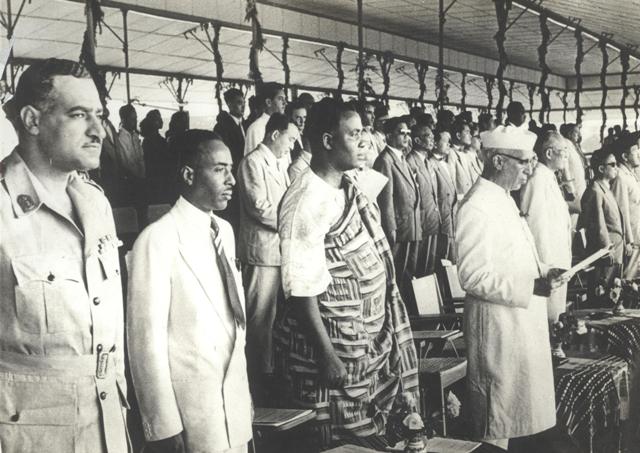
Left to right: Egyptian President Gamal Abdel Nasser; Ethiopian Finance Minister Yilma Deressa; Kojo Botsio, minister of state from the Gold Coast, later Ghana; and Indian Prime Minister Jawaharlal Nehru at the Bandung Conference. (Unknown/Public Domain/Wikimedia Commons)
The Bandung Spirit was institutionalised through several platforms, the most important being the Non-Aligned Movement (N.A.M.) (1961). This global formation was built alongside regional institutions to combat the crisis of postcolonial fragmentation. Understanding that political sovereignty was insufficient as a barrier to a world economy dominated by the North Atlantic states and multinational corporations, the Non-Aligned Movement proposed regional institutions as mechanisms to protect sovereignty, coordinate development, and increase the bargaining power of the Third World.
Alongside these global institutions emerged a set of projects to develop regional or continental solidarity and to build a collective shield against imperialism. These institutions included the Arab League (1945), Organisation of African Unity or O.A.U. (1963), Organisation of Islamic Cooperation or O.I.C. (1969), and Caribbean Community or CARICOM (1973).
Under the initiative of Ghana’s first president, Kwame Nkrumah, the O.A.U. emerged to build a continental political federation against the ravages of foreign capital. The O.A.U. became primarily a diplomatic body committed to anti-colonial solidarity, support for liberation movements, and the defence of territorial integrity. Its successor, the African Union (A.U.), was born in the neoliberal swamp and promoted continental integration through pro-capital policies such as Agenda 2063.
In 2008, as the A.U. succumbed to the lure of pro-capital policies, the Union of South American Nations (UNASUR) was formed to create political coordination independent of Washington. Unlike other trade-centred blocs, UNASUR emphasised infrastructure integration, regional health cooperation, defence coordination, and diplomatic mediation. The emergence of the Angry Tide in recent years has weakened UNASUR in the same way that debt has weakened governments in Africa and whittled the potential of the A.U.
Asia, meanwhile, failed to build even the skeleton of a regional project.
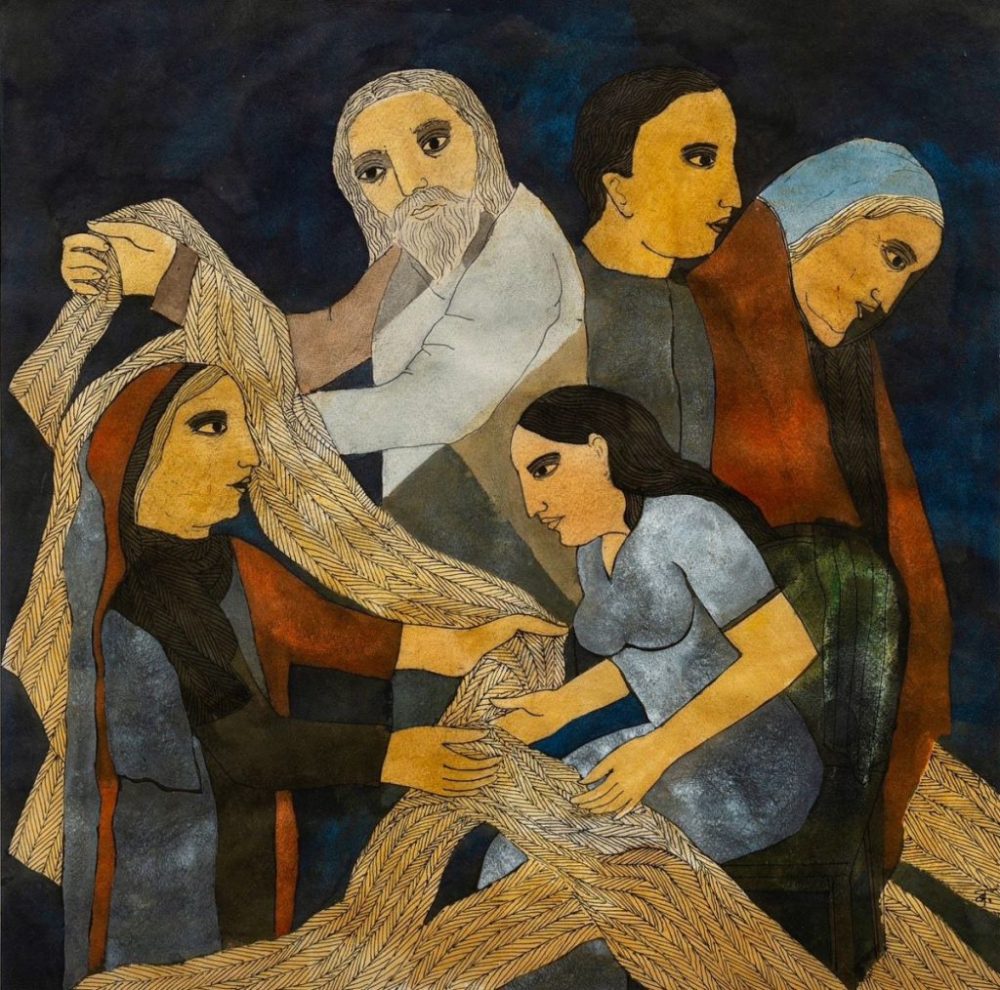
Badri Narayan, India, The Discourse on the Garment, 1997. (Via Tricontinental Institute for Social Research)
In Asia, the dream of continental unity had been poisoned by Japanese militarism, which marched across the continent under the banner of Pan-Asianism and the slogan of the Greater East Asia Co-Prosperity Sphere. Tokyo spoke the language of Asian liberation from Western colonialism, but its army delivered brutality. After the World Anti-Fascist War (widely known as the Second World War), the idea of continental unity appeared dangerous to many newly independent states, which feared that regionalism might simply mask dominant power ambitions.
Yet, the aspiration of Asian unity did not disappear. In March 1947, as the British Empire staggered towards its exit from India, Indian leader Jawaharlal Nehru convened the Asian Relations Conference in New Delhi. Delegates from across Asia trembled with the energy of anti-colonialism, focused as they were on their solidarity with Indonesia against the re-imposition of Dutch imperialism.
In 1952, the Asia-Pacific Peace Conference in Beijing, China, brought 470 delegates from nearly 50 countries – not heads of state but trade unionists, writers, women’s organisations – to oppose the war on Korea, nuclear proliferation, and the remilitarisation of Japan. The aspiration for Asian unity was always more than a diplomatic manoeuvre: it was a living anti-imperialist peoples’ tradition.
History intruded harshly. Conflicts between states and the dense architecture of U.S. military alliances fractured the continent. Asian regionalism emerged cautiously and unevenly. Early platforms did not bode well for the process. The Association of Southeast Asian Nations (ASEAN) – founded in 1967 by Indonesia, Malaysia, the Philippines, Singapore, and Thailand – was born in the shadow of the U.S. war on Vietnam and carried an anti-communist orientation.
It is now largely a trade body. The same could be said of the Asian Development Bank, which emerged from demands for development finance within the United Nations Economic Commission for Asia and the Far East (now called the United Nations Economic and Social Commission for Asia and the Pacific) but soon became another instrument for neoliberal policy under the domination of the U.S. treasury.
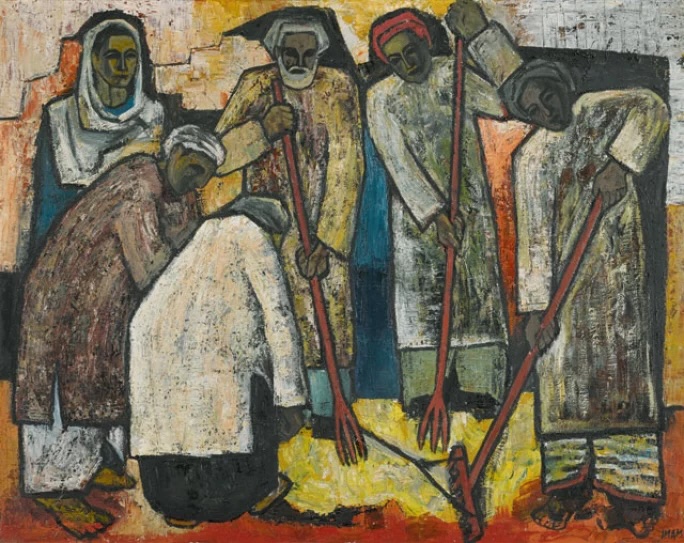
Ali Iman, Pakistan, Farmers, 1956. (Via Tricontinental Institute for Social Research)
The Shanghai Cooperation Organisation (S.C.O.) – founded in 2001 by China, Kazakhstan, Kyrgyzstan, Russia, Tajikistan, and Uzbekistan – reflected another historical current: the slow construction of an order no longer organised around the North Atlantic but around Asia, which is the emerging centre of gravity of the world economy.
Though the S.C.O., which began as a security organisation, had limited success in regionalising security and pushing foreign bases out of the region, it is now evolving into a platform to construct an alternative trade and financial system. From the high-quality manufacturing belts of China and Vietnam to the technological corridors of India and South Korea, the continent has become the principal engine of global growth.
However, this economic transformation remains politically fragmented. Interstate rivalries, border disputes, competitive nationalism, military alliances, and the continued presence of extra-regional powers fracture the continent at precisely the moment when history demands greater coordination.
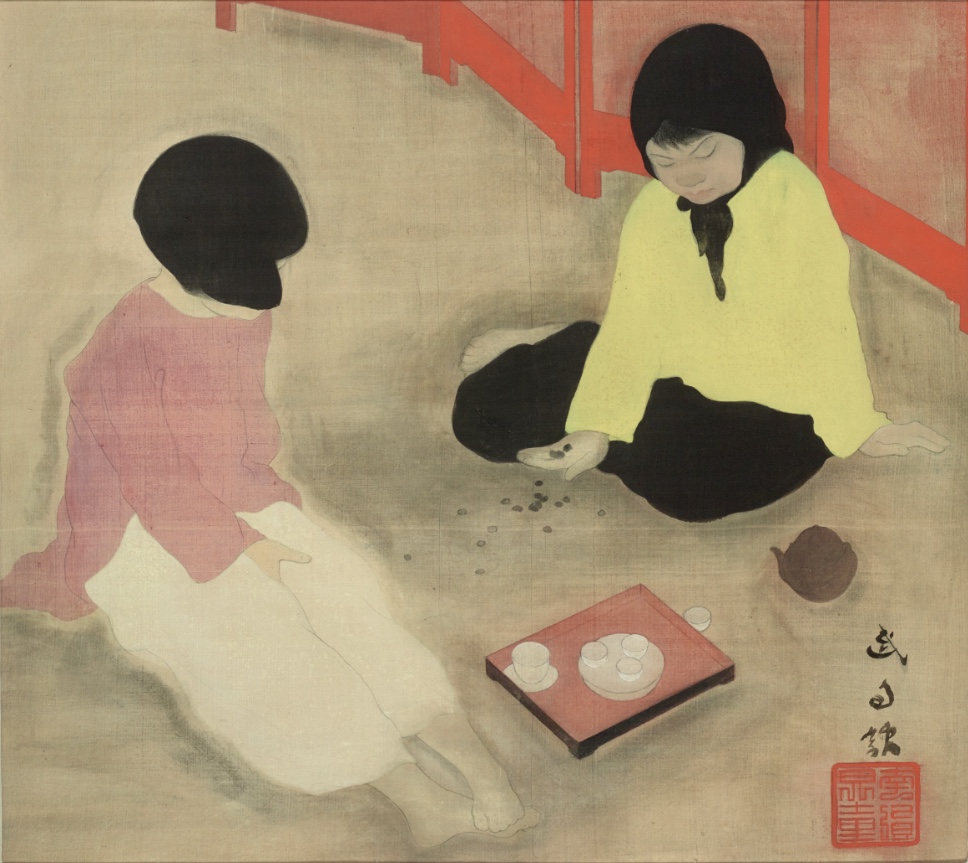
Vu Cao Dàm, Vietnam, Le Thé (Tea), 1930. (Via Tricontinental Institute for Social Research)
An Asian Union could revive the moral horizon that Bandung once represented. Today’s world suffers from fragmentation and cynicism. Politics has been reduced to management rather than transformation.
Palestine remains under brutal occupation. Wars, sanctions, and militarisation continue to devastate societies across the world. Climate change threatens billions, particularly the rural poor. Meanwhile, wealth accumulates in extraordinary concentration while workers face precarious conditions.
These are not isolated national or regional problems. They are structural problems produced by a global system that privileges profit over humanity. The Bandung generation believed that another world could be built through solidarity among peoples struggling against domination. That spirit remains essential.
An Asian Union is therefore not a utopian slogan but a material necessity. Asia’s economies are already deeply intertwined through trade, supply chains, migration, finance, energy flows, and infrastructure corridors, yet there exists no continental political mechanism capable of managing these interconnections. Without institutions for regional coordination, economic integration risks producing only sharper inequalities, intensified competition, and militarised conflict.
The continent requires common institutions able to reduce interstate tensions through diplomacy, coordinate industrial and technological planning, secure food and energy systems, manage water and climate crises, and prevent external powers from turning Asian rivalries into permanent zones of instability. Above all, Asia requires a collective political voice equal to its economic weight. Without greater regional unity, Asia’s rise will remain vulnerable to fragmentation, tariffs, sanctions, militarisation, and external manipulation.
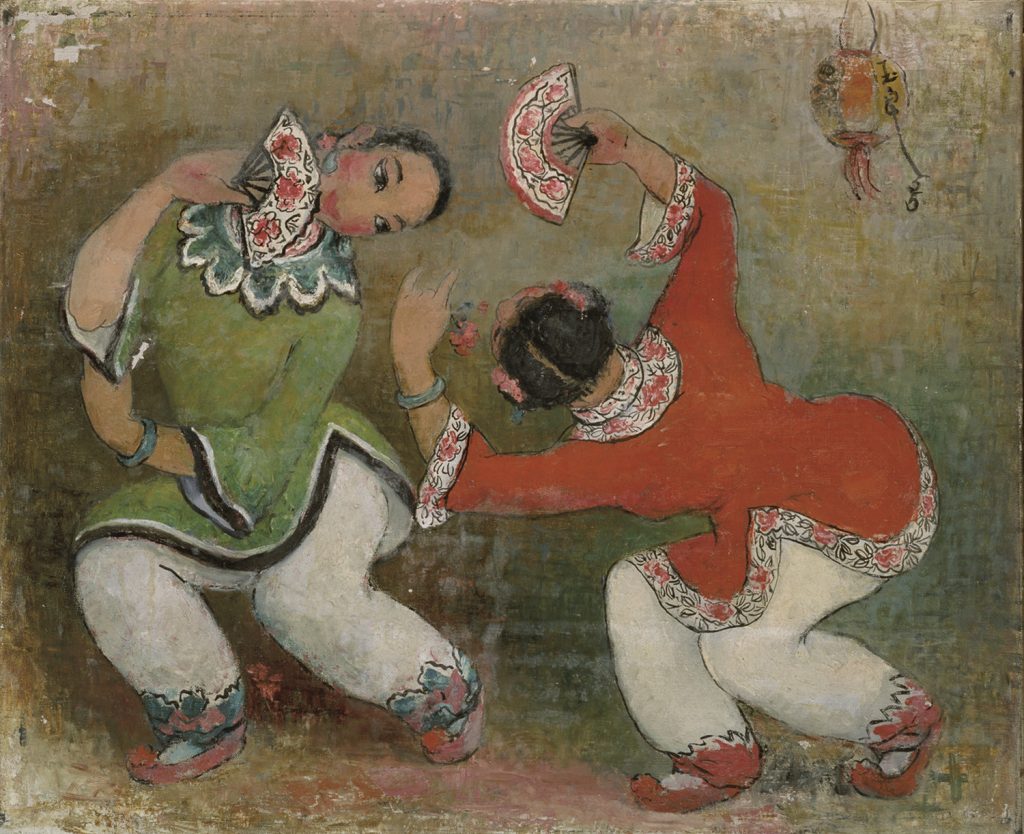
Pan Yuliang, China, Two Girls Dancing with Fans, 1955. (Via Tricontinental Institute for Social Research)
When I stood in Gedung Merdeka, I thought not only about the leaders who gathered there in 1955 but also about the generations that followed them – those who have fought for land reform, literacy, public health, workers’ rights, and cultural dignity across Asia. Many of their dreams were interrupted, but they were not extinguished.
The aspirations of Bandung survive because the conditions that produced them survive. Colonialism formally ended, but hierarchy persists in new forms. Economic dependency remains entrenched. Military power still shapes international relations. Yet resistance also continues. The peoples of the Global South demand sovereignty, equality, and peace.
In November 2025, I wrote an essay for Tricontinental Asia which asked the question, ‘Is Asia Possible?’. My answer was that
“it would be good for artists and intellectuals to open a serious conversation about a new progressive Pan-Asianism, a continental vision of a new kind of socialist world that looks beyond greed and towards the wider palate of human experience and emotion.”
The work in the Asia department of the Tricontinental institute is an attempt to provoke such a conversation and vision.
I still believe that the invitation to envision a new progressive Pan-Asianism could provoke a conversation that the region desperately needs. Perhaps we could gather in Indonesia in 2030 to celebrate the 75th anniversary of Bandung and launch an Asian Union. But such a gathering will only be possible if the peoples of Asia continue to resist the militarisation of their region. From Okinawa to the Philippines, movements are already demanding the removal of U.S. military bases – the precondition for any meaningful regional cooperation.
At the Asian Relations Conference in 1947, Nehru ended his speech with a powerful call to action and an acknowledgement of a people on the move:
“There is a new vitality and powerful creative impulse in all the peoples of Asia. The masses are awake and demand their heritage. Strong winds are blowing all over Asia. Let us not be afraid of them but rather welcome them for only with their help can we build the new Asia of our dreams.”
Vijay Prashad is an Indian historian, editor and journalist. He is a writing fellow and chief correspondent at Globetrotter. He is an editor of LeftWord Books and the director of Tricontinental: Institute for Social Research. He is a senior non-resident fellow at Chongyang Institute for Financial Studies, Renmin University of China. He has written more than 20 books, including The Darker Nations and The Poorer Nations. His latest books are Struggle Makes Us Human: Learning from Movements for Socialism and, with Noam Chomsky, The Withdrawal: Iraq, Libya, Afghanistan and the Fragility of U.S. Power.
This article is from Tricontinental: Institute for Social Research.
Views expressed in this article may or may not reflect those of Consortium News.
Please Donate to the
Spring Fund Drive!


[ad_2]
Source link
