
[ad_1]
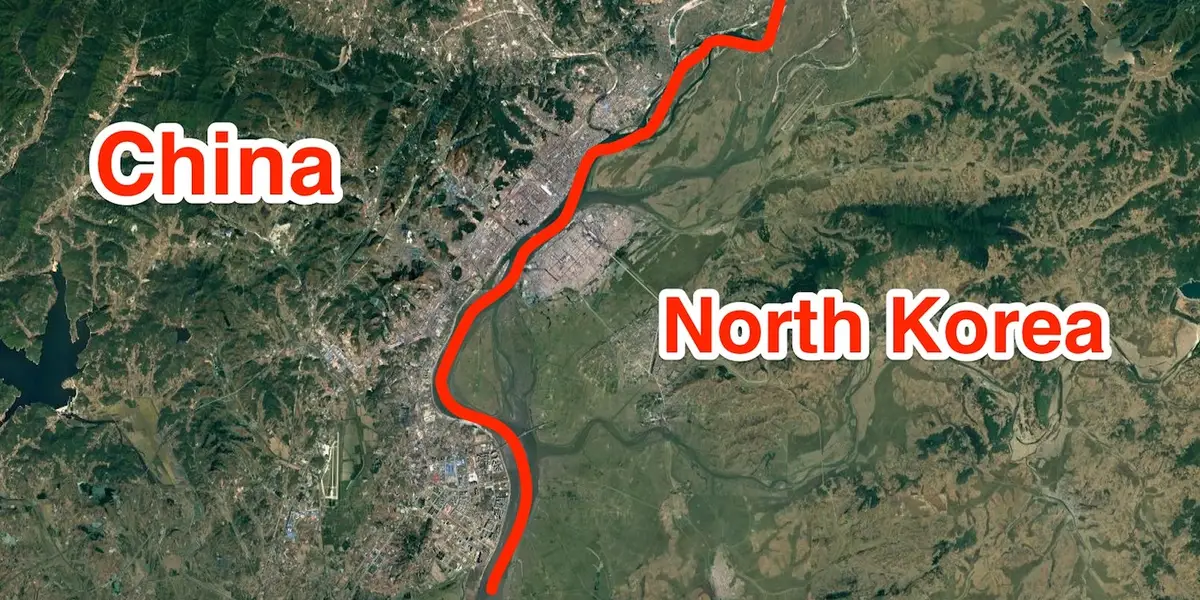
For more than 7 decades, leaders of the People’s Republic of China (PRC) and the Democratic Republic of Korea (DPRK) have emphasized that their countries maintain an exceptionally close political, economic, and security relationship. Mao Zedong even stated during the Korean War that the bilateral relationship was “as close as lips and teeth.” Numerous PRC officials have repeated that phrase throughout the years since then. (A variation describes the alliance as close as “teeth and gums,” a formulation that is essentially the same). The summit meeting between PRC President Xi Jinping and North Korean leader Kim Jong-un held in mid-June sought to reemphasize both the continuing importance and the compatibility of PRC-DPRK ties.
There is an indisputably crucial history of very close relations between Beijing and Pyongyang. In late 1950, PRC forces intervened in the war between communist North Korea and anti-communist South Korea (whose government was massively supported with military personnel and weaponry from the United States and other Western countries). The armistice that ended the fighting in 1953 left the Korean Peninsula split between two intensely hostile countries, with the United States and the PRC firmly backing their respective clients throughout the remainder of the Cold War.
Despite that history, the current connection between the two communist states is decidedly more nuanced, ambiguous, and even contentious than the lips and teeth cliché would imply. Beijing’s ambivalence about its small, more radical, client has especially been building since Pyongyang began pursuing a nuclear weapons program in the 1990s and started conducting underground nuclear tests in the early 2000s. PRC civilian and military officials believe that North Korea’s actions contribute to the worrisome level of political and military tensions plaguing Northeast Asia and could even trigger a catastrophic war.
Chinese policymakers have had ample reasons for concern. In 1994, Bill Clinton’s administration was so alarmed by Pyongyang’s pursuit of a nuclear arsenal that U.S. officials seriously contemplated launching preemptive aircraft and missile strikes on North Korean installations. A peace initiative that former president Jimmy Carter initiated helped avert that tragedy, but tensions regarding the nuclear issue on the Korean Peninsula escalated again as the years passed. The DPRK’s decision to conduct nuclear tests greatly added to worries in both the United States and China.
Beijing watched with mounting uneasiness the DPRK’s obvious intention to barge into the exclusive global club of nuclear weapons powers. PRC officials attempted to reassure their Korean clients that China would continue to firmly protect the DPRK’s security. The PRC’s underlying message was that a North Korean nuclear weapons program, therefore, was both unnecessary and provocative. Nevertheless, for all the talk about fraternal Leninist solidarity and the image of “lips and teeth,” Beijing’s discontent with Pyongyang became increasingly serious and obvious. That trend was especially apparent when North Korea ignored its patron’s advice. The DPRK withdrew from the Nuclear Nonproliferation Treaty in 2003 and then conducted a series of underground nuclear tests over the next 14 years. Pyongyang’s pursuit of a larger, more sophisticated capability with respect to medium-and long-range ballistic missiles also agitated Chinese leaders. Nevertheless, despite Beijing’s sometimes caustic criticism, North Korea has managed to build a modest nuclear arsenal that Western analysts now estimate to number approximately 50 warheads.
My numerous conversations with PRC diplomats in the Foreign Ministry as well as China’s embassy in Washington, D.C. during the 1990s and early 2000s confirmed my impression about the extent of Beijing’s mounting annoyance with North Korea. Despite their efforts to conceal such frustration, it became obvious to me that many mid-level PRC diplomats privately regarded the DPRK as an embarrassment to China. They seemed to view the Pyongyang regime as an obsolete client that was needlessly complicating the PRC’s ambitions to play a leading economic, diplomatic, and security role in world affairs.
More recently, Xi’s government also seems uneasy about the extent of Pyongyang’s nuclear ambitions as well as some of the DPRK’s other freelancing geostrategic initiatives. For example, Pyongyang has assisted Vladimir Putin’s government to wage its bloody war in Ukraine. Indeed, North Korean troops are now direct participants in that meat grinder conflict. Pyongyang’s involvement complicates Beijing’s multifaceted efforts to facilitate an end to the fighting and gain plaudits around the world for its role as peacemaker.
The United States has missed multiple opportunities over the decades to help wean the DPRK off its excessive security dependence on the PRC – and do so without unduly antagonizing China. For example, when the Cold War ended, both Beijing and Moscow promptly fulfilled their earlier offers to establish diplomatic relations with South Korea. Washington, however, found reasons to renege on a similar implied offer to extend diplomatic recognition to the DPRK.
Despite some initial promising symbolic gestures during President Trump’s first administration, U.S. leaders still have made no substantive moves to normalize relations with Pyongyang. That is a serious mistake. Washington should give the DPRK economic and diplomatic alternatives to a continued extensive reliance on Beijing. Kim Jong Un appears to want greater policy choices, as indicated by his recent intense courtship of Moscow.
Exchanging ambassadors, lifting some trade sanctions, offering to pull U.S. troops back from their current positions near the Demilitarized Zone, and tolerating the DPRK’s emergence as a nuclear power, would be relatively low-cost, low-risk ways of easing tensions on the Korean Peninsula. Such concessions also would reduce Pyongyang’s intense reliance on Beijing’s security shield and pervasive patronage. Moreover, they would constitute peaceful steps that would be very difficult for PRC leaders to criticize. Indeed, Trump administration officials could contend that the approach is consistent with the president’s apparent overall willingness to treat China as a benign peer power.
Join the Discussion!
We welcome thoughtful and respectful comments. Hateful language, illegal content, or attacks against Antiwar.com will be removed.
For more details, please see our Comment Policy.
[ad_2]
Source link
