
[ad_1]
March 10, 1972, was supposed to be a blockbuster day in the literary world. Publisher McGraw-Hill planned to unveil “The Autobiography of Howard Hughes,” an as-told-to book midwifed by novelist and investigative journalist Clifford Irving. The book promised to lift the curtain on one of the most fascinating personalities of the age. The reclusive billionaire was a famed aviation visionary, Las Vegas gambling tycoon, movie mogul, beau to beautiful stars, and much more.
But the balloons popped the day before the book party was supposed to take place. Irving was in court. He had audaciously gambled that Hughes’ aversion to publicity would insulate him from exposure for making up the memoir without ever having interviewed the mystery man.
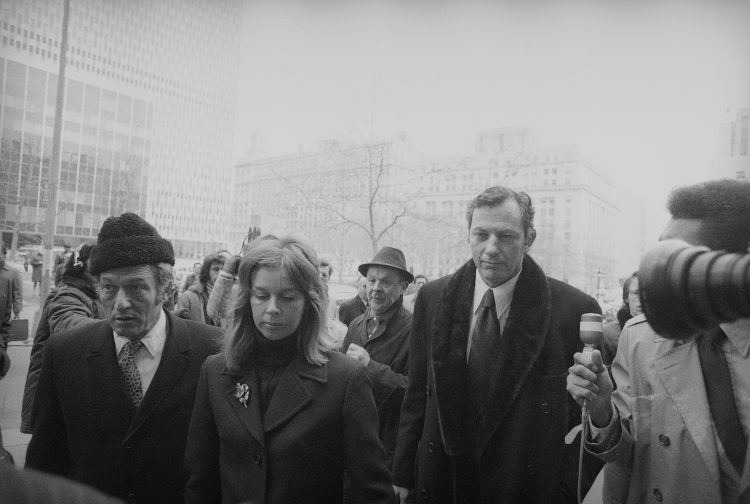
Clifford Irving and his wife Edith arrive at Federal Court in New York on March 13, 1972, where they pleaded guilty to charges of conspiring to defraud a publisher with a fake autobiography of Howard Hughes. (AP Photo)
Irving spent 17 months in prison and returned the whopping $765,000 – a fortune at the time –McGraw-Hill paid him (and supposedly Hughes) in advance. But that was not the end of the story or even the beginning.
This article is the second of a three-part series on faking. The first installment recounted the long history of fake news. This article looks at the chief reason faking works.
We have progressed from the Age of Reason to the Information Age (coined in 1962) and now to the more ominous Disinformation Age, which some have called the “infocalypse.” The potential for injecting faking in the bloodstream of knowledge is boggling.
We blame modern technology for moving fake news far and wide at blinding speed. We blame the fakers for trying to trick us. But the reason faking succeeds so often lies much closer to home. The reason it works is because we like the fakes. People could not get enough of the Clifford Irving caper.
Before Irving fabricated his Hughes memoir, he wrote an amusing book about a friend of his: “Fake: The Story of Elmyr de Hory the Greatest Art Forger of Our Time.” The puckish, Hungarian-born de Hory lived on the same Spanish island as Irving. His fake Modigliani, Matisse, Picasso, and Renoir paintings still hang in museums around the world as the real deal. His time in a Spanish jail was brief, as the government could not prove he painted any of his fakes on Spanish territory.
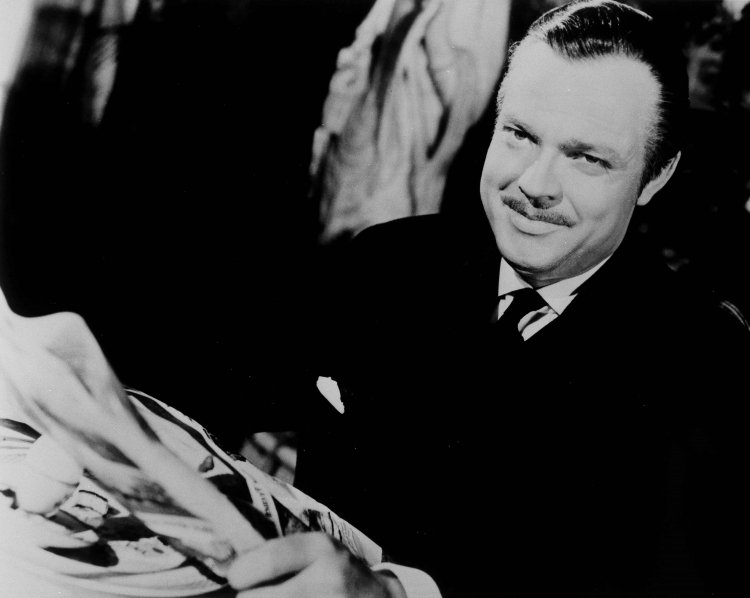
Not only did de Hory inspire Irving to fake his Hughes memoir, he also inspired another faker to undertake a documentary about his art forgery career. This faker was Orson Welles, known for his 1938 “breaking news” broadcast “War of the Worlds,” which breathlessly reported a Martian invasion in New Jersey. The pockets of panic among the listening audience were smaller than radio lore would have it, but the entertainment quotient was high. The hoax made Welles “the enfant terrible of the New York stage.”
When Welles finished filming his de Hory documentary, the news broke that Irving had been writing his Hughes hoax at the same time. “F for Fake,” as the documentary was called, became a story of both men and of the faking that lay behind all art.
Yet the entertainment spawned by Irving was not over by any means. A team of British journalists wrote a book-length account of his hoax. Irving subsequently wrote a memoir appropriately titled “Hoax.” Richard Gere starred in a movie about Irving, also called “Hoax.” Meanwhile, other documentary films recounted de Hory’s ability to trick art experts.
And so forth, each time the public lapping it up. “All the world loves to see the experts and the establishment made a fool of,” Welles said to his “F for Fake” audience.
Fakers and their frauds are routinely celebrated. William Francis Mannix, the master faker introduced in part one of this series, produced one of the greatest fakes of the 20th century while in jail in Hawaii. It was titled, “The Memoirs of Li Hung Chang.”
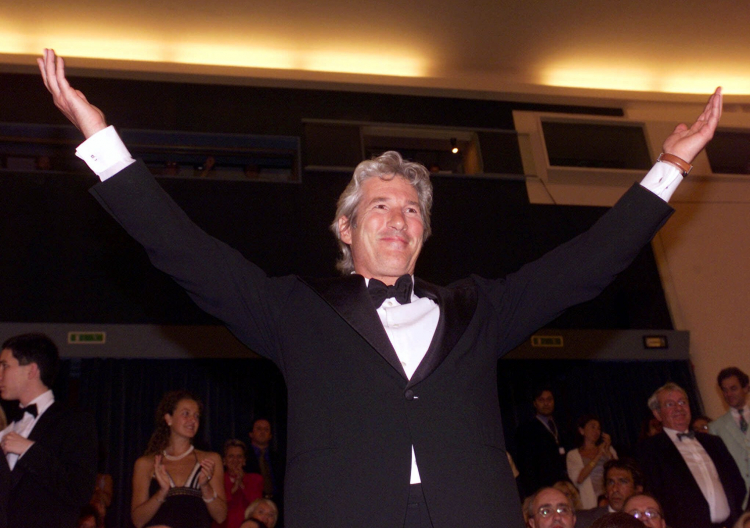
An account of Irving’s hoax was turned into a movie starring Richard Gere. (AP Photo/Luca Bruno)
Chang was a late Qing dynasty diplomat much admired in the West. The book fooled the experts. When finally deemed a fraud, the book went into a new edition with a not-altogether-factual recap of the author’s checkered literary past.
More recently, we have the book “Can You Ever Forgive Me?” This is Lee Israel’s memoir of being a literary forger. Not particularly successful at writing books, she decided to forge letters purporting to come from successful authors and then sold them as memorabilia. Her sentence in court was light. Her book a success. The Associated Press called it “deft, funny and eminently entertaining…. She also has a good tale to tell.” The book was followed by a movie of the same title starring Melissa McCarthy. Forging was a good career move.
After Jayson Blair was fired at the New York Times in 2004 for serial faking stories, he wrote a quickie memoir “Burning Down My Masters’ House.” It had an initial print run of 250,000 copies; and notwithstanding negative reviews, he was interviewed by Larry King and Fox News’ Bill O’Reilly. Stephen Glass, who fabricated scores of articles for the New Republic, left in disgrace and years later came back with “The Fabulist,” a novel about a faking journalist.
Not all hoaxers are jailbirds or even guilty of wrongdoing. Orson Welles was a showman, and few would impugn the integrity of Norman Cousins, editor of the Saturday Review of Literature. Among Cousins’ hoaxes was a letter to the editor calling on readers of the Review to oppose HR 6142, a proposed bill in Congress to eliminate golf courses. The letter-writer claimed the author of the bill was angry because his grandfather died of exhaustion trying to get his golf ball out of a sand trap and his father perished after hitting 19 balls into a pond.
An alarmed golf journal reprinted the letter under the headline, “A Frightening Bill.” No one challenged Cousins’ made-up statistics about the high rate of heart attacks, ulcers, and golf cart fatalities on the links until the Wall Street Journal gave the game away. Cousins, who found it amusing that his spoof was believed by anyone, puckishly responded that the readers’ credulity called for “a serious major sociological study.” As for Cousins, he eventually published a book-length collection of his sendups.
We may smile at this and see nothing similar in the pernicious political faking that inundates our lives. But political fakes also work because the fakers gratify us. They serve us stories that satisfy our craving to hate or love former House Speaker Nancy Pelosi; to believe that Haitian immigrants in Springfield, Ohio, are eating neighbor’s cats and dogs; or to be certain that in her husband’s first term in office, Melania Trump refused to attend events and was replaced by an impersonator.
These stories are hardly as clever as Norman Cousins’ were, but our reaction to them comes from the same place in our psyche. It has been said that politics is cheap entertainment. Domestic political operatives planting fake news and foreign experts using the black arts of disinformation produce shows that trigger our emotions.
Think of it this way: When we see a vivid television clip or zippy anecdotes in our social media feeds that confirm our preexisting beliefs, we forward them to our friends. When we see a story that challenges our beliefs, our first reaction is to delete it from our iPhone and throw it in the trash bin of our mind. The term for this behavior is confirmation bias.
Media messages leave a lasting impression on listeners even though most believe themselves impervious to manipulation. (AP Photo/Mary Altaffer)
The natural human reaction to warnings that we are subject to manipulation by others is to say, “Not me.” We have a fancy term for this, too: the Third Person Effect. It argues that people believe media messages do not have much impact on them, but that they greatly impact others. Purveyors of fake news know this is not true.
This is not the place to go into all the ways fakers fake us. We know that new technologies make faked images more real than ever – and that at the dawn of AI, reality is going to get much harder to discern.
We also know that the fight against these techniques is uphill. News reports that refute fake news often compound the problem. Instead of encouraging listeners to change their minds, the stories remind people of the story they found so convincing in the first place while simultaneously reinforcing people’s mistrust in the media.
The development of AI-created fake images has produced a new defense mechanism against inconvenient information. In a recent exchange, Pope Leo criticized President Trump’s threat to wipe out Iranian civilization. The president responded that the pope was “weak on foreign policy.” A committed supporter of both MAGA and the Catholic Church whom I know found it difficult to reconcile that her heroes were at odds. The solution was to deny that the pontiff had challenged the president. Leo’s comments, she said, had been AI-generated.
The last installment of this series will delve into the way faking is undermining the democratic process. In the meantime, let’s bear in mind Orson Welles’ trenchant comment in “F for Fake”: “We hanky panky men have always been with you.”
John Maxwell Hamilton, an RCP columnist, is at work on a biography of the journalist-faker William Francis Mannix. His recent book “Manipulating the Masses: Woodrow Wilson and the Birth of American Propaganda” won the Goldsmith Prize.
[ad_2]
Source link
