
[ad_1]

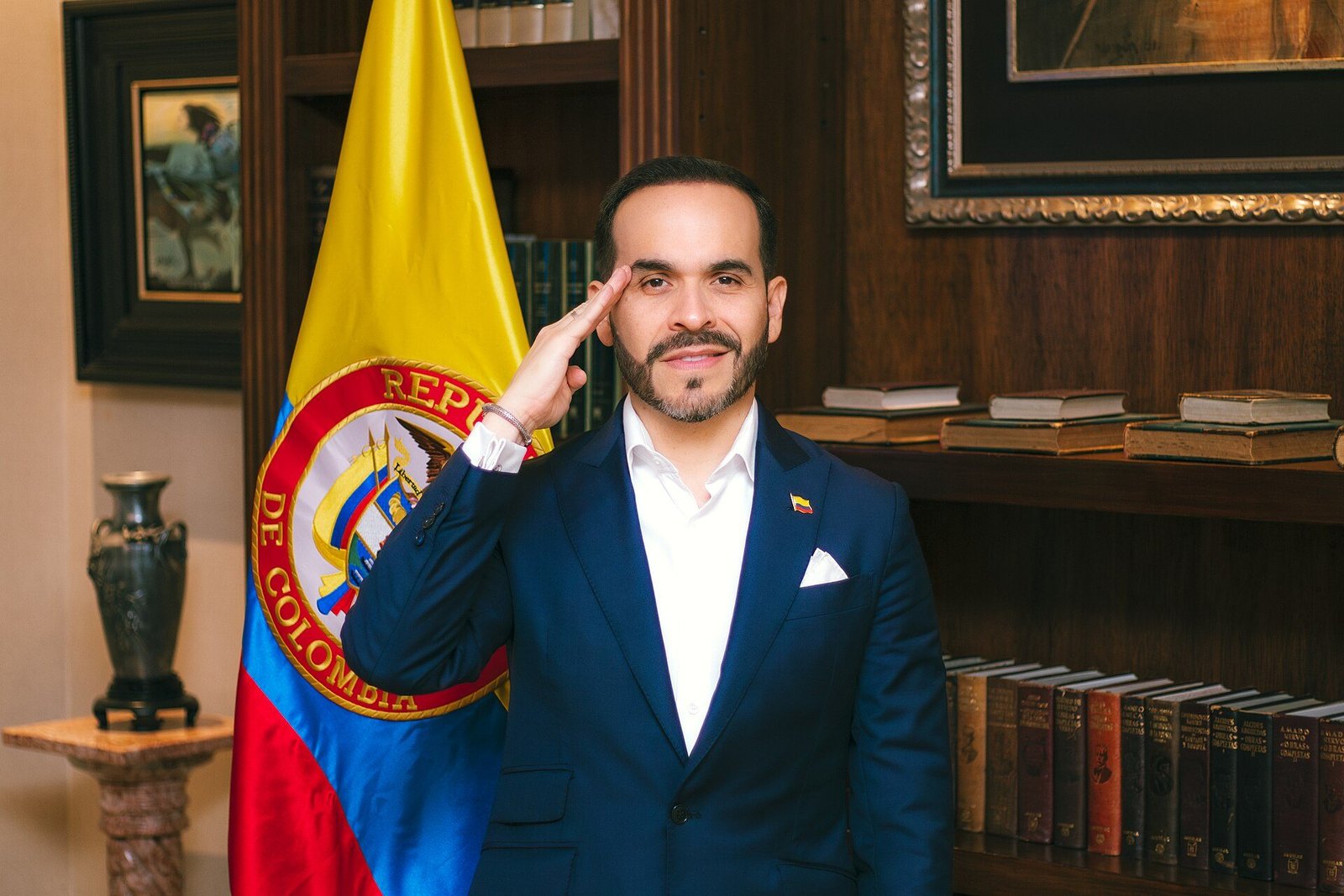
Photograph Source: Abelardo de la Espriella – CC0
While President Donald Trump celebrated the 250th anniversary of U.S. independence in Washington July 4th with a megalomaniacal speech, Iván Cepeda, Colombian senator and candidate for the ruling Historic Pact candidate, warned that he would not recognize the victory of far-right candidate Abelardo de la Espriella unless he renounces his U.S. citizenship, withdraws his campaign promise to extradite and prosecute President Gustavo Petro, and commits to preserving key social reforms implemented by the Historic Pact government. Speaking to a rally in Cali, Cepeda also launched a new initiative to win upcoming governor, mayor, state assembly, and city council races in the October 2027 elections.
De la Espriella countered by accusing Petro of planning “a coup d´etat” and vowing to defend the results of the election with force, if necessary. He has announced plans to implement a set of measures to militarize the country kowtowing to Washington’s interests, and in stark contrast to current President Gustavo Petro’s commitment to dialogue. It’s no coincidence that the president-elect decided not to hold the presidential inauguration ceremony in Bolívar Square or at the National Capitol, but rather at a military base, in his own words, to pay tribute to “the true heroes of the nation: police officers and soldiers.”
The Constitution requires Congress approve the unusual request to move the civil ceremony to a military base, but clearly “El Tigre,” as he is known, has chosen to begin his term surrounded by tanks and troops. The high level of confrontation between the political forces that faced off in the June 21 election places the country in a state of tension that could lead to social upheaval.
From Acknowledging Victory to Peaceful Civil Disobedience
Iván Cepeda’s declaration in Cali that he will not recognize Abelardo de la Espriella as president of the Republic unless he complies represents a major change in stance. Cepeda accepted defeat three days after the election. The official vote count pronounced De la Espriella the winner by a margin of less than one percentage point (49.6% vs. 48.7%). Cepeda’s strategy now involves phased legal and political resistance, separating the realm of electoral data from questions of constitutional legitimacy.
Cepeda argues that his current stance does not contradict his previous one, since he quickly accepted the election results as an act of democratic maturity to prevent outbreaks of violence. He maintains that the vote count does not automatically satisfy all constitutional requirements that the elected candidate must meet to take office. His decision not to recognize De la Espriella under the current circumstances came after De la Espriella’s team confirmed June 30 that he would not renounce his U.S. citizenship. Cepeda argues that governing Colombia while under an active oath of allegiance to a foreign power violates Article 188 of the Constitution (the president symbolizes national unity) and renders the upcoming inauguration on August 7 an illegitimate act.
The U.S. Oath of Allegiance that De la Espriella swore to states in part: “I hereby declare, on oath, that I absolutely and entirely renounce and abjure all allegiance and fidelity to any foreign prince, potentate, state, or sovereignty, of whom or which I have heretofore been a subject or citizen;…” From a strictly ethical and political standpoint, it is very difficult to accept that the commander-in-chief of the Colombian Armed Forces has sworn to defend another country’s interests above any other allegiance.
If De la Espriella had renounced his U.S. citizenship, he would have left the opposition without a leg to stand on. His platform entails a profound, radical, and strategic alignment with U.S. foreign policy, and with the power of the presidency and millions of dollars at his disposal, he could dramatically shift Colombian policy in favor of the Trump administration.
But the extreme right politician refuses to yield to any pressure from the leftist opposition, after building his campaign narrative on his macho image and restoring top-down authority. Cepeda also demanded that De la Espriella clarify whether he is a “U.S. agent”, since, as a criminal defense attorney, he defended a former paramilitary leader who was an informant for the U.S. Drug Enforcement Administration (DEA).
For these reasons, Cepeda announced “civil disobedience against the violation of national dignity” and called on the 12.7 million Colombians who voted for him to follow his example. He said that “when the law, institutions, or authority conflict with moral conscience, citizens not only have the right but also the duty to resist peacefully, refusing to collaborate with injustice, disgrace, or oppression.”
The senator has also called for a major drive to recruit members to the Historic Pact to capitalize on the electoral fervor of recent months. In these next months, the party aims to consolidate its position as the leading political representation of the left. Cepeda emphasizes that his proposal is peaceful and compared it to the actions of Nelson Mandela or Martin Luther King, adding that the specific actions will be determined in consultation with social organizations. He said the main focus will be on disobeying laws and arbitrary measures that violate the Constitution.
The Economic and Security Program
De la Espriella’s central economic proposal, known as “Patria Milagro”, focuses on an aggressive pro-market model and an iron-fisted security policy. On the economic front, it includes austerity and downsizing the state, cutting the government apparatus by 40%, eliminating nearly 700,000 public sector jobs, merging ministries—including not restoring the work of the Ministry of Equality that was dissolved by the court the day before the elections–, tax cuts for the corporate sector and tax incentives to encourage private investment, the resumption of fracking, and doubling national oil production.
Regarding the defense and public order strategy for the 2026–2030 period, his “Second-Generation Democratic Security” plan relies on direct and deep cooperation with U.S. agencies. Specific aspects of the program include technological exchange and access to databases to streamline extradition processes for leaders of criminal gangs and drug trafficking organizations, increasing the National Navy’s presence in the Pacific and the Caribbean in interdiction operations closely coordinated with U.S. Southern Command (responsible for at least 211 extrajudicial executions in the region), resuming eradication of illicit crops using technologies provided by U.S. security contractors, advanced commando courses taught by U.S. Special Forces advisors, and cancellation of any negotiation or truce process with illegal armed organizations, among other measures. Furthermore, in typical Bukele fashion, De la Espriella has announced a plan to build ten large-scale prisons at an estimated cost of 8 billion dollars, and carry out joint operations and extensive military exchanges with the Trump administration to ostensibly combat drug trafficking.
After the election of De la Espriella, Secretary of State Marco Rubio gushed that “Colombia’s best days are yet to come” and issued an official statement outlining, vaguely, three key areas in which the Trump administration will work with the new government beginning August 7:
+ Make significant progress in regional security cooperation and the fight against drug trafficking
+ Jointly curb illegal immigration to the United States
+ Prioritize strengthening economic and trade ties
De la Espriella confirmed that starting August 7, Colombia will formally join the Trump administration’s security program, linked to the White House’s strategic doctrine, “Greater North America”. This plan, announced last March, seeks to redraw the perimeter of U.S. security and economic influence from Greenland to Ecuador, positioning Colombia as the primary defensive stronghold and military ally in northern South America, now considered “Greater North America”.
He also announced Colombia will join the Shield of the Americas, also created in March 2026 and made up of the far-right governments in the region. According to President Trump, the heart of the agreement “is a commitment to use lethal military force to destroy the sinister cartels and terrorist networks once and for all.” By designating drug cartels as terrorist organizations, not only is the use of lethal force permitted, but so are unilateral operations in the territories where they operate. During the inauguration ceremony, attended by 12 Latin American countries, National Security Advisor Stephen Miller stated that the United States “will not cede a single inch of territory in the hemisphere to its enemies or adversaries,” and admitted that the Trump administration is using “hard power, military power, and lethal force to defend the American homeland.” For nationalist sectors, many popular organizations and the left-wing opposition in Colombia, this level of coordination is seen as an alarming loss of autonomy and a surrender of national sovereignty to the expansionist interests of the United States.
The U.S. government and the international extreme right is preparing to back up De la Espriella. Shield of the Americas leaders issued a joint statement on Colombia July 10 warning, “We reject any action, statement, or decision that seeks to delegitimize the mandate conferred by the citizens…”
The March of Resistance
The new administration will presumably take office Aug. 7 amid an unprecedented political and social upheaval in the country. The president-elect has ordered the formal suspension of the presidential transition process across various state institutions because Gustavo Petro declared on social media that he does not recognize the legitimacy of De la Espriella’s victory. Petro announced that his term officially ends on August 6 at midnight and he will not hand over the presidential sash to his successor any time sooner.
Petro has called for a massive national march on July 20, Colombia’s Independence Day. He noted that the demonstrations in public squares across the country will serve as a “shout for independence,” to defend social reforms, and to listen to his official farewell address as head of state. The nationwide organization of the demonstrations seeks to lay the groundwork for resistance and to build toward regional elections in October of next year.
De la Espriella takes office amid strong, already declared civil resistance. Widespread dissent will almost certainly lead to a constant standoff between the streets and the presidential palace. By refusing to recognize the authority of the new executive branch’s directives, the opposition will turn to ongoing social mobilization as its primary counterweight to state power. As the new government prepares to impose state authority from the top down, the opposition is gearing up to challenge that authority from the streets. An historic struggle for state power is brewing in Colombia, with uncertain consequences for the nation and the region.
[ad_2]
Source link
