
[ad_1]
Joshua Scheer
For decades, 60 Minutes stood as one of the last surviving institutions of broadcast journalism willing to challenge power, confront corruption and occasionally remind Americans what reporting looks like when it serves the public rather than corporate interests. Now, according to reports from both The New York Times and The Guardian, one of the program’s most recognizable faces has been shown the door after openly accusing CBS leadership of dismantling the very newsroom he spent decades helping build.
Scott Pelley’s firing is more than a personnel dispute. It is a warning flare over the future of corporate media.
The veteran correspondent reportedly blasted CBS News editor-in-chief Bari Weiss during a tense staff meeting, accusing her of “murdering 60 Minutes” after the network abruptly removed key producers and correspondents from the program. Pelley’s criticism came amid growing turmoil at CBS News following a dramatic restructuring led by ownership and management figures who promised to modernize the network for the digital era.
But modernization is often the language institutions use when they are really talking about control.
The most striking allegation is not that Pelley lost his job after challenging management. It is Pelley’s claim that senior executives pressured him to inject bias into reporting and that “the collapse of values at the top has become untenable.” If true, the issue extends far beyond one journalist’s employment status. It becomes a question of whether one of America’s most influential news organizations is abandoning the editorial independence that made it relevant in the first place.
The irony is difficult to ignore.
Below is the termination letter CBS executives sent to Scott Pelley—a document that offers a revealing glimpse into the growing battle over editorial independence, newsroom dissent and the future of one of America’s most respected news programs.
According to the termination letter, Bilton said he had attempted to establish a more collegial relationship with Pelley, including extending a personal dinner invitation that was declined. He wrote that what troubled him most, however, was Pelley’s conduct during a staff meeting, which he characterized as a public confrontation rather than a constructive discussion.
Bilton accused Pelley of using the gathering to openly challenge his leadership, qualifications and motives in front of colleagues. The letter argued that Pelley’s behavior demonstrated a level of hostility and resistance that made future collaboration increasingly difficult, leading management to conclude that he was unwilling to participate in the network’s new direction.
Read Pelley’s full statement from Tuesday night below:
There has never been anything in America like 60 Minutes.
The Sunday tradition is the most successful program of any kind in history. For more than a decade, its innovative growth on every major online platform has extended its reach to countless millions around the world. This spring, at the end of our 58th season, 60 Minutes grew rapidly with an unheard-of 9% jump in viewers on CBS.
“60” has been the number-one program in America for decades because our beloved audience finds integrity, quality, and humanity in our stories. When stewardship of the program passed to my colleagues and me, our responsibility was to expand energetically into a new age of media technology while preserving the values our audience expects. Now, the new owner of our network is casting this legend aside, apparently to curry a moment of favor with the Trump administration.
The waste is heartbreaking.
Last month, 60 Minutes lost its DNA when our entire senior leadership and two of our best on-air correspondents were cruelly fired without cause. Good people were silenced because they stood up for our audience. They stood for fairness against the forces of political bias; they stood for professionalism against chaos.
For my part, new management has instructed me to inject falsehoods and bias into a politically sensitive story. I’ve been told to include assertions that are unverified. To date, in every case, I have managed to ignore these instructions or refuse them. Recently, politicians have been invited to choose correspondents for interviews on the broadcast. Giving politicians control over 60 Minutes interviews is not how this is done. Finally, incompetence and unprofessionalism in the new management have wreaked havoc. In a case involving one of my stories, the entire program came within 19 minutes of not getting on the air at all.
At 60 Minutes, we have fought harder than anyone knows to save the program that became an American icon. We owed that to our millions of viewers. I am deeply moved by the thousands of wishes we have received to “keep up the good fight.” Most of the men and women of CBS News are still in that fight. But now the collapse of values at the top has become untenable. The leadership of 60 Minutes is no longer recognizable. The principles I hold dear are gone, and so I must leave as well.
I depart after 37 years at CBS with one emotion — a heart brimming with gratitude for the men and women of CBS News who encouraged and enriched my work, very often at the risk of their own lives. I pray for a day when those people and their ideals are honored again — a day when sanity, competence, and courage return.
Scott Pelley
For years, media executives have lectured the public about the importance of defending democratic norms, protecting institutions and standing up to political pressure. Yet when journalists inside their own organizations raise concerns about editorial interference, many of those same institutions suddenly discover the virtues of obedience.
Pelley is not some fringe figure. He reported from Afghanistan, Iraq and Ukraine. He spent decades in dangerous environments documenting war, power and political deception. Whether readers agree with every story he produced is beside the point. His reputation was built through reporting, not branding.
Meanwhile, CBS appears to be replacing newsroom veterans with a leadership structure increasingly shaped by media personalities, digital strategists and executives whose expertise lies less in investigative journalism than in managing narratives and audience engagement.
That may be good for quarterly earnings.
It may be good for shareholders.
But it is rarely good for journalism.
The deeper story here is one playing out across the media landscape. Independent reporting is expensive, unpredictable and often uncomfortable for those in power. Corporate consolidation, billionaire ownership and platform-driven news models all reward something different: safer content, controlled controversy and journalism that never threatens the interests of those signing the checks.
The battle over 60 Minutes is therefore not merely about Scott Pelley or Bari Weiss. It is about whether journalism remains a public service or becomes another corporate product optimized for market positioning.
At ScheerPost, we have spent years documenting the very real persecution, imprisonment and killing of journalists around the world. We have published extensively on the slaughter of reporters in Gaza, the targeting of independent media, the surveillance of dissent and the growing concentration of media power in the hands of billionaires and corporate interests. That context matters.
Scott Pelley was not killed. He was not imprisoned. He was not disappeared. But his firing fits into a broader pattern that should concern anyone who values a free press. Increasingly, journalists who challenge power—whether political, corporate or institutional—find themselves marginalized, silenced or removed. The methods may differ, but the underlying message remains the same: know your place.
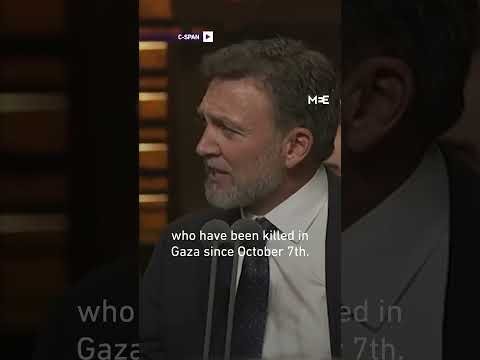
The contrast was highlighted recently when journalist Josh Rushing accepted a News Emmy for Al Jazeera English’s documentary Kids Under Fire. In his acceptance speech, Rushing pointed to what he called the irony of receiving an award for reporting on a genocide from a country that continues to enable it. He dedicated the award to the journalists killed in Gaza and warned that there can be “no free people without a free press.”
That warning extends beyond war zones. A free press does not disappear overnight. It erodes through corporate consolidation, billionaire ownership, political intimidation, surveillance, censorship and newsroom cultures where questioning management becomes grounds for removal. The firing of Scott Pelley is not equivalent to the murder of journalists covering wars. But it belongs to the same troubling conversation about who controls the news, who gets to tell the story and what happens to those who refuse to follow the script.
Journalism’s first duty is not obedience. It is truth. When institutions begin punishing journalists for defending that principle, everyone should pay attention.
Editor’s Note: At a moment when the once vaunted model of responsible journalism is overwhelmingly the play thing of self-serving billionaires and their corporate scribes, alternatives of integrity are desperately needed, and ScheerPost is one of them. Please support our independent journalism by contributing to our online donation platform, Network for Good, or send a check to our new PO Box. We can’t thank you enough, and promise to keep bringing you this kind of vital news.
You can also make a donation to our PayPal or subscribe to our Patreon.
Please share this story and help us grow our network!
[ad_2]
Source link
