
[ad_1]
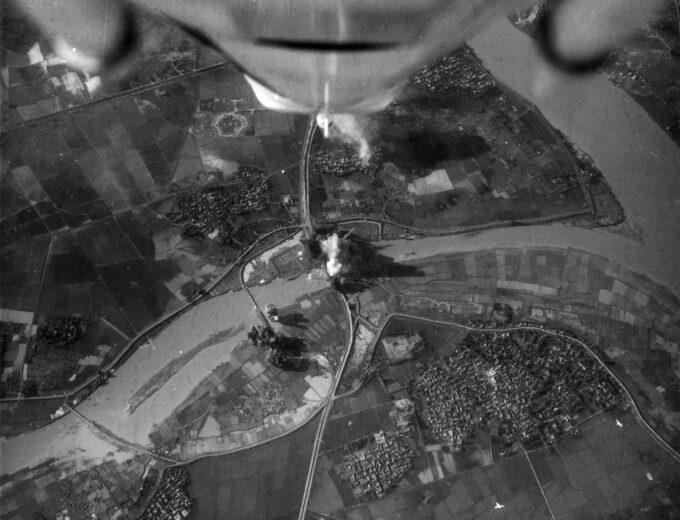
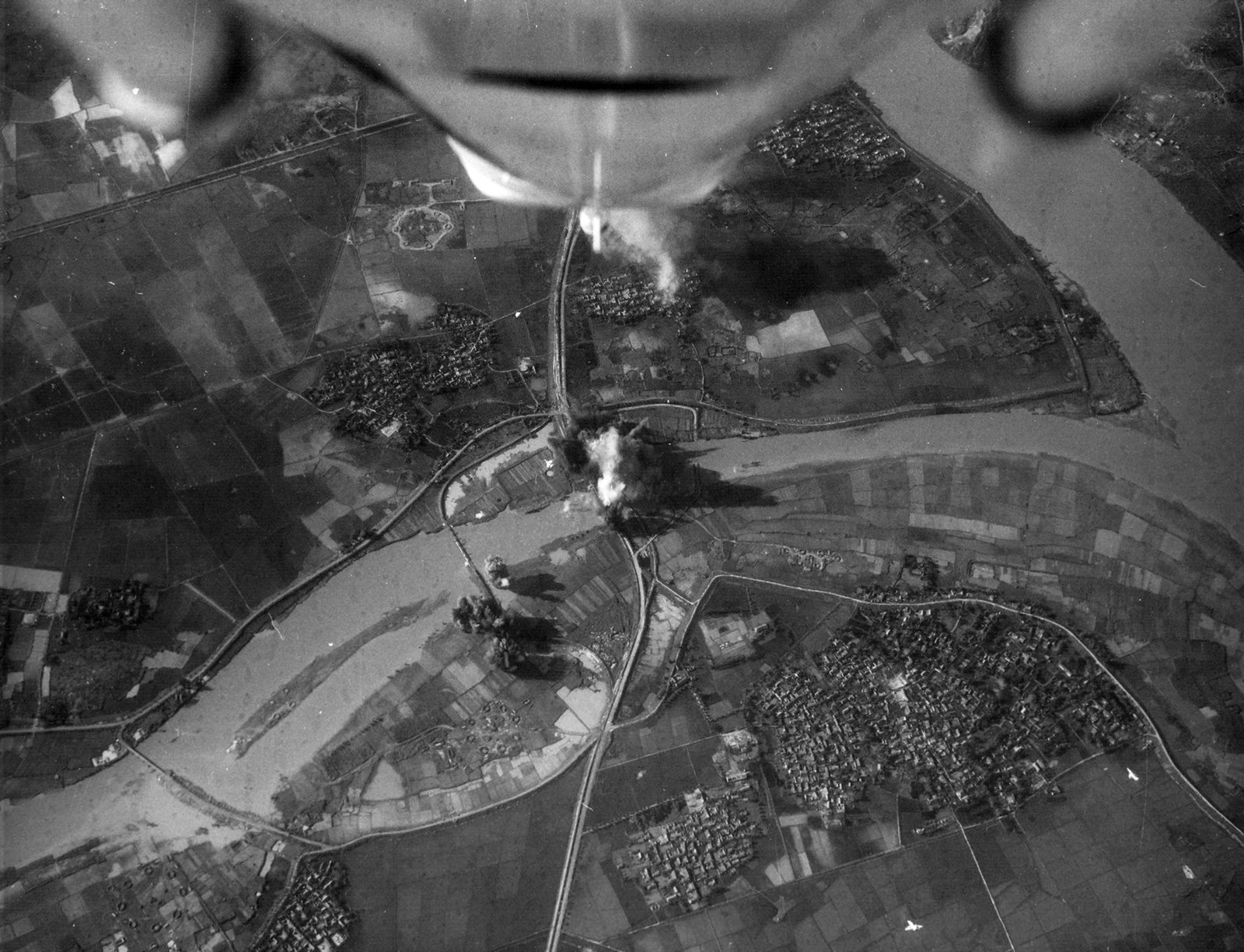
A-4E Skyhawks attacking Phuong Dinh bridge in 1967. Photo: LCdr. Jerry Breast, US Navy.
Comparisons are always risky. Even identical twins are not exactly alike. But some phrases echo across decades with unsettling familiarity. For those of a certain generation, hearing Donald Trump threaten Iran—“We’re going to bring them back to the Stone Age where they belong”—brought back memories of General Curtis LeMay’s infamous remark: “We’re going to bomb them back into the Stone Age,” attributed to U.S. air war strategy in North Vietnam.
Is the U.S. war against Iran Vietnam 2.0? Or is it another example of America’s persistent reliance on military force to solve political problems?
The Vietnam War remains one of the clearest examples of the limits of overwhelming military force. The scale of its human and environmental consequences still shapes how later conflicts are judged. While it is too early to compare the two wars in depth, Vietnam remains precedent-setting as a demonstration of a failed military intervention. Approximately 3,000,000 Vietnamese were killed, including civilians and military personnel. Long-term collateral damage is estimated at about 150,000–400,000 birth defects linked to exposure to Agent Orange.
The Vietnam War cost more than 58,000 American lives.
Despite its military superiority, the U.S. failed to achieve its primary political objective. Southeast Asia did not become a communist sphere of influence even after the U.S. dropped more bombs on Vietnam than all of World War II combined.
In the current U.S. war with Iran, estimates of Iranian deaths vary. Conservative numbers place the death toll at roughly 3,400 to 7,600 killed inside Iran. The composition of those deaths matters. Reports suggest a significant proportion are civilians, including children, alongside military personnel and paramilitary forces.
Total confirmed U.S. service members killed: 14.
Is comparing more than three million deaths, hundreds of thousands of birth defects and generational environmental damage in Vietnam with several thousand deaths after only weeks of bombing in Iran simply comparing apples and oranges?
Yes and no.
On one side, the differences are obvious. The Vietnam War was a prolonged conflict. Most analyses place the main period of combat between 1965 and 1973, although U.S. involvement in Vietnam stretched over close to two decades. The Iran War has just begun, although U.S. involvement in Iran goes back to at least the 1953 overthrow of Prime Minister Mohammad Mossadegh. The duration of actual combat, number of deaths, and environmental damage are clearly not comparable.
Nonetheless, the United States’ confrontation with Iran does show disturbing similarities to Vietnam. Both wars blurred international humanitarian law distinctions between civilians and combatants; both were not formally declared by Congress; both relied heavily on executive authority.
But what is most similar to both the Vietnam and Iran wars is the overwhelming reliance on military force. “Bombing them back into the Stone Age” echoes across more than 50 years.
Has the lesson of Vietnam been learned? What explains America’s continued reliance on force?
For over fifty years, the United States has used its overwhelming military capabilities in conflicts with foreign countries. President Eisenhower famously warned of the “military-industrial complex,” but he might also have warned about the repeated use of the complex’s weapons in conflicts whose political objectives were never met. What were the results of millions of Vietnamese deaths and generational destruction as well as 58,000 American casualties? The dominoes never fell across Southeast Asia.
Vietnam did not end America’s reliance on military intervention. Later conflicts in Afghanistan and Iraq raise similar questions about the limits of military power. In Afghanistan, the United States’ 2001 invasion quickly removed the Taliban from power. But what followed was more than two decades of insurgency, fragile governance, and continued dependence on foreign military and financial support. Despite massive investment in reconstruction and security forces, the Afghan state collapsed, and the Taliban returned to power after the U.S.’s sudden withdrawal in 2021.
The 2003 invasion of Iraq showed a comparable pattern. While U.S. forces rapidly toppled Saddam Hussein’s regime, the dismantling of the Iraqi state created a power vacuum that fueled sectarian violence and insurgency. The collapse of political institutions and security structures contributed to years of instability and enabled the rise of groups such as ISIS. Although Iraq eventually established elections and new political institutions, the country continues to struggle with political fragmentation, corruption, and periodic violence.
In both Afghanistan and Iraq, initial American military success gave way to long-term instability. Defeating an enemy militarily did not translate into sustainable political order. What leads us to believe that the situation in Iran will be better?
Military force alone has rarely been sufficient to win “hearts and minds.” The post–World War II cases of Japan and Germany are often cited as counterexamples, but they are not directly comparable because their reconstruction involved extensive political, economic, and social efforts that went far beyond mere military intervention.
The question, therefore, may not be whether the Iran War will become another Vietnam, but whether the United States has fully absorbed the lessons of its previous interventions. From Vietnam to Iraq and Afghanistan, American military power has repeatedly demonstrated its ability to dominate battlefields and overwhelm weaker regimes. What it has not achieved is the creation of stable and legitimate political orders in deeply complex societies. There has been plenty of regime destruction, but little nation-building.
Referring to the Iran conflict, a recent Editorial Board article in the New York Times argued that “the world saw how a country that spends one-hundredth of what the United States does on its military can seek to outlast it in a conflict. It is a reminder of the urgent need to reform America’s military.” The deeper problem is not the structure or capability of the military itself. The more fundamental lesson from Vietnam, Iraq, and Afghanistan is the recurring tendency to treat military force as the central instrument of foreign policy in situations whose outcomes ultimately depend on political legitimacy and social stability.
Both Trump and LeMay refer to bombing “back” to the Stone Age as if that is where their adversaries belong. But the Stone Age may ultimately describe not where those being bombed belong, but the mindset of those doing the bombing. Just because the United States believes it has the biggest hammer doesn’t mean the world is full of nails. That is a perfect example of Stone Age thinking.
[ad_2]
Source link
