
[ad_1]
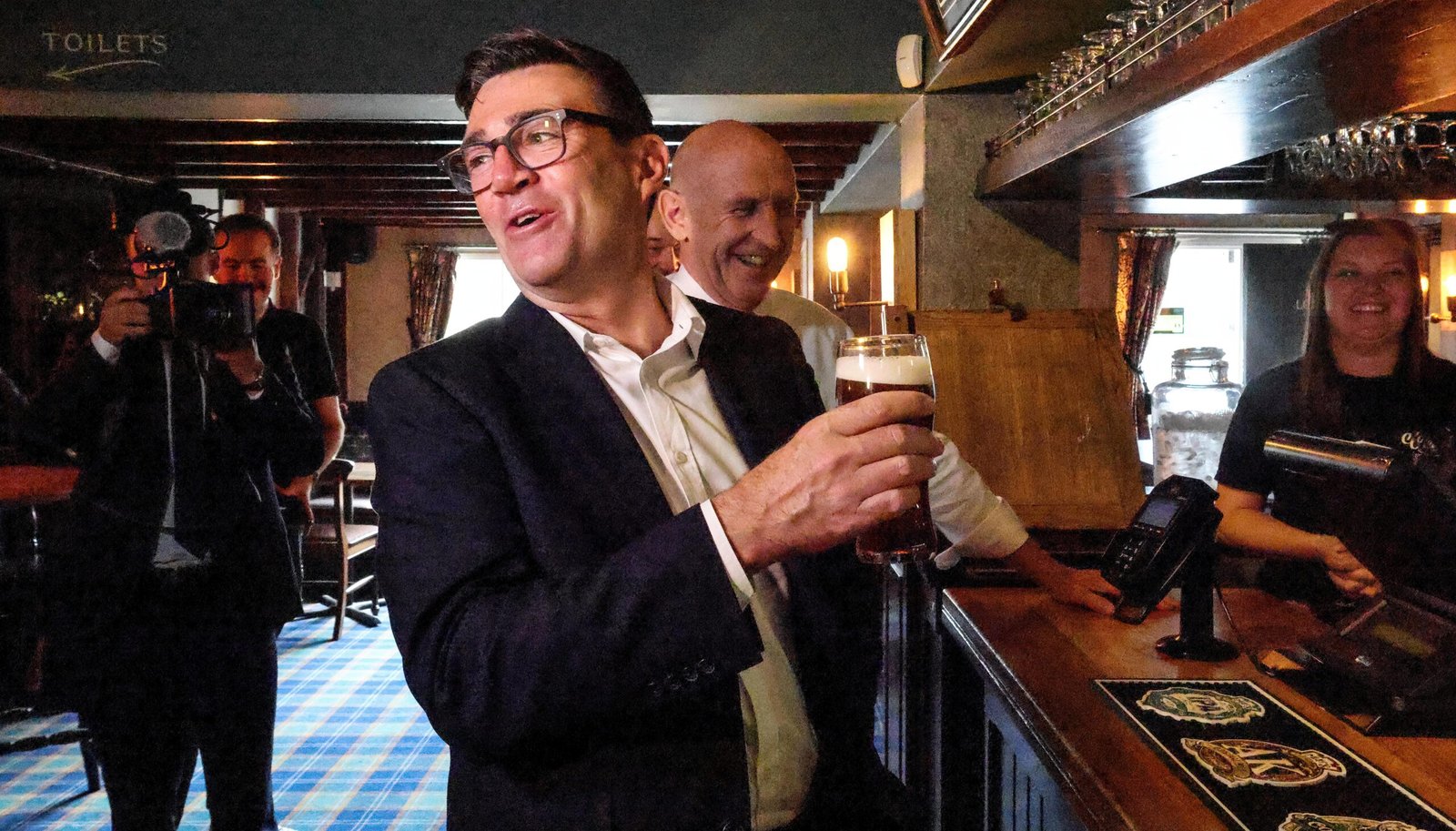
On Monday, Britain’s new prime minister, Andy Burnham, promised to “bring life’s essentials back under stronger public control to make them affordable again.” He has honored his pledge to help with the cost of living by restoring the £2 cap on bus fares and by reducing VAT on household electricity bills. Well, every little bit helps.
But anyone who thinks that bus usage in the UK, which has fallen significantly since the coronavirus pandemic, will be revived by a £2 bus fare is not living in the real world. Nor will a £40 reduction in the average Briton’s £1,600 annual heating bill exactly lead to national rejoicing. Domestic energy bills are expected to go up again in the autumn, so this cut will scarcely be noticed by the public at large.
Nevertheless, disgruntled Starmer-era ministers who have been rudely pushed out of the door by Burnham (so much for ending factionalism) have certainly noticed. One of them, Darren Jones, pointed out that this reduction in VAT on fuel is unfunded. Or rather, it is fantasy-funded by Burnham scrapping Keir Starmer’s much-criticized digital ID scheme, which was itself supposed to be paid for by unspecified savings elsewhere in the spending budget. It’s all smoke and mirrors.
The new prime minister has, however, shown more dynamism and charisma in the past few days than his predecessor ever did and some are even comparing Burnham to Zohran Mamdani, the left-wing New York mayor. Mamdani has also been celebrated as a great communicator and a wizard of new media, and has made many bold promises that have proved to be rather modest in practice. Burnham’s nugatory reductions in the cost of living are supposed to be giving voters what he calls “breathing space” and a taste of what they can expect in future. In other words, they are mostly about “vibes.”
But eventually the rubber will hit the road. Burnham is still said to be planning to nationalize the insolvent Thames Water, London’s water and sewer utility. But the big investment houses that currently own it have made clear that they will fiercely resist any expropriation and will demand compensation. That would be on top of the government effectively taking on the debt and running costs of this basket-case utility. Nationalization doesn’t come cheap.
This self-identified “socialist” prime minister simply lacks the cash to nationalize the public utilities and so will have to rely on private capital to finance them, albeit under stricter public control. That is, ironically, the very “neoliberal” approach that Tony Blair pioneered 25 years ago: using the market and competition to build better public services than can be provided by the state sector. Yet Burnham keeps saying that neoliberalism was a “wrong turn” and that he is going back to “authentic” Labour.
In the real world, the top of Burnham’s spending agenda will be finding more cash for defense. This is to honor his predecessor’s promise to spend 2.7 percent of GDP on arms by the end of 2030. That has already been severely attenuated by the failure to come up with the £28 billion Defence Investment Plan (DIP), which service chiefs said was necessary to deliver it. His new chancellor, John Healey, actually resigned as defense secretary last month over the failure to fund the DIP.
Following his elevation to the second-highest job in the cabinet, however, Healey has become rather more accommodating on defense funding. Perhaps promotion to chancellor has concentrated his mind on the onerous demands of the government’s own fiscal rules. UK finances remain in a parlous state, and no amount of Burnham “vibes” can disguise the fact.
Britain already spends nearly twice as much on debt interest as it does on defense. More is spent on welfare than is raised by income tax. The tax burden is higher than at any time since the Second World War. Yet clearly taxes are going nowhere but up.
Mr Burnham has ruled out lifting the freeze on the personal allowance, currently £12,570, which is excluded from income tax. He said that lifting the cap, which has effectively increased the tax take through fiscal drag, would be too expensive at around £4 billion. Nor is he going to axe the pension triple lock, which gives state pensioners an annual increase equivalent to inflation, average wages, or 2.5 percent, whichever is highest. Many say this is unaffordable.
Burnham is still expected to make some kind of offer on tax, but it is not clear what. If he sticks to Labour’s 2024 election manifesto, he cannot increase income tax, VAT, or National Insurance contributions, the three biggest sources of tax revenue. His early enthusiasm for a 2 percent wealth tax on those with £10 million in assets seems to have waned as commentators point out the potential damage to inward investment.
Subscribe Today
Get daily emails in your inbox
He has talked positively about introducing a land value tax (LVT) to replace the local government council tax, which is levied on an outdated valuation of real estate, and stamp duty on house sales. But LVT would create losers as well as winners. It would also be complicated and costly to administer and might raise little in the short term.
Britain’s fundamental problem, everyone agrees, is the lack of economic growth. Increasing GDP is the only way to pay for better public services, reduce welfare dependency and increase remuneration for those in work. But we have yet to discover where this wealth creation is to come from under Burnham’s not-so-new deal. The public sector is maxed out and the private sector is flatlining, thanks to the recent increases in corporate taxes, the national minimum wage, and employers’ National Insurance.
Meanwhile, the cost of servicing Britain’s £3 trillion of public debt remains an immense burden. Commentators on the right say that Burnham is taking Britain back to the 1970s, when a previous Labour government had to go cap in hand to the International Monetary Fund to manage a sovereign debt crisis. We are not quite there yet. But keen observers of fashion trends may have noticed that flared trousers and wide lapels are coming back.
[ad_2]
Source link
