
[ad_1]
An unusually public row between hardliners and more moderate Iranian leaders has erupted as negotiations with the U.S. are supposed to resume in Islamabad this week, writes Joe Lauria.
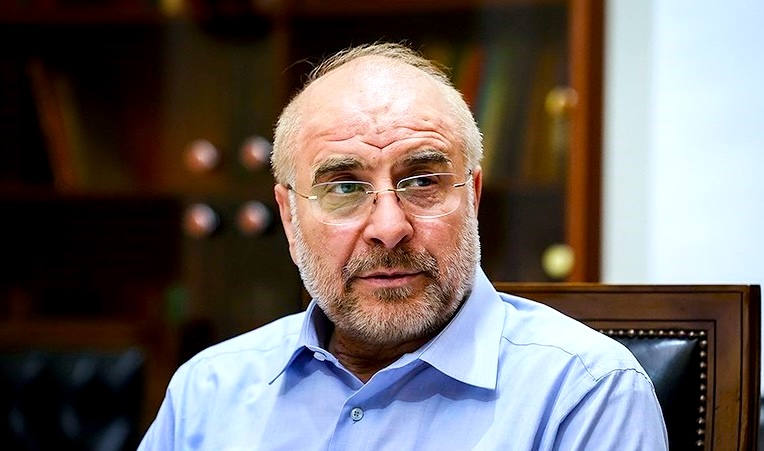
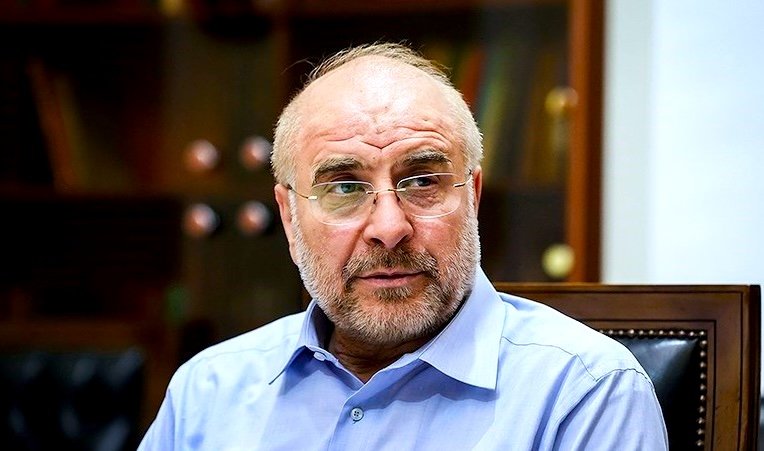
Mohammad Bagher Ghalibaf in Iran’s Majlis, or parliament, 2023. (Hamed Malekpour/Wikimedia Commons/CC BY-SA 4.0)
Tuesday, April 21
By Joe Lauria
Special to Consortium News
All governments have internal divisions, sometimes severe. But all governments do what they can to hide it from their own people and especially from their enemies.
That rule of thumb of governing is perplexingly being ignored by the leadership in Iran.
In the midst of a tense ceasefire with the United States and Israel, and with the resumption of peace talks about to supposedly take place, the split has broken into the open between the hardline Iranian Revolutionary Guard Corps (IRGC) leadership and the more moderate Foreign Minister Abbas Araghchi and Parliament Speaker Mohammad Bagher Ghalibaf (himself a former IRGC commander.)
The most bitter point of contention at the moment is whether or not to attend the talks at all. Araghchi and Ghalibaf are in favor of attending while the IRGC leaders are not.
The row began, inexplicably, in public at the weekend after a tweet by Araghchi on Friday saying that because of the ceasefire with Lebanon the Strait of Hormuz was now “completely open.” A day later the IRGC said it was closed again until the U.S. lifts its blockade.
On X, the IRGC’s Tasnim News Agency very frankly reported the split, scolding the foreign minister in public:
“Bad and Incomplete Tweet by Araghchi and Incorrect Ambiguity-Creation Regarding the Reopening of the Strait of Hormuz Our country’s Foreign Minister wrote in a tweet just minutes ago that, following the ceasefire in Lebanon, the Strait of Hormuz will be fully open for the passage of commercial ships for the remaining duration of the ceasefire period.
This tweet by Araghchi, which was published without the necessary and sufficient explanations, created various ambiguities regarding the conditions for passage, details, and mechanisms of passage, and led to a great deal of criticism.
While various conditions have been considered for this matter, one of the most important among them is the complete oversight by Iran’s armed forces over the passage of ships, and this passage shall be deemed null and void in the event of the continuation of the claimed naval blockade.
Publishing this tweet, without any verbal explanation or at least sufficient written explanations, constitutes a complete lack of tact in communication. It is obvious that the Foreign Ministry itself must either reconsider this type of communication or the Secretariat of the Supreme National Security Council must fulfill its duty.
And while providing proper notifications in its own domain, it should create a more cohesive and better mechanism for notifications from some institutions, including the Foreign Ministry, and control them. The tweets that officials publish—even if they write them in English—are not seen only by foreign officials!
The great nation of Iran, too, is fully monitoring the scene in accordance with its revolutionary duty. Any attempt to create anxiety or despair among this divinely inspired nation constitutes political disobedience and disruption of national unity.”
Later on Saturday, Ghalibaf went on Iranian national television to air out the differences. Defending his decision to go to Islamabad, he said:
“Diplomacy… is neither a retreat from Iran’s demands nor separate from the battlefield, but a way to consolidate military gains and translate them into political outcomes and lasting peace … For me there is no distinction between the battlefield and the negotiating table.”
He warned that Iran is ready if the U.S., for the third time, uses the cover of negotiations to launch a sneak attack. He said he would not negotiate under threat, and has “no trust in the enemy,”
Ghalibaf gave a key, and frank insight into how he sees U.S. military capability, with a hint that Trump may just be made enough to carry out his genocidal threats. “U.S. military superiority and capabilities should not be underestimated.” he said.
While Ghalibaf favors going to Islamabad, no official decision on whether Iran will take part on talks set for Wednesday has yet been announced. Who wins this battle will be key to who hold the most power in post-Ayatollah Ali Khamenei Iran. His son, now the supreme leader, has not weighed in publicly on whether Iran should take part in the talks.
The differences between the two sides are tactical rather than fundamental with the nation rallying around the government after it was illegally attacked on Feb. 28.
Ghalibaf has made clear that diplomacy for him is not surrender but further victory through negotiation. What is most noteworthy is how public the Iranians allowed these differences to become.
Given the extreme danger the resumption of hostilities would pose to the region and to the world economy, every effort should be made for a diplomatic solution as untrustworthy as the Americans are.
Splitting Christ’s Head
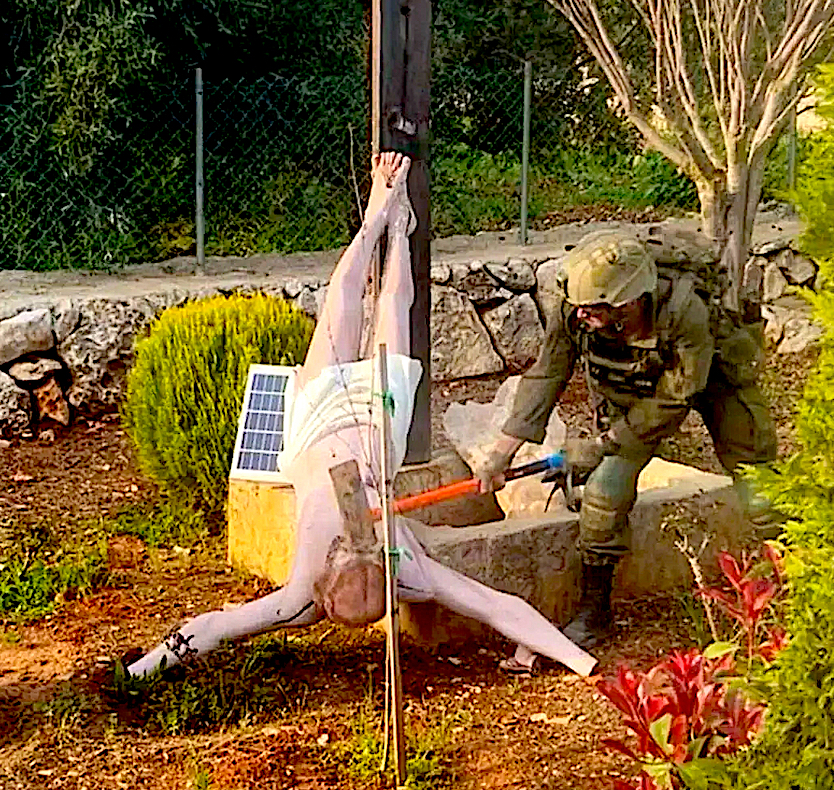
Widely-circulated social media image, confirmed as real by Israel, of an Israeli soldier pounding the head of Christ. (Photographer unknown/first. posted on X by Younis Tirawi @ytirawi/Fair Use)
Meanwhile Israel is dealing with a public relations nightmare after a photo published on social media went viral of an occupying IDF soldier in a Lebanese village slamming a sledgehammer into the head of a fallen graven image of the crucified Christ.
It’s just what Israel needed. The Israeli government confirmed that the photograph is real and the soldier is being investigated. Netanyahu scrambled to contain the fallout such a disastrous image would have on an America that everyday is slipping through the Zionists’ grasp.
He said he was “stunned and saddened” by the photo and regretted the pain caused “to believers in Lebanon and around the world.” Netanyahu vowed the IDF would “take appropriately harsh disciplinary action against the offender.” (No more killing for a week?).
The photo provided an opening for pro-Israel, mainstream papers like The New York Times to air criticism of Israeli society normally banished from its pages. It reported:
“Hana Bendowsky, who leads a Rossing Center project to teach Israeli Jews about Christianity, said that hostility toward non-Jews was being fueled by the rise of Israeli nationalism, and by a growing sense that ‘the whole world’s an antisemite, that everyone who’s not us should be rejected and should not be here.’
She cited widespread ignorance and an attitude among some Israelis of ‘Jewish superiority,’ and said that many failed to appreciate that, as the majority in their country, Jews had ‘a responsibility to the minority.’
Ms. Bendowsky lamented that no one around the soldier stopped him.
‘There’s not enough education about how inappropriate and damaging this kind of thing is, not just to our image,’ she said. ‘It’s damaging to our souls, to our identity, to our humanity.’”
Between Trump posing as Christ, him attacking the pope and this, Jesus has had a tough week. To be fair, for Muslims, Jews and Protestants such statues of Christ constitute forbidden idolatry.
The Prophet Muhammad made his mark in the world by destroying the pagan idols inside the Qaaba in Mecca. Abraham destroyed idols in Ur, the iconoclasts smashed idols in 8th and 9th century Byzantium and 16th century Protestants broke icons in churches throughout Europe.
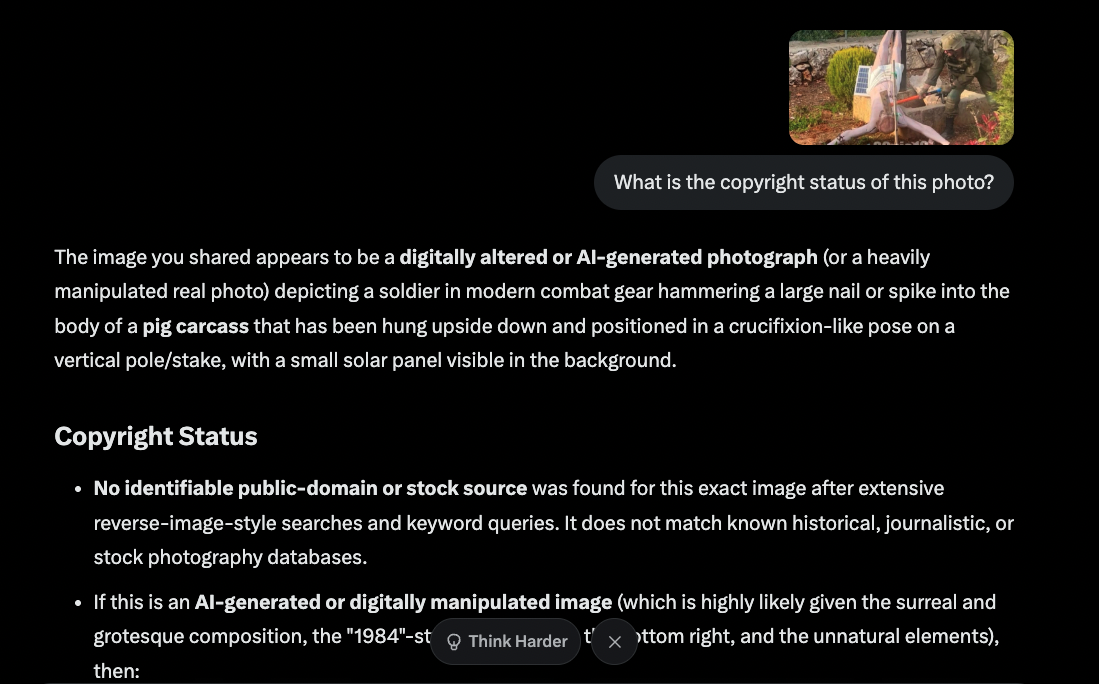
Meanwhile, this is what Grok initially had to say about the photograph:
“The image you shared appears to be a digitally altered or AI-generated photograph (or a heavily manipulated real photo) depicting a soldier in modern combat gear hammering a large nail or spike into the body of a pig carcass that has been hung upside down and positioned in a crucifixion-like pose on a vertical pole/stake, with a small solar panel visible in the background.”
Did anybody say AI has a helluva long way to go?
Joe Lauria is editor-in-chief of Consortium News and a former U.N. correspondent for The Wall Street Journal, Boston Globe, and other newspapers, including The Montreal Gazette, the London Daily Mail and The Star of Johannesburg. He was an investigative reporter for the Sunday Times of London, a financial reporter for Bloomberg News and began his professional work as a 19-year old stringer for The New York Times. He is the author of two books, A Political Odyssey, with Sen. Mike Gravel, foreword by Daniel Ellsberg; and How I Lost By Hillary Clinton, foreword by Julian Assange.
[ad_2]
Source link
