
[ad_1]
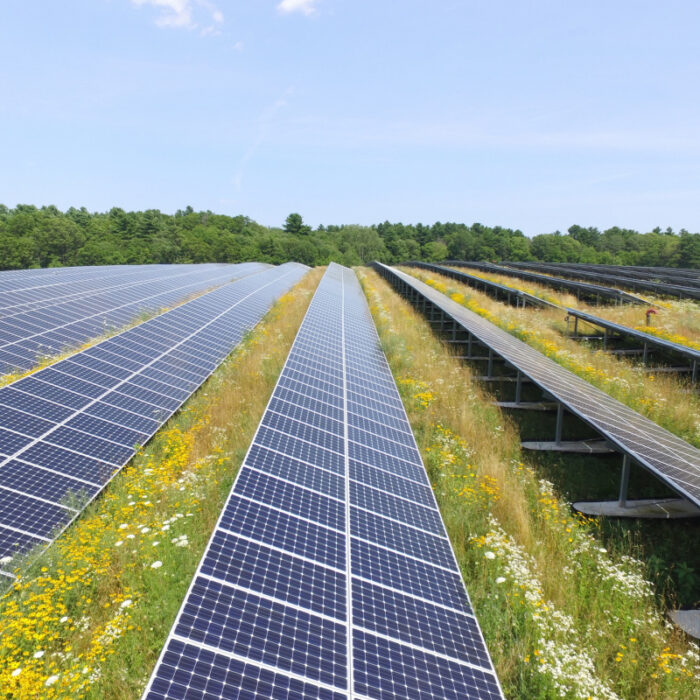 Solar power as a source of electricity has been on a meteoric rise, and has crossed some encouraging milestone recently. Every way you look at it, solar is booming. This is driven primarily by the decrease in the cost of adding solar power, so let’s start there.
The Berkley Lab has been tracking the cost of solar power in the US for years, so they are a reliable source of information. They get direct data from the actual price paid by consumers, and break down the cost of panels, the cost of installation, and all the “soft” costs that are part of the industry. In 2009 the total cost of installing solar between $7 – 8.70 per watt. An average US residential home installs a 6-8 kW system, with the average increasing over the years. In 2025 the average size was 7.7 kW. Let’s use a 7 kW system, at $8 per watt, that’s $56,000 total installation cost. Today the average price of installed residential solar in the US is $3.6 per watt (but it is $3.0 if you pay upfront, $4.50 if you finance). So that same 7 kW system now costs $25,200. (If you pay for it outright, the cost drops to $21,000.) So over the last two decades the total const of installed residential solar has dropped by about 60%. This is without considering any tax breaks or incentives.
The reason for the decrease is partly that solar panels themselves are cheaper, and they are more efficient, so a 7kW system requires fewer panels. Installation costs have decreased by about 50% over this time, largely due to economies of scale. However, the US still has higher soft costs for solar than many other industrialized nations, and this is mostly a matter of the regulatory system. So there is some regulatory efficiency to be gained. Solar companies themselves also have some possible efficiency gains. Fortunately, the net price for solar continues to go down, with another 50-60% decrease in total price possible even without further technology gains. Commercial and grid scale solar is even cheaper – with large non-residential installations down to $2.4 per watt.
It is primarily for this reason that solar is now the most common new source of added grid capacity. Worldwide, wind and solar are responsible for 85% of new grid capacity, with solar making up 73%. Worldwide there is now about 3 TW of installed solar capacity. One TW was added in just the last two years, showing the exponential increase in solar installations. Solar now generates 9-10% of the world’s electricity. This is led mostly by China, which as 50% of the world’s installed solar.
For a long time, while wind and solar were increasing rapidly, they were more than offset by the total increase in electricity demand. This is still much better than not installing renewable or low-carbon energy, but it meant that fossil fuel use was still increasing. For the first time, however, total electricity from fossil fuels decreased, by 0.2%, without being caused by an economic downturn (like COVID). This is a tiny decrease, but it is a potential milestone if we have truly turned a corner. Even better, this decrease is driven primarily by coal, which is the dirtiest form of energy. Natural gas plants are still increasing, because they are still necessary for peaker plants, and because of the increased demand of data centers.
The rise of solar is helping push down demand for fossil fuel energy, but there are two other factors that will be critical to push them down further. The first is grid battery storage. Battery technology is also improving rapidly. The advent of cheaper sodium ion batteries (which also bypass the lithium bottleneck) is seeing battery grid storage rise considerably. More and more of those home solar installations include battery back up. There are also new innovations, such as plug and play home battery backup, where you can add storage capacity in a modular fashion without any installation costs – just plug them in. Regulations need to catch up to this technology, allowing them to be used for whole home backup, but for now they can be used for targeted backup, like for your refrigerator, or your work station.
Grid storage has the capability of reducing reliance on natural gas plants. So does nuclear. We seem to be at the beginning of a revival of the nuclear power industry. This is necessary even if we wish to simply maintain the current percentage of nuclear on the grid, which will help keep fossil fuel use down.
The bottom line is that the cost of solar has dropped precipitously, and so if you have not looked into it recently, you should take another look. The prices I gave above were for a fairly large home. The total price of the system scales with the size of the house, which is a marker for the financial resources of the owner. Let’s say you have a more modest house that only needs a 5 kW system. If you pay for it outright, the total cost would be $15,000. The federal tax incentive just ended on Jan. 1, 2026, which is unfortunate but is defensible due to the fact that the cost of solar has dropped so much. However, 30 states still have some incentive, which can save thousands of dollars. But that aside – $15,000 is very affordable. How much this would save depends on a lot of variables, but for an average home in the US it would be between $800 and $1,500 per year. That means the payback time is between 10 and 18 years. After that, you essentially have free electricity. The useful life expectancy of a new system is 25-30 years, roughly double the payback time.
Most solar companies now bundle solar installation with batter backup systems. This allows for peak shaving, and backup during outages. There is potential money savings here as well (including every time you don’t loose a freezer full of food). Further, many states offer incentives for batteries as well, if you allow them to use your batteries for grid storage. A battery system can also keep your solar panels functioning during a power outage.
The trend lines for solar and battery grid storage are pretty dramatic and there is every reason to predict that they will continue, as further incremental technology advances take place and economies of scale kick in.
[ad_2]
Source link
