
[ad_1]
Editor’s note: In recognition of Skeptoid’s 1,000th episode and twentieth year, we invited the host of the podcast to reflect on these major milestones. Congratulations to the whole Skeptoid team!
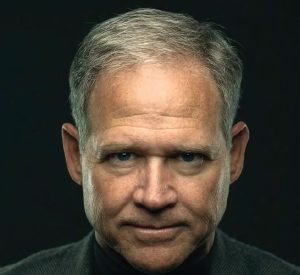
Once upon a time, a clueless but well-intentioned young lad thought he might be able to make the world a little better for a few people by sharing what he’d learned about skepticism, and so he started a podcast: Skeptoid.
Just shy of twenty years later, it has become a headless chicken juggling beehives and a 501(c)(3) educational nonprofit composed of some of the finest people you could ever hope to meet. Today we make feature documentary films, take supporters on skeptical adventure expeditions, and still do that very same weekly podcast—which, I’m proud to say, has surpassed 1,000 episodes—all in pursuit of teaching scientific skepticism and critical thinking in a world that needs it more than ever.
Skeptoid is a short format podcast. Each show features a fifteen-minute deep dive into some popular urban legend, paranormal claim, conspiracy theory, or consumer ripoff. One thousand shows, at one topic per show—that’s a lot of content. There are so many in the back catalog that I can plug in my phone on a road trip and hear shows from more than a decade ago that I don’t remember a single thing about!
It has been a marvelous stroke of personal good fortune for me to have been privileged to do this for a living for so long with the backing and support of so many good people. I’ve been able to learn all the coolest, weirdest stuff there is and, moreover, the true version of it.
In all that time, there has only ever been one missed weekly episode: in June 2007, my sister passed away on the eve of her graduation from veterinary school and was awarded her DVM posthumously. I give myself a pass that week.
If you’re into the geekier side of podcast metrics, you might ask how many people listen to the show. Well, these days, there’s no way to know. So many content distribution networks (CDNs), such as Spotify, iHeart, etc., download your show once, cache it, and then distribute it to Thor knows how many customers. In the old days, I knew the exact numbers because every media file request bounced through my server, and I logged it. The peak was in 2011 at 350,000 weekly listeners. Fifteen years later, the most we can prove today is 100,000 per week, showing a retention of 29 percent.
However—and this is the cool point of interest—there are about 131 times as many podcasts today as there were in 2011. There are also four times as many people who listen to podcasts. Taking that into consideration, the market (audience multiplied by content supply) grew by a factor of 513. The expected retention for a show during that period would be 0.2 percent (1/513).
With 29 percent retention against an expected 0.2 percent, this works out to a competitive resilience score 147 times higher than our competitors. In other words, that apparent “decline” from 350K to 100K is actually a standout case of growth. The executive summary version of this is that Skeptoid has demonstrated a market-adjusted performance index of 147.
So that’s why I’m still here and why I’m fortunate to have a growing team of coworkers.
Some of the past year’s episodes are of that rarest breed: guest-hosted episodes researched, written, and recorded by some of my very best friends—all names known to consumers of skeptical podcasts. They are skilled and knowledgeable researchers who, to my very good personal fortune, fate has seen fit to place among my inner circle. From among their ranks, we’ve chosen Ashley Hamer Pritchard as Skeptoid’s official cohost, so you can expect to hear one episode a month from her.
Why so many guest hosts this past year? Because the vibrational frequencies of the universe prophesied that the release of episode #1000 would align with several other events: the Skeptoid Adventures Bermuda Triangle trip; a full moon; the opposition of Saturn; the Perseids meteor shower; the alignments of Mercury, Mars, Jupiter, Saturn, Uranus, and Neptune; and, finally, an unwanted and unexpected upheaval in my home life combined with the need to move to a ramshackle bachelor pad, which forced me to take a lot of time away from work for a couple of months.
The new place did come with an interesting perk: what appears to be a Southern Pacific railroad caboose. Upon closer inspection, it’s fake—just a plywood shack in the general shape of a caboose. It is being gutted, resided, reroofed, and will become the new Skeptoid recording studio.
There was another reason the guest hosts were needed, which may strike a funny bone for those of you who remember the Y2K computer problem. When I started the show, I devised a system of encoding episode numbers and page IDs that made sense to me at the time. I set up the database with a four-digit unique identifier: the first digit represented the type of episode, and the next three digits were the episode number. Surely, thought a baby Brian in 2006, no podcast would ever reach a four-digit episode number; that’s not a real thing. But here we are! So June and July 2025 also included substantial software development to support episode numbers of more than three digits. Yes, the Skeptoid team managed to struggle with its own version of Y2K, a quarter-century-old software problem.
And thus, we proudly introduced Skeptoid #1000 to the world on August 5, 2025. And now I’m realizing a whole year has sped past since then!
As I write this, I’m back to the weekly podcast, the rest of the team is working to expand our content offerings, a board committee is staying pedal-to-the-metal on planning the next Skeptoid Adventures, and I’m also starting preproduction on our next feature film. By the time you read this, we will have probably already started principal photography, meaning I’m probably ridiculously jet-lagged in some obscure part of the world.
There are so many friends and colleagues out there doing skeptical outreach. For all of us, it is very nearly a thankless job—in the case of Skeptoid Media (and the Center for Inquiry as well, for that matter), it has to be done literally as a charity. Skeptical outreach is not a path to riches; it’s something you choose to do because you believe in its importance so much.
For a long time, I wondered if I’d hit #1000 and look back and decide to call it a body of work and move on. But when I got there, no bells pealed to announce the job was done. No great power manifested to transcend me to my just reward. Instead, the world went and got itself ever deeper into folly and wretchedness. Stopping now would be a crime against my own conscience.
I still have this damn caboose to contend with, but that will sort itself.
[ad_2]
Source link
