
[ad_1]
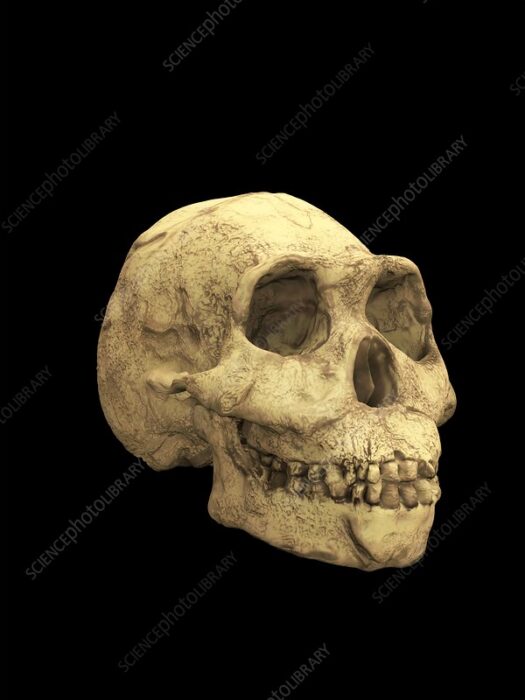
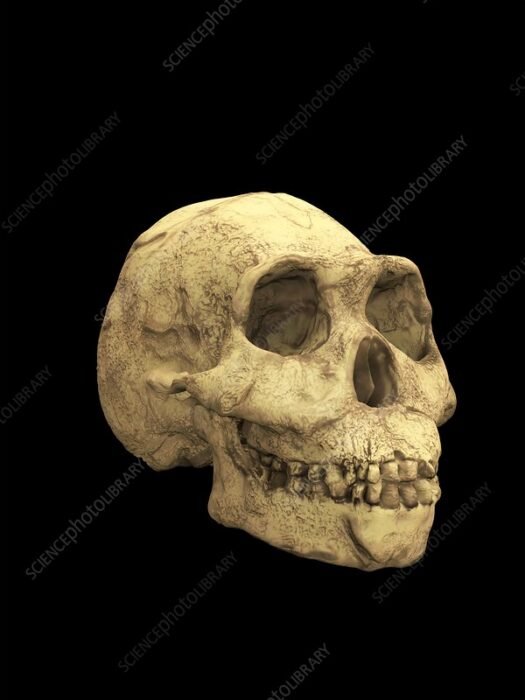
In the last few decades our understanding of human evolution has expanded considerably. We have identified numerous new species, fleshing out a complex branching bush of relationships among early humans. But these discoveries have also caused a problem – our taxonomical naming convention for all these species is basically broken. That is the argument made by paleontologist Ian Towle in a provocative paper – Clades, Grades, and the Genus Problem: A Case for Revising Hominin Taxonomy. Let me lay out the problem before I discuss his proposed solution.
There are basically two layers to the problem – the first is a tension between a cladistic approach to taxonomy and a traditional Linnaean approach (or what Towle refers to as clades vs grades). Cladistics is a classification system that is strictly determined by evolutionary branching points. A clade includes a common ancestor and all descendants (any taxonomic group with this feature is called monophyletic). Clades are nested within larger clades. Traditional taxonomy then maps ranks such as family, tribe, genus and species onto some of those branching levels, although there is no biologically fixed amount of evolutionary divergence corresponding to any particular rank, and not all branching points are ranked. This approach is potentially clean and reflects our understanding of evolutionary relationships. The primary challenge of the cladistic approach, especially when we drill down to the genus and species level, is that we do not always know exactly what the evolutionary branching points are. Further, those branching points may not be clean and different species can still exchange genetic material often for millions of years.
The traditional Linnaean approach uses a variety of criteria for its classification, including evolutionary relationship but also morphology and behavior. A distinct group living in a particular place and time can be defined by specific morphological characteristics. The advantage here is that you don’t have to know the precise evolutionary branching points, you can identify species by features you can see. Perhaps the classic example of the difference between cladistics and the Linnaean approach is birds. Under a cladistic system, birds are dinosaurs. Under the Linnaean system, they could be a distinct group identified by their common derived features.
The second layer to the problem of classifying humans is that both systems, the cladistic system and the Linnaean system, have limitations that prevent confident classification. For the cladistic approach, the limitation is that we do not always have perfect information about evolutionary branching points. That is the one criterion for taxa, and if we do not know it we just have to make our best guess. In the Linnaean system taxa do not have to be monophyletic. They can be what are called paraphyletic – including a common ancestor but not all descendants, or polyphyletic – including species from different clades – as long as they have some defining characteristics in common. The challenge here is that those characteristics may start to blend into each other as we discover more individual species, and they may be inconsistently distributed among paraphyletic groups.
This is the problem that Towle is trying to address with human taxonomy. Currently the system for classifying humans and our recent ancestors is not cladistic. There are three major genera of hominins in the last 4-5 million years (with some other proposed genera): Australopithecus, Paranthropus, and Homo. Australopithecus is almost certainly not monophyletic. Paranthropus and Homo likely descended from an Australopithecine ancestor, but they are still genera with the same ranking as Australopithecus. Further, the features we use to define these groups are not holding up as we discover more species. -For example, the Homo genus is partly defined as being large-brained, but Homo naledi has a distinctly smaller brain, blurring this distinction. So the system is not cladistic, and the grade-based Linnaean system is breaking down.
Towle’s proposed solution is to unite all hominins from the last 4-5 million years into one clade at the genus level, called Homo, essentially expanding the Homo genus to include all recent hominins. This would make these hominin species Homo whatever. Australopithecus afarensis would become Homo afarensis, etc. This eliminates the paraphyletic problem and the blurriness of specific morphological distinctions. Towle writes:
“Such a revision would help address problems of non-monophyly, avoid conceptual difficulties associated with genera with shallow time depths, and facilitate more coherent evolutionary comparisons within a more stable taxonomy.”
This taxonomy is more stable because it is not challenged by every new hominin species discovery. But this approach also has its issues:
“This proposal has limitations, including the loss of taxonomic information relating to adaptive and ecological variation, particularly within Paranthropus and large-brained Homo. At a minimum, however, this article argues for greater consistency and transparency in distinguishing clades from grades in homininan (sic) taxonomy, and for more consistent criteria for the recognition of genera.”
There are other potential approaches as well. You could, for example, make “Australopithecini” a tribe (above genus and below family) that contains all current Australopithecus, Homo, and Paranthropus species. But that still leaves us with the problem of how to organize all the hominin species within that tribe. One of the problems is that if Homo is a clade nested with the Australopithecus clade, then within a cladistic system they cannot be at the same taxon level (both genera).
But the biggest problem is – we do not currently know with any confidence what the branching points of evolutionary relationships are among all the hominins. Therefore there is no obvious way to make stable monophyletic groups at the genus level (to be clear, there are some confident monophyletic groupings withing hominins, such as humans and Neanderthals) – later fossils would likely challenge any genus-level groupings we make. What we currently know is that A. anamensis followed by A. afarensis are likely near the ancestral base of the radiations that produced later Australopithecines and all Paranthropus and Homo species. These latter two genera evolved from late Australopithecus radiations that we simply do not have well documented.
This is part of Towle’s point – rather than applying increasingly difficult morphological criteria to these taxa, let’s just lump them all into Homo and call it a day. Towle doesn’t say this, but if we later flesh out these evolutionary radiations in more detail, we can consider creating a true cladistic nomenclature. Therefore, anything we come up with now may be a placeholder until we get more information.
It is unclear if Towle’s specific proposal will catch on among paleontologists. But either way, he does identify an interesting problem which highlights the complexity and trade-offs of any classification system, especially one involving the messy reality of nature.
[ad_2]
Source link
