
[ad_1]
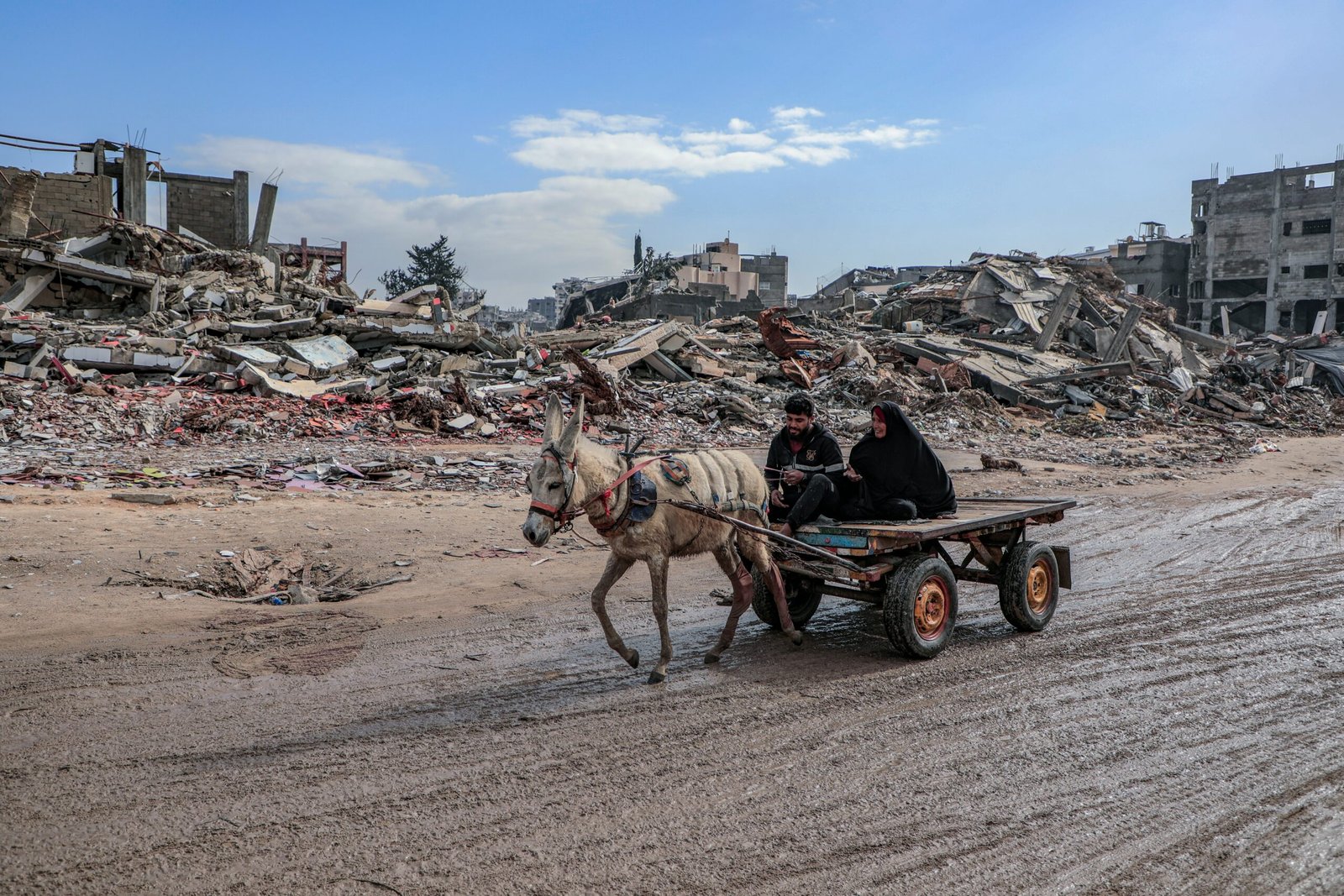
Image by Mohammed Ibrahim.
I was seven years old in Amman, Jordan, when the Naksa broke through our television screen. I had just finished second grade. I didn’t yet have the words — occupation, settler colonialism, ethnic cleansing — but I had my grandparents’ stories. The forced departure of 1948. The iron key to a house they never saw again. The certainty, unshakeable as faith, that they would return in a week. A week became 78 years.
That is the first thing you need to understand about the Naksa: it did not come from nowhere, and it did not end in 1967. It was the second chapter of a catastrophe that began in 1948 and has never stopped accelerating. Today, as we mark 59 years since the June War, we are watching its latest chapter unfold in real time — not through grainy newsreel footage, but in live streams, percentage points, and body counts that the world has learned to scroll past.
We cannot afford to scroll past.
What the Naksa Actually Was
The Six-Day War gave Israel control over the Sinai Peninsula, the Gaza Strip, the West Bank, East Jerusalem, and the Golan Heights — roughly 20,000 square kilometers, three times what it controlled after 1948. For the Israeli state, this was military triumph. For Palestinians, it was a land theft with body counts attached.
The Palestinian Central Bureau of Statistics puts Arab casualties between 15,000 and 25,000 killed, 45,000 injured, and 300,000 Palestinians displaced — most of them pushed into Jordan. Israeli losses: 650–800 killed, 2,000 injured. That asymmetry is not a footnote. It is the story. One side had a modern military and an expansionist project. The other side was a population being removed from its land.¹
East Jerusalem was occupied and annexed in everything but official language. For the first time, Israel controlled what it calls ‘Greater Jerusalem.’ From that moment, the settlement enterprise launched — first in the West Bank and Gaza, then everywhere, consuming land, water, and the possibility of a contiguous Palestinian life.
Do not call it a setback. Call it what it was: a deepening of the Nakba, executed in six days, still unfolding now.
The Occupation Did Not Freeze. It Compounded.
The timeline of ‘peace processes’ that followed the Naksa is, on inspection, a timeline of Palestinian losses wearing the costume of diplomacy. The 1979 withdrawal from Sinai happened not because Israel developed a conscience, but because Egypt’s military made continued occupation expensive. The 1994 Wadi Araba treaty with Jordan normalized relations while solving nothing for Palestinians. The 2005 ‘withdrawal’ from Gaza kept every border, airspace corridor, and sea lane under Israeli control. That was not liberation. That was the transformation of occupation into a siege.
The numbers speak without euphemism. By the end of 2020, there were 471 Israeli colonial sites and military bases in the West Bank — 151 settlements, 150 outposts, 170 other installations — housing 712,815 settlers growing at 3.6 percent annually. For every 100 Palestinians in the West Bank, there are 23 settlers. In Jerusalem: 71 settlers per 100 Palestinians.²
Israel directly controls 76 percent of Area C. Military bases occupy 18 percent of the West Bank. The annexation wall has isolated more than 10 percent of it. Since 1967, 353,000 dunums of Palestinian land have been seized and relabeled ‘nature reserves’ — a bureaucratic alibi for slow-motion dispossession.³
Approximately one million Palestinians have been arrested since 1967. That is not security. That is the criminalization of an entire people for the crime of existing on their land. Twenty-six prisoners have spent more than a quarter-century in Israeli jails. Not for terrorism. For resistance.⁴
Today, 13.8 million Palestinians exist: 5.3 million in historic Palestine (West Bank, Gaza, East Jerusalem), 1.6 million inside Israel, and over 6 million refugees scattered across Arab countries and beyond.⁵ The right of return is not a sentimental attachment to the past. It is the political demand that the Nakba and the Naksa were designed, together, to permanently foreclose.
When Genocide Gets Reported as a Progress Update
My friend Hani Almadhoun, Vice President of Philanthropy at UNRWA USA, recently described waking up to this:
Benjamin Netanyahu — indicted war criminal, subject of an active ICC arrest warrant issued November 21, 2024, for war crimes and crimes against humanity in Gaza⁶ — stood before a conference in the occupied West Bank and announced that his army now controls sixty percent of the Gaza Strip. Then he ordered them to push it to seventy. When someone in the audience shouted that Israel should take all of Gaza, Netanyahu did not object. He said: ‘First seventy. Let’s start with that.’⁷
He said it like a quarterly business target. Like Palestinian land, lives, and futures are line items on a spreadsheet to be optimized. And the world — heads of state, weapons suppliers, diplomatic enablers — largely let it pass.
This is not hyperbole. It is a confession, delivered openly, on camera, to applause. Ethnic cleansing rebranded as military progress. Genocide measured in percentages. Two million Palestinians compressed into a shrinking coastal strip while the man directing the compression describes the process in increments — fifty, sixty, seventy — as though he fully intends to reach one hundred.
We have been so saturated by horror that horror no longer registers as horror. That numbness is not accidental. It is cultivated. And it is one of the occupation’s most powerful weapons.
Your Exhaustion Is Real. It Is Also Not the Point.
I know many of you are bone-tired. You marched — in New York, San Francisco, London, Sana’a, Johannesburg, and a hundred other cities. You posted. You called your representatives until you had their voicemails memorized. You went to city council meetings and faced down people who called your solidarity antisemitism. You did all of that, and the genocide continued. Now it has metastasized into the West Bank with renewed ferocity. The powerlessness you feel is not a personal failure. It is a political condition — and it has a name: the gap between moral expression and organized political force.
As I wrote in CounterPunch on May 20, 2026, the Nakba never stopped — and neither can our organizing.⁸ Ghassan Kanafani’s analysis of the 1936–1939 Palestinian revolt is still the most precise diagnosis available. A liberation movement can burn brilliantly and still be crushed when it lacks unified political leadership, independent resources, and a strategy that targets the structural arteries of the system it is fighting — not just reacting to its provocations.⁹ That lesson does not belong only to Palestinians. It belongs to every solidarity movement that wants to be more than a recurring moment of righteous feeling.
The marches were not meaningless. They demonstrated that millions of people are ready. But readiness without strategic organization does not become power. It becomes exhaustion. The question now is not whether justice is on our side — it is whether we are prepared to organize with the same seriousness, patience, and coordination as the forces that deny it.
What This Anniversary Demands — Especially from the Young
This 59th anniversary cannot be another ritual of memory alone. Memory is essential — my grandmother’s key, my seven-year-old self watching the news in Amman, the 300,000 displaced in 1967. Memory is the condition of survival for a people under sustained erasure. But memory becomes a trap when it substitutes for the hard work of building institutions, knowledge, and campaigns that actually threaten the occupation’s material foundations.
For the younger generation leading this struggle — in Gaza under bombardment, in the West Bank under escalating settler violence, in the diaspora, in the streets of cities that have not yet stopped marching — I will not offer consolation or hollow praise. You are exhausted because you have done real work and faced real repression. That exhaustion is not weakness. It is the cost of seriousness. But it must be metabolized into clarity, not abandoned to burnout.
That means, concretely, refusing to measure success only by immediate policy wins. The occupation and its genocide are backed by the full weight of empire. Empire does not fold after one protest wave, or five. We are not in a sprint — we are building a long-term anti-colonial movement, and that requires strategic depth, not just moral energy.
It means moving from moral expression to political infrastructure. Shared infographics and marches are necessary. They are not sufficient. What we need alongside them is independent research, legal documentation of war crimes, political education in camps and communities, and campaigns that target the actual arteries of the occupation: arms sales, diplomatic cover, economic integration, academic complicity. These are the pressure points that empires feel.
It means being honest about Oslo and its legacy — plainly, without diplomatic language. The Palestinian Authority is not a partner for liberation. It is a security subcontractor that administers fragmentation while Palestinians are killed. Any strategy that depends on the same structures that dissolved the right of return will reproduce the defeat. That is not a radical position. It is a historical observation.
And it means linking our struggles without losing the specificity of each one. The same systems that displace and kill Palestinians are connected to wars, austerity, ICE raids in the streets of American cities, mass incarceration, and surveillance everywhere. Palestinian liberation is not an isolated cause. It is part of a global struggle against colonial violence in all its forms. Act accordingly — not as a rhetorical gesture, but as a structural analysis that shapes who we organize with and how.
The Key Still Opens Nothing. That Is Why We Have Not Stopped.
I started this piece as a seven-year-old boy in Amman, watching a catastrophe unfold on a screen and not yet having the language for it. That confusion became determination. Each generation of Palestinians — and each generation of people who refuse complicity with their dispossession — becomes more aware of what is being done, more clear-eyed about what it will take to stop it.
On this 59th anniversary, we do not only mourn the dead, the displaced, and the keys that still open nothing. We remember that the occupation is not history. It is happening now — in percentages, in settlements, in arrests, in a man with an ICC arrest warrant casually announcing territorial targets to applause. And we are still here. Still organizing. Still refusing to make peace with the arithmetic of ethnic cleansing.
Silence is not neutrality. Silence is complicity. But noise without strategy is not resistance — it is the pre-condition of the next wave of exhaustion. Let this anniversary be a moment to pause, assess, and recommit: not to more outrage, but to more effective, more coordinated, and more relentless organizing.
That is what my grandparents’ key demands. That is what the 300,000 displaced in 1967 demand. That is what the children of Gaza — now being measured in percentages by a man who intends to reach one hundred — demand.
Endnotes
[1] Palestinian Central Bureau of Statistics (PCBS). “The Sixty Years of the Nakba and the Naksa.” Ramallah, 2025.
[2] PCBS. “Settlement Expansion in the West Bank: Statistical Report 2021.” Ramallah, 2022. See also Peace Now, “Settlement Population 2020-2021,” February 2022.
[3] Applied Research Institute – Jerusalem (ARIJ). “Land Confiscation and Nature Reserves in the West Bank.” Bethlehem, 2023.
[4] Addameer Prisoner Support and Human Rights Association. “Statistical Report on Palestinian Prisoners.” Ramallah, December 2025.
[5] PCBS. “Palestinian Population Estimates at the End of 2025.” Press release, January 2026.
[6] International Criminal Court. “Warrant of Arrest for Benjamin Netanyahu and Yoav Gallant.” ICC-01/18, November 21, 2024.
[7] Hani Almadhoun, personal correspondence and public statement, May 2026. Video documentation on file.
[8] Monadel Herzallah, “The Nakba Never Stopped,” CounterPunch, May 20, 2026.
[9] Ghassan Kanafani, The 1936-39 Revolt in Palestine. See also Hani Habib, “Kanafani’s Revolutionary Legacy,” Journal of Palestine Studies, Vol. 52, No. 3 (2024), 45-67.
[ad_2]
Source link
