
[ad_1]

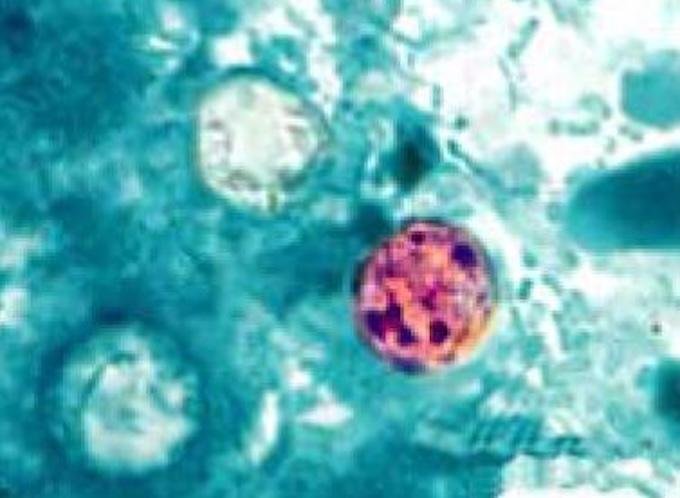
The US is currently experiencing its largest ever recorded outbreak of cyclosporiasis, a disease caused by infection with the Cyclospora parasite. The disease is typically acquired via fecal-contaminated food or drink, and can cause explosive diarrhea and severe, lingering stomach cramps. Those who contract it generally have a terrible time. Experts have yet to conclusively identify the source of the outbreak, which continues unabated. Recent tests implicating Taylor Farms have been withdrawn as false positives, though Taylor Farms’ lettuce remains a primary suspect in the ongoing investigation.
After presiding over the COVID-19 crisis, one might imagine a presidential administration would be eager to prevent another public health catastrophe from occurring under its watch. The Trump Administration, however, has taken pains to weaken the resilience of the already limited and chronically underfunded public health infrastructure in the US. As a result, this latest outbreak is unfolding in a system that is even more diminished and underresourced than it was in 2020.
First, it is worth noting that fecal contamination can happen when farm workers are not given adequate bathroom breaks. Rather than protecting farm workers, however, the Trump administration has made it harder for them to challenge unsafe conditions. In June 2025, the Labor Department suspended enforcement of a rule that expressly protected H-2A agricultural guestworkers from retaliation for filing workplace safety complaints or consulting with worker advocates. The administration subsequently proposed rescinding those protections altogether.
Another example of the second Trump administration’s handiwork is their changes to the Foodborne Diseases Active Surveillance Network, or FoodNet. FoodNet is useful because it conducts active surveillance of foodborne diseases. Rather than waiting for private laboratories to send results, FoodNet staff regularly inquire about new disease cases and conduct audits to ensure cases are not missed. This proactive, standardized approach helps public health officials identify more cases earlier than systems that wait for reports to move passively up the chain. FoodNet is a joint program of the Centers for Disease Control and Prevention (CDC), the Food and Drug Administration (FDA), the US Department of Agriculture (USDA) Food Safety and Inspection Service, and the state health departments where the sites are located. There are FoodNet surveillance sites in ten states, covering 62.6 million people (Figure 1).

FoodNet previously tracked cases of cyclosporiasis. In July of 2025, however, the Trump administration made FoodNet’s reporting of cyclosporiasis optional, mandating FoodNet tracking only for salmonella and Shiga toxin-producing E. coli. The administration justified the change as a way to conserve resources and avoid duplication, conflating FoodNet’s active surveillance with more passive surveillance systems such as the National Notifiable Diseases Surveillance System (NNDSS). The CDC’s own surveillance manual notes that active surveillance systems have been shown to increase reporting. Other empirical research has yielded similar results, with one study finding that the rate of disease reporting doubled when active surveillance practices were used, and that the disease reports themselves were more likely to be complete than those obtained through passive reporting structures.
Unfortunately, FoodNet’s reach was already limited, covering only about 16 percent of the US population. The CDC maintains that FoodNet is not intended to detect individual outbreaks, and is geared more toward measuring disease burden over time. Rather than expanding it to make it more useful for monitoring active outbreaks, however, the Trump administration significantly weakened the program by reducing the number of diseases it was required to track, undermining even its utility as a historical dataset. This will also make it difficult to determine whether foodborne illness increased under their watch.
The changes to FoodNet did not occur in a vacuum. In February 2025, the administration eliminated the USDA’s National Advisory Committee on Microbiological Criteria for Foods, which was working on best-practice guidelines to combat foodborne illnesses shortly before its dissolution. In April 2025, federal workforce cuts forced the suspension of the Food Emergency Response Network proficiency testing program, which ensured that the network’s 170 food-testing laboratories could produce quality results during an emergency. The Trump Administration also downsized the CDC’s parasite surveillance team from eleven to just three. Zooming out, important institutions have been hollowed out: the USDA has shed 24,000 workers (an almost 27 percent reduction), the CDC has lost nearly 3,000 (roughly a quarter of its workforce), and the FDA is down more than 4,000(almost a fifth of its workforce).
Many of these cuts were initiated at the direction of the so-called Department of Government Efficiency, or DOGE. DOGE’s handiwork should certainly allow for more efficient spread of diseases like cyclosporiasis. Given the cost of such outbreaks, however, the more economically sensible path would have been to invest in public health rather than shortchanging it. In any case, there is no evidence that the Trump administration slashed programs based on some careful cost-benefit analysis. Instead, the cuts appear to be part of the administration’s reckless and shortsighted pattern of hollowing out the federal government’s ability to serve the public.
Cyclospora is exactly the kind of pathogen for which timely, comprehensive surveillance matters. The incubation period for cyclosporiasis is 2 to 14 days after exposure, making it difficult to track because people often struggle to remember exactly what they ate during that period. Active surveillance is better equipped to compensate for this, however, because it both picks up more cases and collects more complete records. This enables officials to identify clusters sooner despite shaky recollections from individual patients. Making active surveillance optional removed an important source of systematic, standardized data just before a major surge that has proved difficult to characterize and trace.
In public health, it is important to have robust systems in place before a crisis occurs. An outbreak that can be contained in its early stages may become difficult or impossible to control once it spreads. Yet these systems often become victims of their own success. Successful prevention means that the public never sees the disasters that were averted and may underestimate the scale of the danger those systems were designed to contain. The Trump administration appears to have doubled down on this terrible inclination, and people are paying for it with their bowels.
This first appeared on CEPR.
[ad_2]
Source link
