
[ad_1]
There has been a great deal of speculation about the political consequences of Donald Trump’s “revenge tour” against Republicans he considers insufficiently loyal in the midterm elections. But over the last several days, there have been signs that it may come back to haunt him much sooner than the midterms.
The first harbinger of what might be headed Trump’s way was the vote in the Senate to advance a resolution to force a vote restraining Donald Trump’s conduct of the Iranian war under the War Powers Act. Democrats had attempted to force a vote on several previous occasions, only to come up short. This time, the vote was 50-47, and it passed only because three Republican senators were absent. Had they been present and voted against the resolution, the vote would have been tied, allowing Vice President Vance to break the tie in the president’s favor.
However, there was a significant change this time. Bill Cassidy, who just lost his primary election in Louisiana, voted with Republican Sens. Lisa Murkowski, Susan Collins, and Rand Paul, all of whom had previously favored the resolution. In other words, even if the three absent Republican senators had been present, the president would have mustered only 49 Republican votes against the resolution.
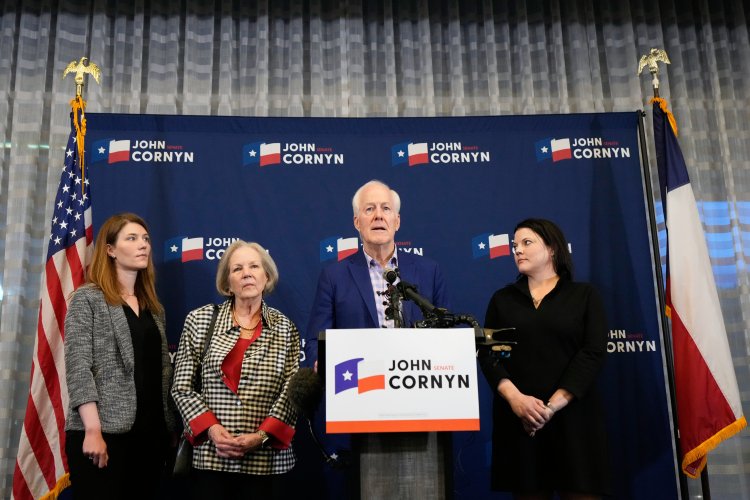
Then-Senate Majority Leader John Thune publicly and sharply criticized Trump’s proposal to create a fund to pay “reparations” to J6 defendants, as well as proposals aimed at limiting or ending IRS scrutiny of Trump and his family. It is probably not coincidental that Thune’s blunt comments came shortly after Trump endorsed Ken Paxton in the Texas Senate primary. There were numerous reports that Trump’s endorsement of Paxton infuriated Senate Republicans, who have spent months begging and cajoling Trump to endorse John Cornyn over the scandal-plagued Paxton. They have worried that, at a minimum, Paxton’s win will make the Texas race much more expensive to defend, diverting resources from other critical seats the Republicans need to defend. In the worst case, Texas might finally go blue, which would likely give Democrats control of the Senate.
But there may be more immediate consequences. A scorned Cornyn will have little reason not to take his own piece of flesh out of Trump’s agenda over the next seven months. If he joins Thom Tillis, Collins, Murkowski, Cassidy, and occasionally Paul as a rump caucus, they could deny the Republicans the ability to pass anything and be a real thorn in Trump’s side for the balance of the term.
Cornyn would certainly have every reason to turn on Trump. For this entire cycle, Cornyn has genuflected to Trump, attempting to win his endorsement. He even went so far as to propose naming a Texas freeway after the president. Trump dragged out his endorsement of Paxton until the last minute, seeming to savor Cornyn’s humiliation. It may be that hell hath no fury like a U.S. senator scorned.
Trump’s endorsement of Paxton very likely guarantees that his reparations and self-serving immunity from IRS audit are DOA. He can also forget about the SAVE America Act or ending the filibuster rule. With Democrats increasingly likely to retake the House, there is very little chance either will ever see the light of day. Cornyn could also hold up all of Trump’s judicial nominations and other appointments. If the Democrats take control of the Senate in the midterms, Trump might never appoint another judge to the federal bench.
Trump had no reason to endorse Paxton. The polling and prediction markets have been showing a likely Paxton runoff win ever since the primary. There was nothing strategic about the endorsement. It was all personal because Cornyn was slow to support Trump’s 2024 presidential bid.
This episode highlights how extreme narcissism can create strategic blind spots. When a narcissist experiences a perceived slight, it frequently triggers an obsession with punishing the offender, reasserting dominance, and regaining validation. As a result, the narcissist may engage in impulsive or self-defeating acts that ultimately damage the narcissist’s own long-term interests and objectives.
Nonetheless, Trump is an intense reader of polls and public sentiment. Notwithstanding his contrary comments, he knows he will likely be a lame-duck president after the midterms. He has clearly been taking steps to prepare for that likelihood. But because of his obsession with revenge, he may well be a lame duck long before the midterm election results are tallied.
[ad_2]
Source link
