
[ad_1]

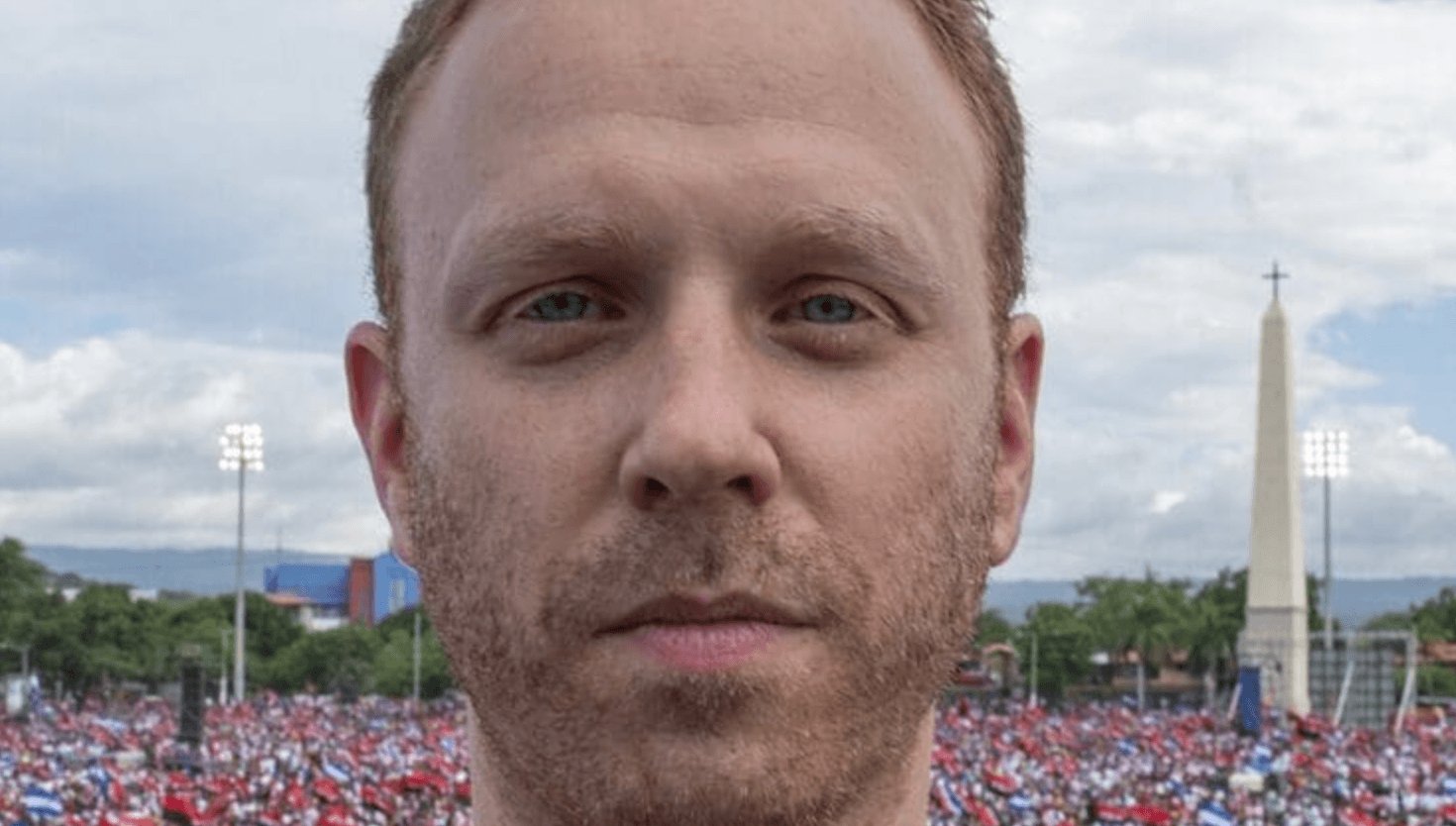
File photo of Max Blumenthal. Photo Credit: Ben Norton, Wikipedia Commons
The seizure of Max Blumenthal’s phones shows how the war on Iran and the border-security state can turn foreign conflict into domestic repression.
Max Blumenthal returned from a reporting trip to Iran and left Washington Dulles International Airport without the two phones that contained much of his working life. According to a federal filing submitted on his behalf, U.S. Customs and Border Protection officers questioned him about his journalism, funding, and travel plans and seized the devices after he declined to provide their passcodes. The Committee to Protect Journalists called the episode alarming. What happened at Dulles exposed how war abroad, exceptional border powers, and hostility toward dissenting media can converge in a single act of state pressure.
A journalist’s phone is no longer merely a personal device. It may be a notebook, archive, contact list, secure mailbox, and map of confidential relationships. Seizing it for possible data extraction is closer to searching a newsroom than inspecting ordinary luggage. The government can enter not through the front door with a warrant, but through the legal back door of the border exception.
The filing says Blumenthal’s phones contained information identifying confidential sources, unpublished reporting, and years of protected newsgathering. Those claims have not yet been tested in court, and there is no public evidence that Donald Trump personally ordered the seizure. A serious defense of press freedom should not depend on exaggeration. The danger is narrower but profound: a federal agency used broad border authority against a journalist returning from a country with which the United States was at war and took devices that allegedly contained source-identifying information, confidential communications, and unpublished work.
Defending Blumenthal’s rights does not require endorsing every article or editorial judgment associated with The Grayzone. Critics are free to challenge his record. Constitutional protections matter most when they extend to journalists who are controversial or distrusted by powerful institutions. If the state may decide who qualifies as a “real” journalist before honoring press freedom, then press freedom becomes a license for the politically acceptable.
Supporters of broad border authority will argue that the government needs latitude to search electronic devices to combat terrorism, smuggling, and other transnational crimes. CBP says officers may examine phones, computers, cameras, and other devices at ports of entry. That power can serve legitimate purposes. But the existence of lawful authority does not make every use of it justified—or constitutional. CBP’s own policy classifies the use of external extraction equipment as an “advanced” search, requiring reasonable suspicion of a legal violation or a national-security concern and senior-level approval. Whether those standards were met in Blumenthal’s case has not been publicly explained. When the traveler is a reporter returning from a country Washington defines as an enemy, the device may contain source identities, raw interviews, unpublished images, and future investigations. At that point, a border search can become an intervention in the production of news.
The deeper problem is the widening gap between old legal categories and digital journalism. Searching a reporter’s home or office inside the country would normally trigger demands for judicial oversight. Yet the same professional archive can fit inside a phone carried through an airport, where Fourth Amendment protections remain sharply contested and executive power is broader. The Electronic Frontier Foundation argues that electronic-device searches at the border should require a warrant because modern phones contain an extraordinary volume of personal and professional information. Without such safeguards, the border creates legal arbitrage for the security state: information difficult to obtain through the front door may be reached more easily by waiting at the airport.
Trump did not invent the border exception or the national-security state’s hostility toward leaks and dissent. Republican and Democratic administrations built the machinery he now commands. The Obama administration, for example, secretly subpoenaed and seized journalists’ phone and email records during leak investigations, helping normalize the treatment of newsgathering as a target of national-security enforcement. Trump’s distinctive contribution has been to fuse those inherited powers with an openly retaliatory politics—one that treats criticism of a live war not merely as opposition, but as disloyalty.
That danger cannot be separated from Trump’s conduct during the Iran war. His Justice Department subpoenaed The Wall Street Journal for reporters’ records tied to a story about Pentagon warnings over the risks of a prolonged military campaign. The department also issued subpoenas seeking testimony from Washington Post and Wall Street Journal reporters, then withdrew them after legal challenges by the news organizations. Trump later called New York Times reporter David Sanger “treasonous” after Sanger challenged the administration’s portrayal of the war. These episodes do not prove that Trump directed the seizure of Blumenthal’s phones. They do show a president repeatedly recasting scrutiny of his war as disloyalty and drawing government power into disputes that should be answered with evidence.
This is the difference between criticizing the press and weaponizing the state against it. A president may call a story inaccurate, biased, or dishonest. But a government must not use its powers to retaliate against journalism—or in ways that predictably function as punishment and deterrence. Reporters can make mistakes. The state commands prosecutors, border agents, and police powers. Treating these as equal participants in a media argument erases the imbalance on which authoritarian power depends.
Trump’s responsibility therefore does not begin only when someone finds his signature on an operational order. When a president repeatedly portrays critical reporters as traitorous enemies, he creates a permissive climate in which agencies can treat reporting as a security threat. That is not a claim that every official action is centrally coordinated. It is an argument about governing incentives: language from the top tells institutions which targets deserve suspicion and which excesses may be rewarded rather than restrained.
The Blumenthal case reveals how a subtler form of censorship can operate. An administration need not ban travel to Iran or prohibit reporting that challenges Washington’s narrative. It can instead raise the cost of coming home: questioning, seized equipment, uncertain data security, legal expenses, and frightened sources. Call it a return tax on adversarial journalism. The formal message remains that reporters are free to travel and publish. The practical message is that they should be prepared to surrender their mobile newsroom at the border.
The chilling effect reaches far beyond Blumenthal. The most important audience may be the reporter deciding whether to travel to Tehran, Gaza, Moscow, Caracas, or another place where U.S. narratives are contested. Editors must calculate legal and security risks. Sources must wonder whether confidential messages will reach American authorities. Even if no data were extracted from Blumenthal’s devices, the possibility alone can destroy trust. A phone seizure pressures not only one individual, but an entire network of future reporting.
Courts and Congress should draw a clear line between searching ordinary personal property and accessing a device containing confidential sources and unpublished journalistic material. Such searches should require a specific factual basis, judicial authorization, and an independent process to protect newsgathering records. The border exception cannot become a permanent workaround for the First Amendment.
The test of press freedom is not how a government treats journalists whom the president considers fair or respectable. It is whether a reporter whose politics, travels, and work Trump despises can reenter his own country without surrendering his archive. War abroad comes home long before a newspaper is closed or an editor is jailed. It begins when powers built for foreign enemies are turned against the domestic production of knowledge. At Dulles, the border did not merely mark the entrance to the country. It became a warning that the security state’s back door into the newsroom is already open.
[ad_2]
Source link
