
[ad_1]
No, your lettuce isn’t vaccinating you against polio.
Social media users recently recirculated a 2024 clip of Tennessee lawmakers debating a bill to regulate foods containing “edible” vaccines. These posts’ claims and the legislation’s premise might lead you to think you can get your vaccine in an apple slice or tomato wedge — but that’s not happening.
Over the last 30 years, scientists have experimented with ways to harness plant biology to create medications, or even deliver vaccines to animals and humans — but the science has moved away from “edible vaccines,” and they are certainly not available in the grocery store.
Here’s what you need to know, plus a bite of the leafy science behind “edible vaccines.”
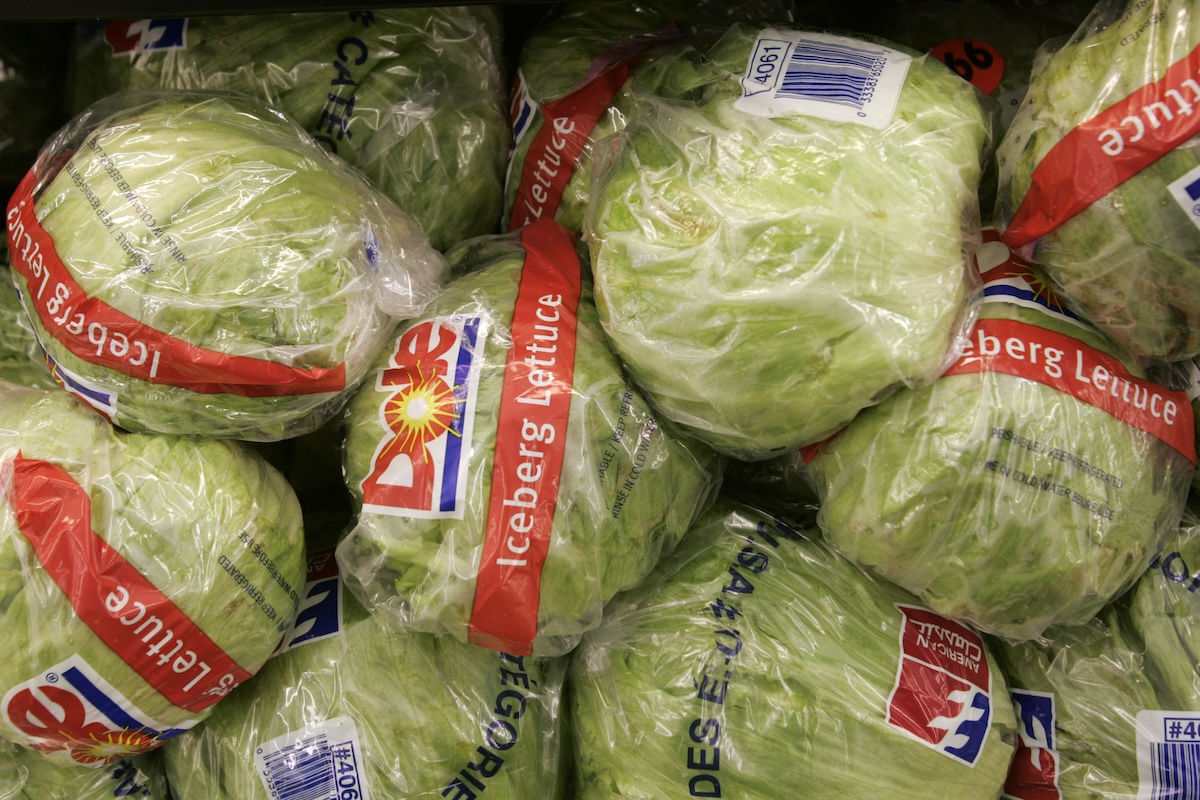
Packaged heads of iceberg lettuce are shown at the K+G Food Mart in Detroit, Monday, May 8, 2006. (AP)
Scientists have experimented with ‘edible vaccines,’ but none are approved
First, the facts: There are zero “edible vaccines” approved by the U.S. Food and Drug Administration. And, according to Charles Arntzen, a retired Arizona State University professor credited with both the term and concept, none are in development.
Some approved vaccines can be delivered orally through drops, like the rotavirus vaccine, but those aren’t considered “edible vaccines,” a term generally used to describe foods that have been bioengineered to contain vaccines.
If technology one day makes it possible to deliver vaccines to humans through food, U.S. safety regulations would require such products to get approval like any other vaccine, before they’re available to patients, experts said.
Plus, the federal Food, Drug, and Cosmetic Act prohibits the addition of drugs or biological products to food without prior regulatory approval.
The Tennessee bill, which became law in 2024, requires any food with added vaccines to be classified as a “drug.” Since no such foods are on the market, the law is regulating something that doesn’t yet exist.
But that doesn’t mean the concept is baseless.
Since the 1990s, scientists have experimented with modifying plants to use as vaccines by altering their genetics or amplifying their production of key proteins.
The initial hope behind these experiments was that vaccine-containing foods would offer more affordable ways to produce and distribute vaccines globally, including to impoverished areas. In the best case, they would eliminate vaccines’ complicated and expensive manufacturing processes and cold storage needs, and trained nurses wouldn’t need to administer a shot.
Scientists have tested whether they could reliably deliver vaccines to people through foods. In 1998, for example, researchers asked people to eat raw potato chunks that had been genetically modified to elicit an immune response against E. coli, and it worked. There have been a few more human trials over the years, but most research has been on animals.
Some scientists are still exploring food-based vaccines as a possibility, but the concept comes with serious limitations, especially under U.S. regulations.
It would be impossible to regulate the dosage in a fresh lettuce leaf or tomato, making it hard to imagine a path to FDA approval, said Henry Daniell, a University of Pennsylvania biochemist.
There are just too many variables.
“One side of the tomato might have lots of that vaccine antigen, and the other side might not have very much. It depends on how the sun is shining and all kinds of different things,” Cornell University microbiologist Kathleen Hefferon said.
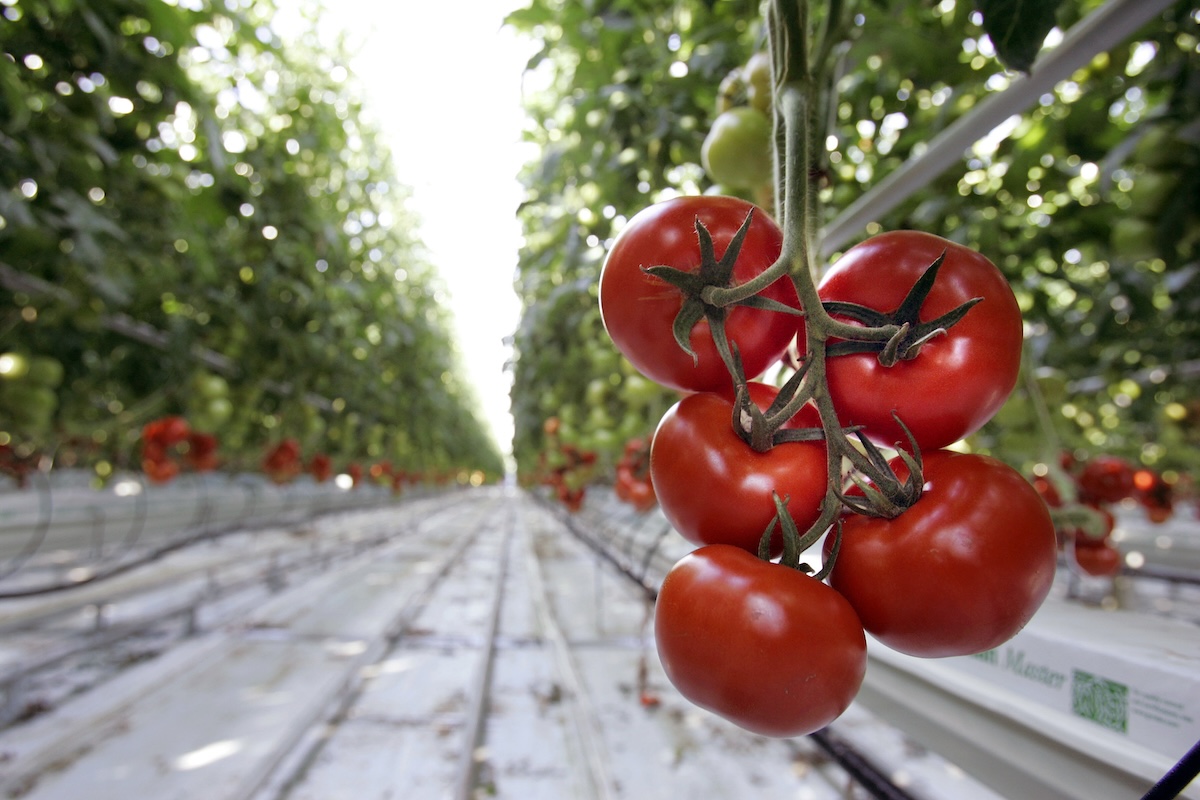
In this Jan. 29, 2007, file photo ripe tomatoes await harvesting at the Backyard Farms greenhouse in Madison, Maine. (AP)
Plant-derived vaccines show potential
“Edible vaccines” as they were imagined in the 1990s may not be feasible, but the underlying science has proved fruitful. Plant cells offer hope in the field of vaccines.
Scientists have used plant cells as microscopic farms that grow proteins for use in injected vaccines. A few such “plant-derived” vaccines have been commercially produced for farm animals and to protect humans against COVID-19.
“Any type of plant-made vaccine that may reach the commercial stage is purified and provided as an injectable or oral drug, not consumed as a food,” Hefferon said.
The promise of plant cells extends to other medications. The FDA-approved injectable medication Elelyso, which treats an uncommon enzyme deficiency disorder, is made from carrot cells grown in a lab.
Other methods involve freeze-drying altered plant cells into powder that could be delivered orally in a drug capsule. Dosage can be better managed this way, than in a whole food, said Daniell. But if such a product reached the market, it would be regulated by the FDA like any other drug.
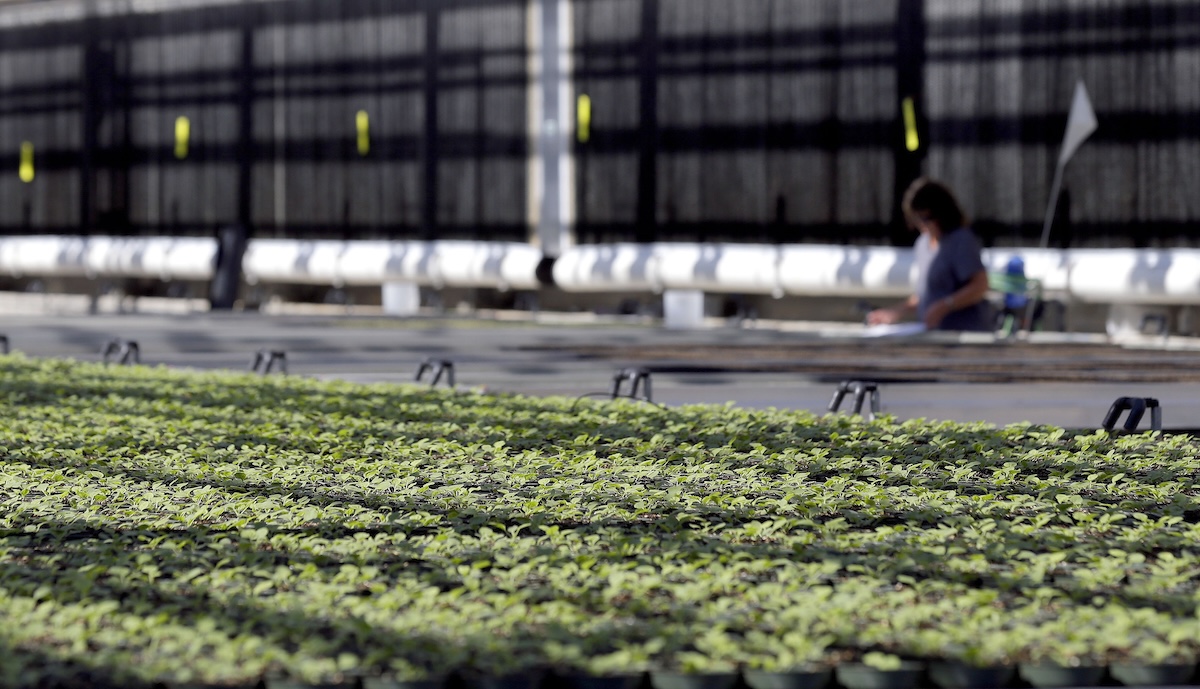
In this Aug. 14, 2014, file photo, young tobacco plants of a unique variety grow in the greenhouse at Medicago USA, Inc. in Research Triangle Park, N.C. (AP)
RELATED: A Tennessee bill doesn’t ban vaccines from being pumped into the food supply
RELATED: Can mRNA be ingested via milk? Study didn’t say so and USDA isn’t testing it in food
RELATED: No, mRNA vaccines aren’t widely used in livestock and can’t get into the food supply
[ad_2]
Source link
