
[ad_1]
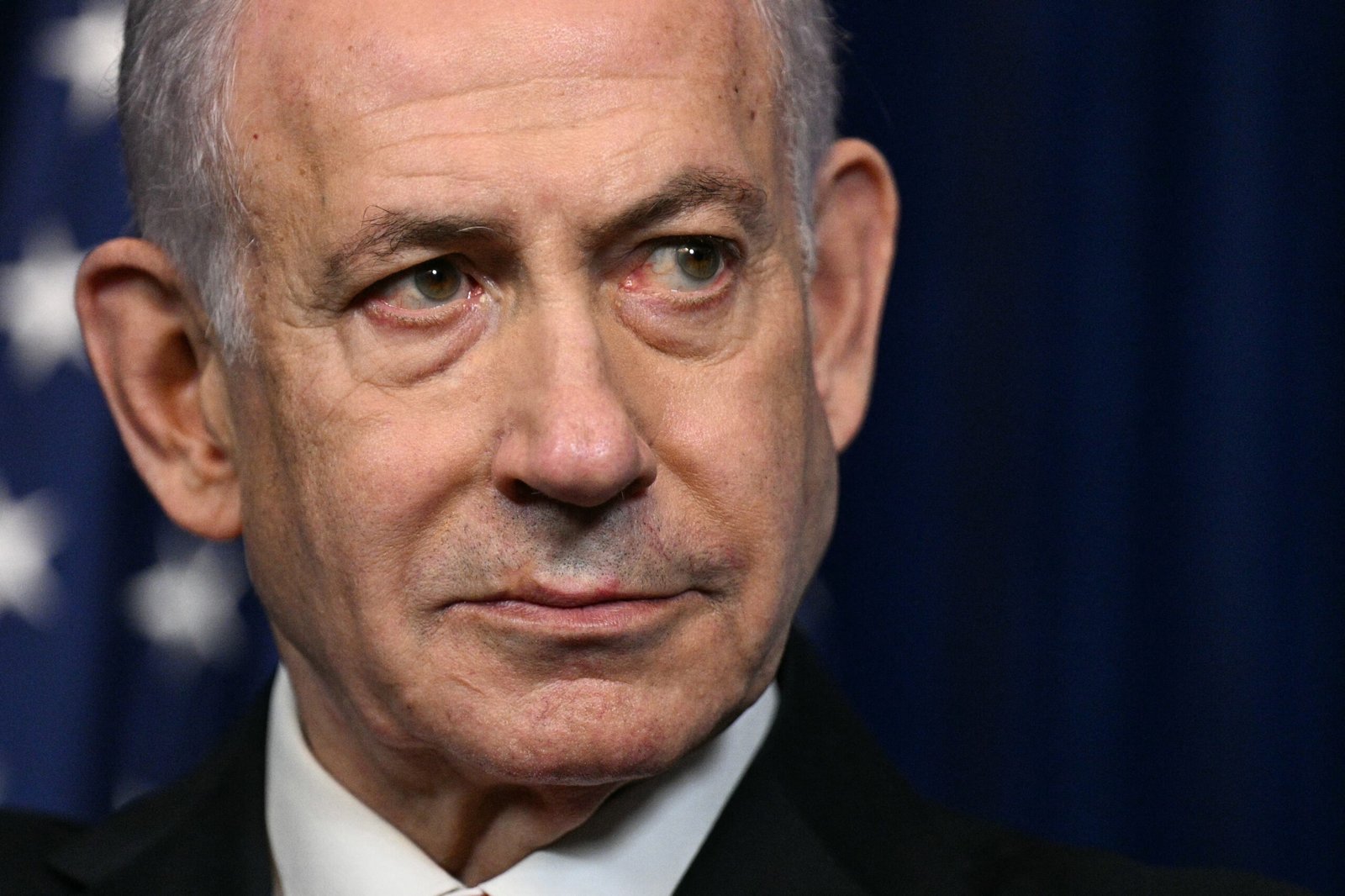
Prime Minister Netanyahu has been the longest serving prime minister of Israel, having assumed the office in 1996 and served off and on for a total of almost two decades. His upcoming election looks to be a tossup, so there’s a fair chance voters will show him the door. Even if they do, analysts would be fools to write him off altogether, as they’ve tried to do many times before. And even if “Bibi,” as he is known, doesn’t find a way back to power, the hardline militarism he represents will probably dominate Israeli politics for a long time.
Just as he faces political challenges at home, Netanyahu has presided over a turn in global opinion against his country, including a massive loss in American support for Israel and its regional designs, and for U.S. intervention in the Middle East broadly. Lately we’ve seen signs that President Donald Trump is getting fed up with Netanyahu—and especially with his military campaign in Lebanon—which could hurt the Israeli leader at the polls.
Yet, for all the blame the man receives, he is doing what he was elected to do, and even his most hawkish supporters are far from the fringes of Israeli politics. There is a delusion among some Americans that, if and when Bibi finally exits center stage, Israel will pursue a new path, and the rapid decline in its approval ratings will be arrested or reversed. But this misses the forest for the trees. The Israeli population’s hawkishness has little to do with the current prime minister and will easily outlive his tenure, whether it ends this year or not. This hawkishness is, at its core, what is driving the break between Israel and its superpower patron.
Americans have long been opposed to the kind of U.S. adventurism that has defined the last decade of geopolitics in the Middle East. After 9/11, of course, there was a surge in support for waging war against America’s enemies in the region. But since the Iraq War went south presidential candidates have been elected on promises to wind down Mideast involvement. They have all failed to completely fulfill those promises for fear of the political blowback from donors and special interests, many of whom prioritize strong U.S.-Israel ties.
After Hamas’s October 7 attacks, the Israeli government decided to seize the initiative not only against Hamas, but also against other militant groups supported by Iran, and even to decapitate its major adversary in Tehran. In doing so, it opened up a multi-front war and attempted to claim more territory outside its recognized borders. This included fighting Hamas in the Gaza Strip, Hezbollah in Lebanon, Ahmad al Sharaa’s newly formed government in Syria, and conducting smaller but still costly wars in Iraq and Yemen.
This pathway of militarism led to a direct American-Israeli war against Iran, with the fiercest hostilities kicking off this February. While the earlier conflicts had material costs for America, the current one, now in a fragile ceasefire, has been, by far, the most damaging to U.S. interests. As a result, more and more Americans across the political spectrum are questioning the value of nonstop investment in Middle East wars and of the allies that seem to drag us into them.
This is not a uniquely Israeli problem; the Saudi Arabians, along with the rest of the Gulf countries, are part of the same issue. The populations of those countries have less responsibility for the conflicts in the Middle East because they are not democracies. Israel, by contrast, has free and fair elections, yet American critics of Israel often blame its government, not its broader society, for the nation’s militarism. While Israeli election results obviously don’t reflect the views of all Israelis, they do reflect the views not only of a majority, but of a growing majority.
The current Israeli population is far more hawkish than it was previously. The total collapse of parties advocating against war in the past few elections is a strong piece of evidence for the thesis, as is the growth of support for parties enthusiastic about perpetual confrontation with Muslim-majority nations, such as Itamar Ben-Gvir’s Jewish Power and Bezalel Smotrich’s Religious Zionist Party.
These are not fringe figures, but high-ranking officials. Netanyahu welcomed each of these men into his coalition, partly because he could not govern without them, but also because he knows the center of gravity is shifting toward the hard right in Israeli politics. One cannot maintain a grip on power for decades, throughout numerous crises and scandals, without a keen sense of politics.
Subscribe Today
Get daily emails in your inbox
The extremely hawkish population has been able, in effect, to wield Netanyahu as a sword against their enemies but also as a shield against criticism of Israeli actions. And Netanyahu, in turn, has harnessed his nation’s escalating hawkishness to pursue grand designs on the international stage and bolster his reputation as “Mr. Security,” which suffered after the October 7 attacks.
The irony is that Netanyahu is blamed for Israeli militarism by Americans who say they still admire and support Israel when in fact he is doing what the people who elected him want. He is, in that sense, a man of the people. More crucially, he is doing what any other Israeli leader would do in his position if they hoped to retain power.
No one can say who will win the next election, but even if it brings the end of Bibi, it will not bring the end of an extremely militaristic and expansionist Israel. If Netanyahu loses, it might bring the end of a delusion that he somehow didn’t represent the people who kept him in power for so long.
[ad_2]
Source link
