
[ad_1]
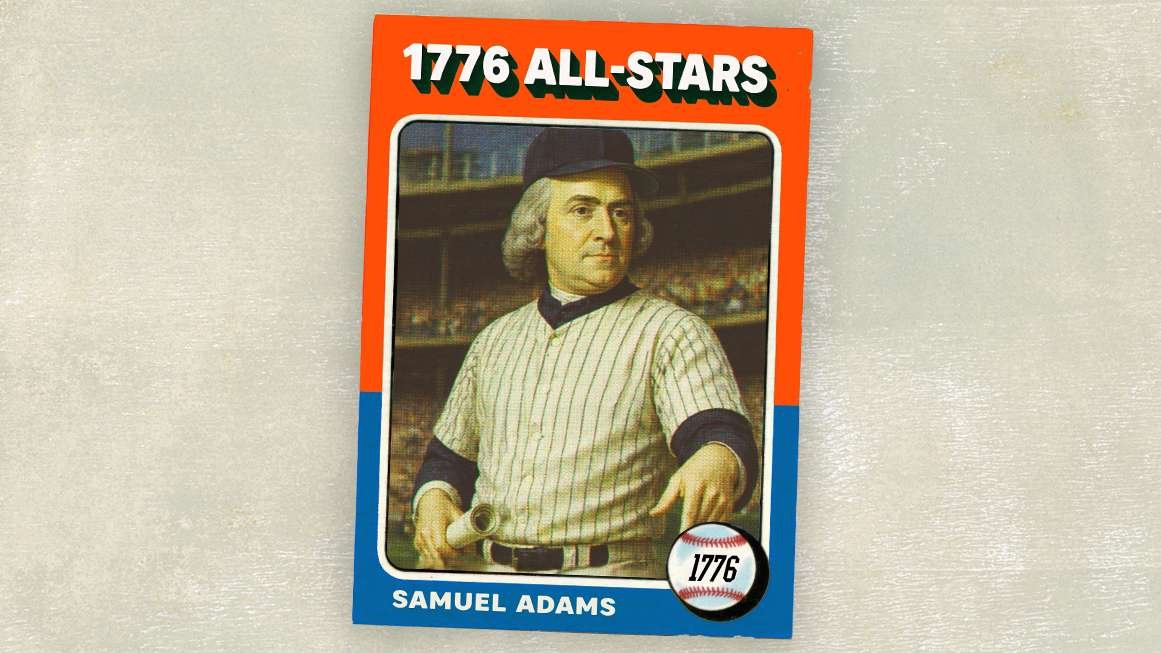
This is part of 1776 All-Stars, a series about Reason‘s favorite American Founders. Read more here.

The American Battlefield Trust describes Samuel Adams as “a rabble-rouser and propagandist” for American independence. His tireless advocacy and organizing for liberty, his limited time in major political office, and his disdain for hereditary aristocracy make him the most libertarian Founding Father.
You can find a couple of libertarian-leaning legislators wandering the halls of the Capitol, but libertarians often operate outside of elective office, as rabble-rousers and propagandists first and foremost. Albert Jay Nock eloquently expressed as much in his 1936 essay “Isaiah’s Job.” The libertarian’s usual task is to fan the torch of liberty and pass it on to the next generation of always-lonely liberty lovers so that the world may be made marginally freer over time.
But Samuel Adams did not merely keep liberty alive in the hearts and minds of a minority of Americans. He fanned so much oxygen into the flame that it grew into the inferno of the American Revolution.
Adams was precocious: He matriculated at Harvard when he was only 14 years old. There, he was introduced to and influenced by the political and moral philosophy of the natural rights theorist John Locke. Adams’ philosophical education contributed to his denunciation of hereditary aristocracy, as evidenced by his contempt for the nepotistic governor of Massachusetts, Thomas Hutchinson. Eight years after graduating from Harvard, Adams launched The Independent Advertiser, a publication dedicated to “defend[ing] the rights and liberties of mankind.”
Adams wasn’t just a firebrand, of course. He was actively involved in patriot politics. Before the revolution, he served as a member of the Massachusetts General Court. He was a delegate to the First and Second Continental Congresses, the Confederation Congress, and the Constitutional Convention. He served as lieutenant governor and then governor of Massachusetts. He also served a while as a Boston tax collector. While his acceptance of that last role might not weigh in favor of the Most Libertarian Founder appellation, his execution of it did: The National Constitution Center reports that he “often did not collect the taxes, especially when his fellow townsmen could not meet their bill.”
James Otis Jr., the Massachusetts lawyer credited with originating the “no taxation without representation” slogan, was Adams’ political mentor. When the Stamp Act was imposed without colonial consent in 1765, Adams spearheaded the protests that ultimately resulted in the Stamp Act Riots. After London responded by passing the Townshend Acts and stationing 2,000 British regulars in Boston, Adams wrote a piece defending the right to bear arms and the right of revolution. Invoking the English jurist William Blackstone, Adams defended “the right of having and using arms for self-preservation and defence…to protect and maintain inviolate the three great and primary rights of personal security, personal liberty and private property.”
A year later, a customs officer shot and killed 11-year-old Christopher Seider. Adams responded by leading a huge funeral procession that honored the young patriot and galvanized opposition to the British presence. The Boston Massacre would occur less than two weeks later.
Adams referenced “Mr. Locke” by name in his 1772 essay “The Rights of the Colonists,” but he hardly had to: Adams’ essay was minarchism exemplified. Presaging the Declaration of Independence, Adams identified the right to life, liberty, and property, and the means to defend these rights, as natural and inalienable. “The grand end of civil government,” he wrote, “is for the support, protection, and defence of those very rights.” Men may not renounce these rights, he added, because they are “the gift of God Almighty” and “it is not in the power of man to alienate this gift and voluntarily become a slave.”
Speaking of which: Unlike George Washington and Thomas Jefferson, Adams never owned any slaves. When presented with an enslaved girl in 1765, he immediately freed her.
In response to the Tea Act of 1773, which granted the British East Indian Company a monopoly on the tea trade to the colonies, Adams utilized the Boston Committee of Correspondence to coordinate resistance to taxation and trade restrictions. This resistance was realized in the form of the Boston Tea Party, when somewhere between 60 and 90 members of the Sons of Liberty—allegedly at Adams’ signal—threw 42 tons of British tea into the Boston Harbor.
Adams was a prolific polemicist and an adept organizer. If not for his persuasive prose and tireless rabble-rousing, the American Revolution might never have happened.
1776 All-Stars, a series about Reason‘s favorite American Founders:
[ad_2]
Source link
