
[ad_1]
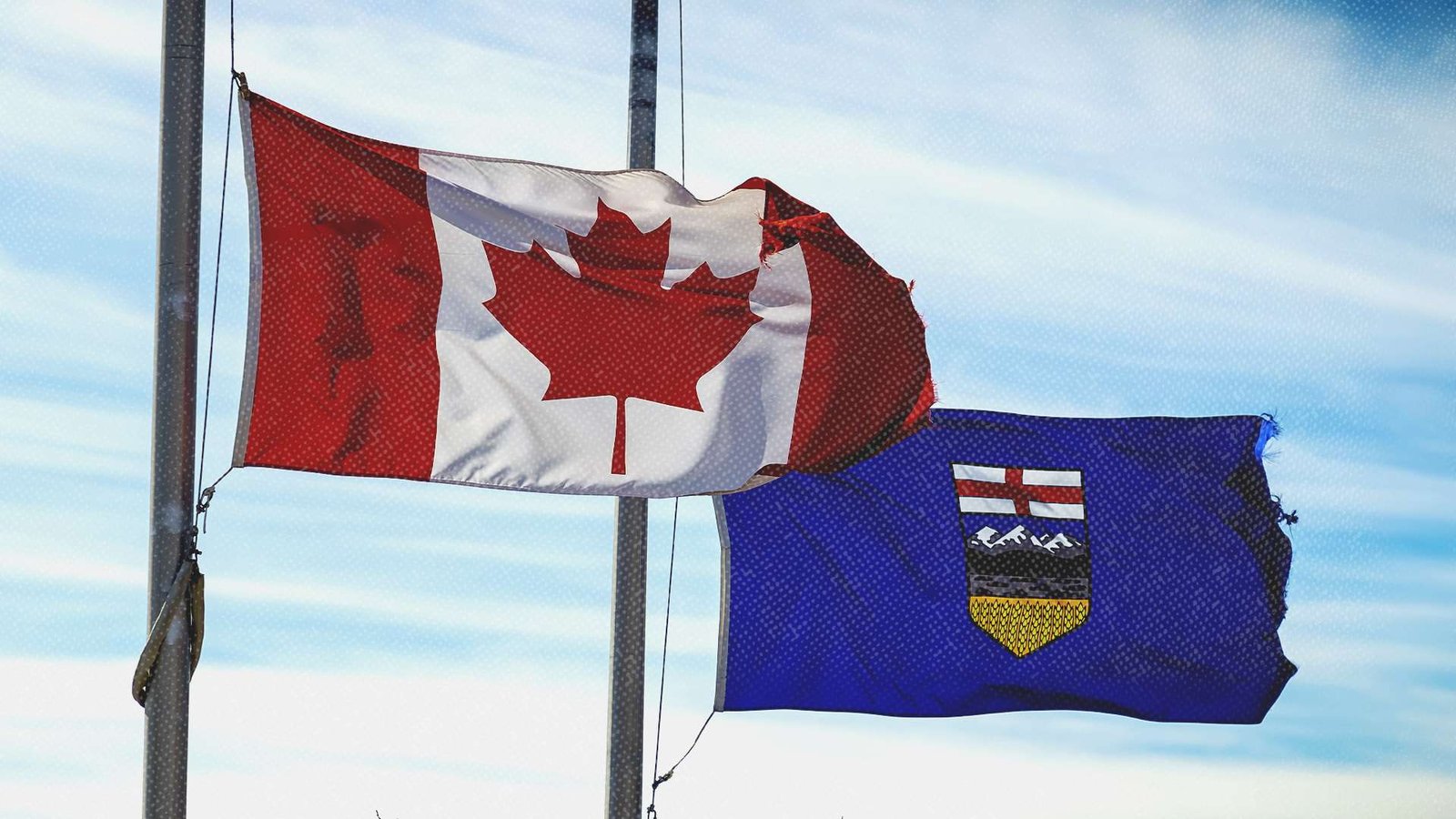
On Monday, a separatist group in the oil-rich Canadian province of Alberta, located just above Montana, submitted over 300,000 signatures in support of a referendum to leave Canada. That’s nearly double the amount of signatures required to trigger a vote by law. Recent reporting shows that at least one quarter of the province’s population would vote to leave Canada. While the separatists still have substantial gains to make, the popularity of the movement illustrates a growing list of fractures and faults in Canada’s constitutional order—particularly cultural differences, economic grievances, and the systemic political underrepresentation of western provinces.
While Alberta has never formally begun the long road to secession until now, the Francophone province of Quebec has twice held referendums on whether to leave Canada. The second, in 1995, saw “remain” narrowly win with 50.58 percent of the vote, triggering the Supreme Court of Canada to issue an advisory opinion dictating the terms under which Quebec could elect to secede from Canada. There, the court said: “The other provinces and the federal government would have no basis to deny the right of the government of Quebec to pursue secession should a clear majority of the people of Quebec choose that goal, so long as in doing so, Quebec respects the rights of others.”
The Quebec opinion provides the legal basis on which Alberta could also separate. However, the language requiring a seceding province to “respect the rights of others” is now being leveraged to contest Alberta’s ability to separate. Separation, some indigenous groups have argued in court, would infringe on collective indigenous rights granted through treaties and enshrined in the Canadian Charter of Rights and Freedoms (the country’s bill of rights).
But an adverse ruling is likely to only fuel the feelings of lopsided treatment undergirding separatist sentiment. Fundamentally, the Alberta Sovereignty movement is born from a perceived disconnect in values and vision between the country’s more conservative, economically productive prairie provinces, like Alberta, and the less economically successful, but politically dominant eastern provinces, particularly Quebec.
The origins of the province’s first settlers are telling. Albertans have always had a different culture and different ideals from the francophones and monarchists in the east. Early migrants to Alberta included Mormons, Germans, Ukrainians, and other Eastern Europeans, most of whom immigrated north from the United States, rather than from better-settled parts of Canada. They were aspiring Americans who, after riding the long trails from Ellis Island to the Rocky Mountains, chased opportunity north, where land was cheaper and easier to acquire.
And these cultural differences remain, especially in the province’s conservative political tendencies. For example, in 2024, Tucker Carlson went on a sold-out tour of the province, charging 200 CAD ($147) a seat for speaking events with the province’s premier (the equivalent of the governor). Alberta is also rich with the culture of the Wild West; it is home to the Calgary Stampede, the world’s largest outdoor rodeo.
Compounding these cultural differences is Alberta’s unique economic position within Canada. Beneath Alberta’s surface lies approximately 167 billion barrels of oil reserves, nearly four times the volume in the United States. But Alberta is one of only two landlocked provinces in Canada, meaning it cannot get this oil to the international market absent the cooperation of other provinces.
Complicating this are the extensive interprovincial trade barriers erected by Canadian provinces against each other. Unlike the United States, Canada does not prohibit discrimination against out-of-state commerce. The problem is so severe that a 2019 report from the International Monetary Fund observed that “international free trade agreements [allow] foreign companies better access to Canada than Canadian companies [have].” This internal absence of free trade creates bad incentives: Provinces that rely on cheap oil to keep their manufacturing sectors competitive are incentivized to block that oil from reaching international markets, even if it lowers national productivity overall.
Further aggravating matters is a constitutional redistribution scheme known as “equalization payments.” Equalization, designed to redistribute revenues from “have” provinces to “have not” provinces, is calculated according to each province’s tax base. Since the program began in 1957, Alberta has not received a single penny in equalization payments. Comparatively, between 2015 and 2025 alone, the province of Quebec received $129 billion, for which Alberta footed most of the bill. This disparity is greatened by an exemption on hydropower, one of Quebec’s largest sources of revenue, and self-imposed restrictions on economic productivity, such as Quebec’s longstanding province-wide ban on retail stores being open past 5 p.m. on weekends.
These economic issues have contributed to Canada’s steady economic decline over the past 10 years of liberal party rule. The nation now has a lower gross domestic product per capita than Alabama, one of the least productive U.S. states.
Finally, separatists have capitalized on feelings of political disenfranchisement after a decade of liberal rule, leveraging Albertans’ sense of powerlessness in trying to fix the aforementioned issues. Canada is a parliamentary system, meaning that Canadians elect a single representative for their electoral district, known as a riding, and the party with the most representatives forms government, with the head of that party becoming prime minister. Because of Alberta’s significant concentration of conservative voters, ridings are often won by margins well over 70 percent, even in a multiparty system. Eastern provinces, on the other hand, are often won nearer to the 50 percent mark, and frequently below that line in ridings where at least three parties are competitive. From a popular vote perspective, this means that Albertans have significantly less sway in determining the ruling party, and thus the prime minister, than voters living in Eastern Canada.
This political reality is compounded by a series of districting rules that prevent provinces with relatively waning populations from losing seats and that add seats based on senate representation. Unlike the American Senate, section 22 of the Canadian Constitution does not provide equal Senate seats for each province, but rather between Quebec, Ontario, the Western provinces (including Alberta) as a bloc, and the Atlantic provinces as a bloc. This would be like if California, New York, and Texas got two senators each, but the entire Midwest had to share 6 senators. As a result of these practices, not only are Albertans underrepresented when compared with the popular vote, but each riding in Alberta has more people in it, making every vote literally worth less.
It’s uncertain how and when the separation referendum will unfold. But Alberta’s grievances illustrate legitimate flaws in Canada’s system of federalism. A failure to address them would likely cause further rifts between Canada’s eastern and western provinces.
[ad_2]
Source link
