
[ad_1]
For all the talk of a “generation gap” between younger and older voters, Americans share an unignorable disillusionment with the state of today’s politics.
Only 14% of baby boomers and 18% of the silent generation, alongside 15% of millennials and 19% of Generation Z, trust the government almost always or most of the time. Fifty-six percent of Gen Z consider themselves independents, feeling that neither Democrats nor Republicans represent their interests. These gripes wrestle with morality, as older generations tend to cast their political opponents as “evil,” while Gen Z often sympathizes with political violence rather than discourse.
With many wary of today’s politics, candidates sense opportunities to bring them back into their coalitions. But can you woo those who lack faith in the process?
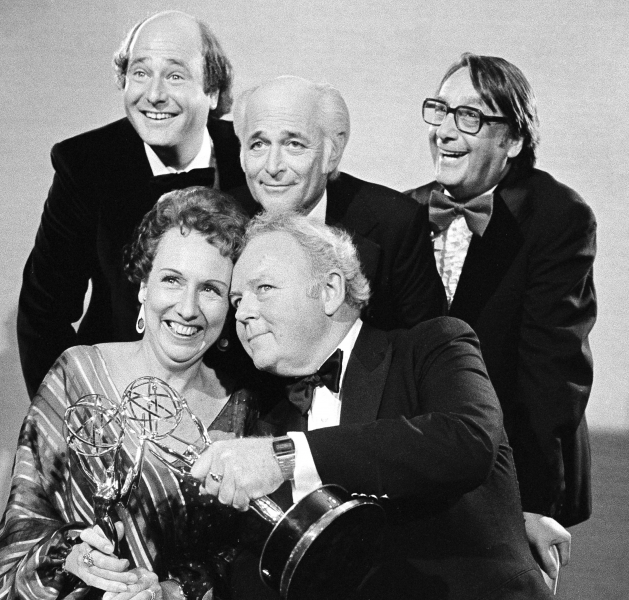
Archie Bunker, one of television’s most revered traditionalists, may offer a solution to the modern political realignment. Bunker, the main character of Norman Lear’s “All in the Family” (1971-79) embodied a blue-collar lifestyle and advocated for an unchanging social order, opposing the new liberalism of the 1970s. The sitcom acknowledged that staunch beliefs on the world hold deep, personal value, and are potent drivers of nuance, discussion, and broader empathy towards our fellow compatriots.
If a candidate wishes to endure, they must honor, not forsake, America’s Archie Bunkers.
In 1970s New York, Archie Bunker laid out a treatise for this voter bloc: law-and-order, cultural conservatism, and strong labor unions. These were political products that could be seen, felt, and respected by ordinary people. Democrats, however, sensed success with a new progressive, intellectual, and elitist constituency, so they prioritized college campuses over factory floors. The party adopted identity politics and institutional reform, intervening in areas where old-school Democrats felt that people’s rights should trump all.
The Democrats’ evolution left many in their old factions, including Archie, to defect from the party. In turn, Bunker’s demographic of urban, working-class white men was pivotal to Richard Nixon’s and Ronald Reagan’s voter bases, a prediction he made in a 1976 episode. Democrats rewarded performative moralizing over competence, and, with the exception of President Bill Clinton, they’ve been trying to reclaim the country’s Bunkers ever since. With today’s Democrats supporting government overreach, political correctness, and increased taxes, their message is still hollow for those seeking laissez-faire social norms and economic security.
After several decades of turning out the Bunker camp, Republicans have struggled to retain their support. This February, a Marist poll discovered that 49% of white, working-class respondents disapproved of President Trump’s performance, with 42% “strongly” disapproving. Low-income white voters shifted 26 points away from President Trump since 2024, going from +22 points approval to -4. With Trump sliding under 50% with non-college-educated white Americans, the cost of living, despite surging job growth, weighs heavily on voters’ minds. For this class, federal action (or inaction) makes or breaks their communities and livelihoods, with their frustration channeled through abstinence in the political process.
Politicians must realize that generations young and old have the political ethos of the white working class. They are economically anxious and populist, varying in degrees of nationalism and cultural defensiveness, and skeptical that elites and institutions fight for them. Much of America’s youth is attending church at record rates, while black Americans are becoming more family-oriented. Citizens are also cozy with the idea that a strong leader can violate democratic principles to keep them safe. Stereotyping the white working class as “older, rural, and socially reactionary” now risks jeopardizing the support of a cross-generational, cross-racial value set that defines much of the electorate.
Communicating these issues to voters is the other half of the battle. And it’s where “All in the Family”-style political bickering transcends entertainment.
Archie’s foil is Mike “Meathead” Stivic, his son-in-law. Meathead is a college-educated liberal critical of the Vietnam War, religiously agnostic, and a proponent of women’s and gay rights. He converses with Archie through abstract arguments such as justice and equality, grounding his beliefs with data, and correcting Bunker’s language, logic, and facts. These rhetorical tactics make him appear smart but condescending to Bunker and to viewers who identify with him. Bunker responds with emotional interruptions and personal insults, relying on nostalgia or gut feelings to frame issues as common sense against the intellectual know-it-alls. Archie ultimately remains unpersuaded, and Meathead storms off, upset that his worldview doesn’t triumph.
“All in the Family” wasn’t a “sounding board” for raw, political discourse. The program exposed the frailties and prejudices of two ideologies and generations, offering no resolution for reconciling them. That task would be left to the viewers and officeholders paving their world in speech and service – a project that requires the white working class.
The Bunker-Meathead battles exhibit that validating emotions beats spewing facts. Archie’s stubbornness is a reflex to his worldview being attacked without first acknowledging his experience. Whether it be plant closures or fear of rapid technological change, leaders must tap into these environments and anxieties before pivoting to moral or policy cases. They must also drop the barbed, scripted talking points in favor of plain language and storytelling with a respectful tone. Blue-collar workers focus on being fundamentally good-hearted people, rooted in place and kinship. Politicians who can match and convey that energy with dignity can gain the ears of many who feel unheard.
Finally, candidates must remember that an invisible audience watches their performance. Archie never sees eye to eye with Meathead, his black neighbor George Jefferson, or his feminist cousin-in-law Maude Findlay, but he does soften his approach to them as the show progresses. Onlookers, similarly, may not convert after a single media hit or campaign stop, but they notice when others act with compassion, patience, and humanity. These groups aren’t monoliths or in retreat, but desperate for authenticity in a surreal time for the nation. Candidates of every party will, sooner or later, come to understand it, too.
There is no enduring coalition that exists without the Archie Bunker vote. John Abbott and Joan Williams of Jacobin suggested that, to engage America’s Bunkers, candidates must tout “a politics that takes their economic grievances seriously and offers concrete material programs – lower prices, better and more stable jobs, cheaper and higher quality health care, and affordable housing.” This substance must have emotional honesty, an anti-elite edge, and an embrace of dinner-table talk.
“All in the Family,” a sitcom designed to reflect the 1970s, feels more like a roadmap for navigating 2020s politics. Candidates would be wise to give it a watch.
[ad_2]
Source link
