
[ad_1]
What if I told you that the U.S. government once imprisoned a filmmaker for making a movie about the American Revolution because it depicted British troops in an unflattering light?
In today’s edition of the Injustice System newsletter, let’s talk about censorship, freedom of speech, and the infuriating—if aptly named—1917 case of United States v. “The Spirit of ’76.”
You’re reading Injustice System from Damon Root and Reason. Get more of Damon’s commentary on constitutional law and American history.
When President Woodrow Wilson led the U.S. to war against Germany in 1917, he also vowed to crush all enemies that arose closer to home. “There are citizens of the United States, I blush to admit,” Wilson declared, “who have poured the poison of disloyalty into the very arteries of our national life….[T]he hand of our power should close over them at once.”
Congress responded to this call for domestic repression by passing the Espionage Act, which made it illegal to “cause or attempt to cause insubordination, disloyalty, mutiny, or refusal of duty, in the military or naval forces of the United States.” In effect, the Espionage Act made it mostly illegal to speak out against American involvement in World War I.
Perhaps the most famous victim of this notorious law was the socialist politician and labor union leader Eugene Debs, who was imprisoned for the “crime” of giving an anti-war speech to an audience at an afternoon picnic. In Debs v. United States (1919), the U.S. Supreme Court upheld his conviction. “One purpose of [Debs’] speech, whether incidental or not does not matter, was to oppose not only war in general but this war,” stated the majority opinion of Justice Oliver Wendell Holmes Jr. “The opposition was so expressed that its natural and intended effect would be to obstruct recruiting.”
The ruling in Debs echoed Holmes’ earlier decision in Schenck v. United States (1919), which upheld the Espionage Act conviction of a socialist who had been arrested for distributing anti-war pamphlets. “When a nation is at war,” Holmes declared, “many things that might be said in time of peace are such a hindrance to its effort that their utterance will not be endured.”
Filmmaker Robert Goldstein was also targeted by federal prosecutors at this time under the Espionage Act. But his saga is not as famous in free speech lore as it should be, probably because his case never made it to the Supreme Court.
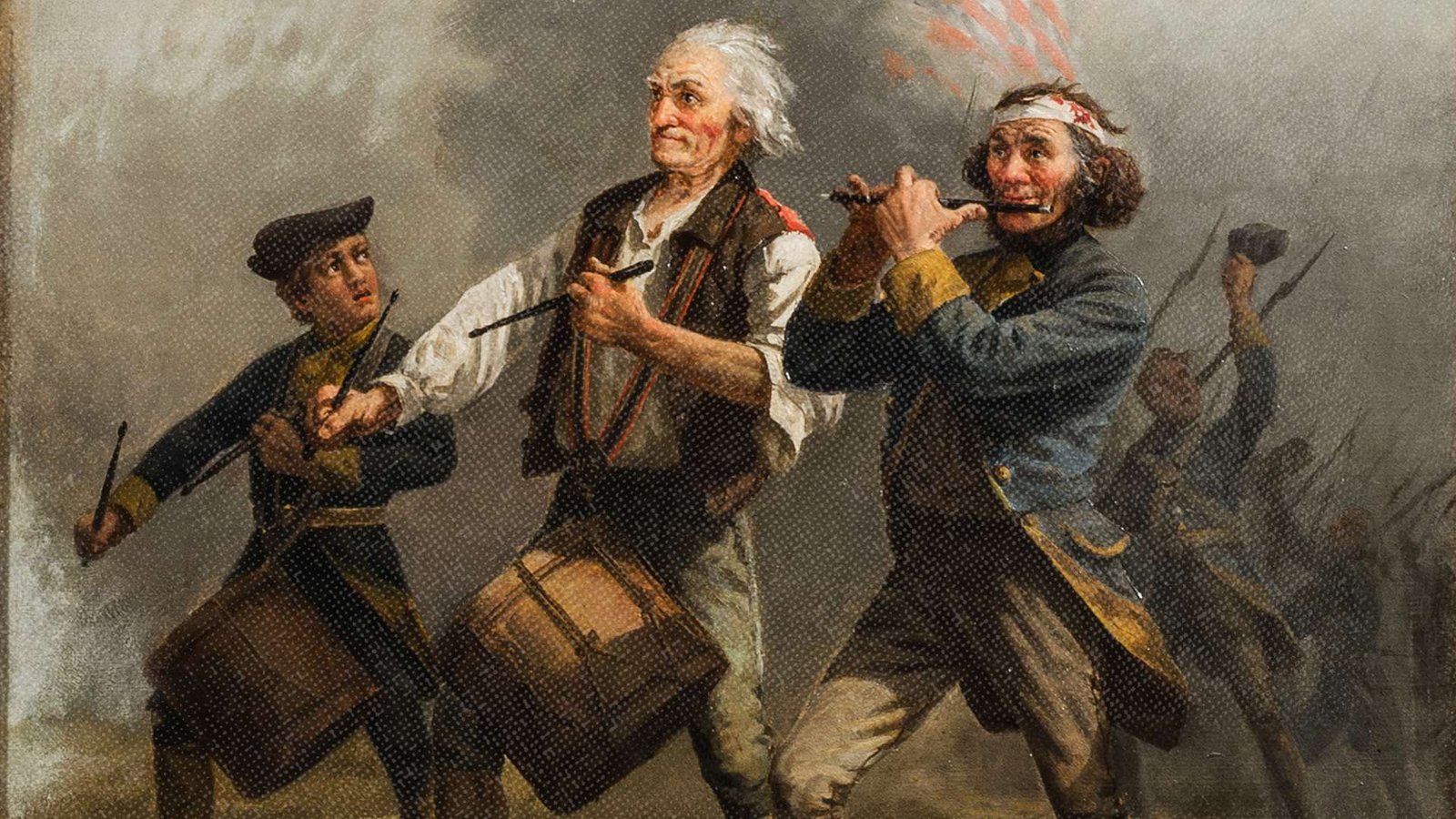
Goldstein’s “crime” was producing a silent film about the American Revolution titled The Spirit of ’76. Among other things, the film reportedly contained scenes that depicted British troops bayoneting women and children. Because Britain was then an ally of America’s in the First World War, the U.S. government quickly suppressed the film and prosecuted Goldstein for interfering with the war effort. “History is history, and fact is fact,” conceded the trial judge. But “this is no time” for “those things that may have the tendency…of creating animosity or want of confidence between us and our allies.” Goldstein was sentenced to 10 years in prison. Two years later, his conviction was upheld on appeal.
Tragically, it seems that Goldstein never recovered from this persecution by the U.S. government. According to Michael Innam of the New York Public Library’s Rare Book Division, “upon his release [from prison], Goldstein moved to Europe and attempted without success to reestablish his film career. After being expelled from Nazi Germany in the mid 1930s, he returned to the United States where, so far as is known, he died in obscurity.” As for the “offending” motion picture itself, Inman noted that The Spirit of ’76, “like a great many films of the silent era…is now considered lost, with no print known to survive.”
Is there a lesson to be learned from this terrible story of injustice? Perhaps this: Sometimes all three branches of the U.S. government come together for the purpose of trampling upon the Constitution. Be alert.
[ad_2]
Source link
