
[ad_1]
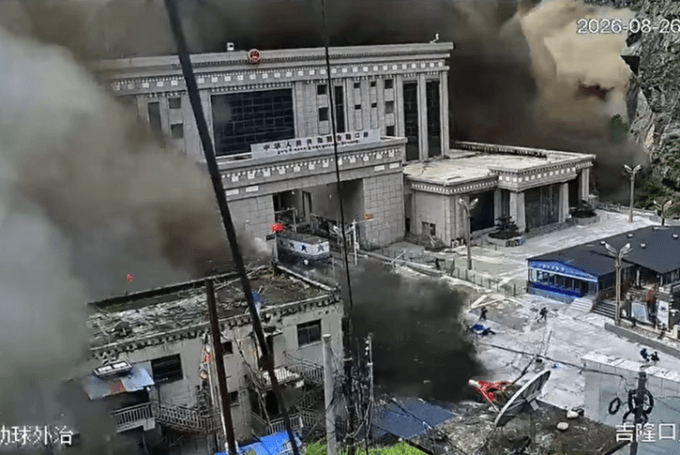
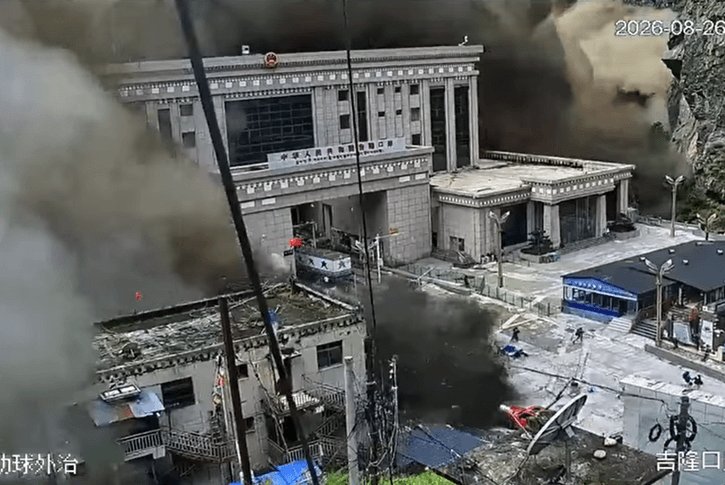
Port crossing on the China–Nepal border seven minutes after a Ms 5.2 tremor – Public Domain
At roughly 8:30 AM on 26 August 2026, a wall of water, mud, ice, and massive boulders roared down the Lhende Khola into the Bhotekoshi and Trishuli river systems. The surge struck without local rainfall or warning sirens, catching border communities like Timure, mid-morning. Initial reports mistook the ground tremors for an earthquake, but satellite and seismic data later confirmed the real trigger: a high-altitude collapse of rock and ice near Langtang Lirung, on the Tibetan side, spanning nearly one square kilometer and generating a ground shock equivalent to a magnitude 5.2 quake. Plunging 1,200 vertical meters into the valley, the avalanche briefly dammed the Lhende River before rupturing, unleashing a debris-laden slurry that tore through Rasuwa, Nuwakot, Dhading, Gorkha, Tanahun, and Chitwan.
Environmental Drivers and Hydrological Cascade
The disaster exposed the extreme fragility of high-altitude Himalayan ecosystems under a shifting climate. Rising temperatures and accelerating freeze-thaw cycles are steadily degrading permafrost and the cryogenic bonds that hold mountain bedrock together, priming slopes for collapse. This was not an isolated event: smaller glacial lake outburst flood (GLOF) incidents in July 2025 had already weakened local topsoil and riverbank integrity.
The catastrophe unfolded in two stages. First, the avalanche formed a short-lived debris dam across the narrow Lhende Khola. Hydrostatic pressure built rapidly behind the ice-and-rock wall as glacial meltwater and river discharge backed up, until the barrier gave way. Second, the released surge raced downstream at speeds exceeding 75 km/h, scouring up topsoil, riverbed gravel, and boulders as it went and turning into a hyper-abrasive slurry that gouged riverbeds, stripped valley walls, and undercut mountain foundations across the Bhotekoshi, Trishuli, and Narayani corridors. Secondary barrier lakes are still forming along blocked upper tributaries, prompting fresh flood warnings downstream.
Human Toll and Structural Damage
According to Nepal’s National Disaster Risk Reduction and Management Authority (NDRRMA) and the Nepal Police, the toll on life and infrastructure has been devastating. Confirmed deaths have surpassed 669, with victims swept as far as Chitwan (248), Nawalparasi East (158), and Paschim Nawalparasi (75); some remains were recovered up to 240 kilometres away in India’s Uttar Pradesh. Between 1,000 and 2,426 people remain missing, including 933 hydropower workers, dozens of security personnel from the Nepal Army, Police, and Armed Police Force, customs officers, residents, and over 500 foreign nationals mostly trekkers and Kailash Mansarovar pilgrims from more than 30 countries.
On the recovery front, between 3,700 and 4,400 survivors have been treated or evacuated, including nearly 200 workers pulled from flooded underground hydropower tunnels. Damages are now estimated to exceed NRs 200 billion. The flood destroyed more than 80 bridges (35+ motorable, 45+ suspension) and washed out 40 kilometers of the vital Betrawati–Rasuwagadhi trade corridor, halting overland commerce with China. Thirteen run-of-the-river hydropower plants including the 111 MW Rasuwagadhi and 60 MW Upper Trishuli 3A sustained direct structural damage, knocking hundreds of megawatts off the national grid.
Ecological Disruption and Human-Made Risk
Beyond the human and economic cost, the scouring wiped out aquatic habitats and macroinvertebrate populations across Langtang National Park and its buffer zones. Millions of tons of topsoil were stripped from mountain slopes, while heavy silt deposits degraded farmland further downstream. Environmental assessments warn that unstable debris left in the upper tributaries could form new barrier lakes, raising the risk of further outburst floods when the rains return.
Human activity in these narrow corridors amplified the destruction. Encroaching highway construction, constricted floodplains, and loose excavation muck from active building sites added extra material to the flood’s path. Once the surge hit, this debris and the narrowed riverbeds turned built infrastructure into secondary hazards that intensified the wave’s force.
Emergency Response and Cross-Border Cooperation
Nepal deployed over 15,000 security personnel from the Army, Police, and Armed Police Force alongside military and private helicopters for air-bridge evacuations, medical drops, and search operations. NDRRMA set up 12 Sector Coordination Teams to manage missing-person tracing, grid restoration, and aid delivery, backed by relief funds and truckloads of food, shelter, and medical supplies.
Because high-altitude hazards cross borders, the response demanded fast regional coordination. China activated emergency protocols around Gyirong Port, sending over 500 rescue workers, while Chinese hydrological teams shared real-time water-level and barrier-lake satellite data with Nepal’s Flood Forecasting Division. In India, recovery operations ran in the border districts of Bihar and Uttar Pradesh, gates at the Valmikinagar Barrage on the Gandak River were opened to manage surge volumes, and helplines were set up to trace missing pilgrims. The U.S., the IFRC, and global relief networks contributed emergency funding, shelter materials, traveller-tracking support, and diplomatic assistance for affected foreign nationals.
Preventing a repeat of this scale of disaster will require stronger transboundary data-sharing, strictly enforced riparian buffer zones, comprehensive cumulative Environmental Impact Assessments for river-basin projects, and satellite-integrated early-warning networks built specifically for dynamic, high-altitude Himalayan conditions.
This article was produced by Globetrotter.
[ad_2]
Source link
